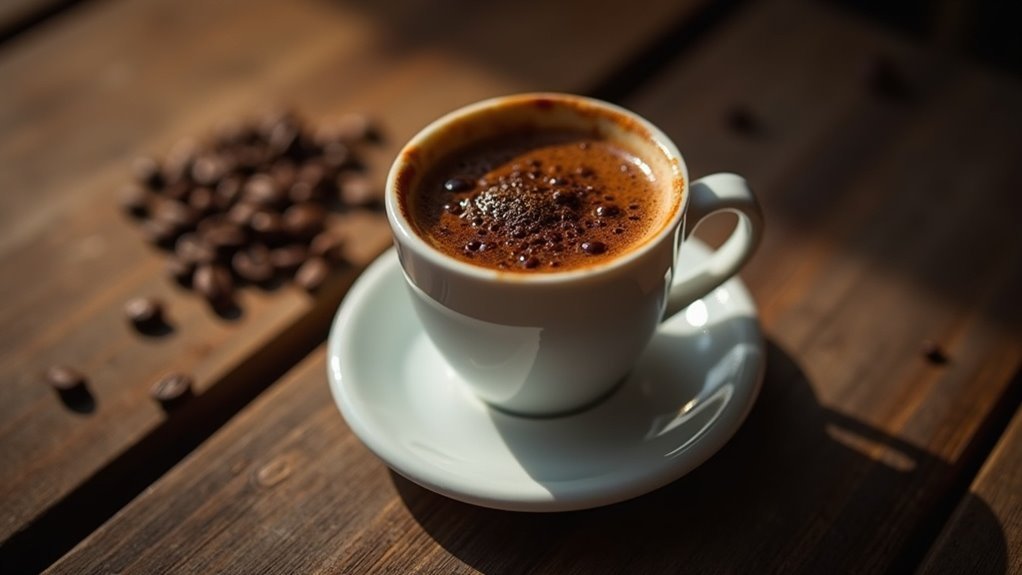
A single shot of espresso contains about 63 to 75 mg of caffeine, making it a strong source compared to brewed coffee. Although it seems more potent due to its concentrated form, an 8 oz cup of brewed coffee typically has 95 to 100 mg of caffeine. Factors like bean type and grind size can affect the caffeine content. If you’re curious about the details, various aspects of coffee, including espresso and its caffeine effects, can provide deeper insights.
Key Takeaways
- A single shot of espresso contains approximately 63 to 75 mg of caffeine, making it a popular choice for coffee lovers seeking a quick energy boost.
- A double shot of espresso typically offers around 126 mg of caffeine, perfect for those who need an extra jolt.
- Decaf espresso has a caffeine content ranging from 3 to 15 mg per shot, providing a milder option for those avoiding caffeine.
- Caffeine levels in espresso can vary based on the type of beans used and the roast level, contributing to the unique flavors of different espresso varieties.
- Espresso delivers more caffeine per ounce compared to brewed coffee, averaging 63 mg per ounce, making it a concentrated source of caffeine for coffee enthusiasts.
Understanding Espresso
When you plunge into the world of coffee, you’ll discover that it’s more than just a beverage; it’s a meticulously crafted experience.
An espresso shot is made by forcing hot water through finely ground coffee beans at high pressure, typically requiring about 9 bars of pressure and a precise brewing time of 25-30 seconds. This method allows for ideal flavor and a rich crema, formed from CO2 bubbles and natural oils.
The beans, primarily Arabica and Robusta, are often roasted darker, enhancing bold flavors while balancing caffeine concentration. Understanding these factors enriches your appreciation for this concentrated coffee experience.
Caffeine Content in Espresso
When it comes to caffeine levels in coffee, espresso packs a punch with about 63-75 mg per ounce, considerably more than brewed coffee’s 12 mg per ounce.
However, various factors like bean type and roast level can affect these numbers. For instance, Robusta beans can nearly double the caffeine content compared to Arabica beans.
Understanding these nuances will help you choose the right espresso for your caffeine needs.
Espresso Caffeine Levels
Understanding espresso caffeine levels is essential for coffee enthusiasts and anyone monitoring their caffeine intake. The amount of caffeine in espresso can vary considerably based on several factors.
Here’s a breakdown of typical caffeine content:
- A single shot of espresso contains approximately 63 to 75 mg of caffeine.
- A double shot typically offers around 126 mg, influenced by brewing methods and bean type.
- Decaf espresso ranges from 3 to 15 mg per shot, making it a suitable option for sensitive individuals.
Being informed about these levels helps you enjoy your favorite coffee safely while managing your caffeine consumption.
Comparisons With Brewed Coffee
While many coffee lovers appreciate the bold flavor of espresso, it’s essential to compare its caffeine content with that of brewed coffee to understand its effects fully.
A single shot of espresso contains about 63-75 mg of caffeine, while an 8 oz cup of brewed coffee typically holds 95-100 mg.
Although espresso delivers around 63 mg of caffeine per ounce, brewed coffee averages only 12 mg per ounce.
A double espresso offers 126-150 mg, which is comparable to a full cup of brewed coffee.
Despite having a lower total caffeine content, the rapid absorption from espresso can lead to quicker stimulant effects, especially when made from Arabica or robusta beans.
Understanding these differences can help coffee enthusiasts choose their favorite brew based on desired caffeine effects.
Factors Affecting Caffeine Content
Several factors influence the caffeine content in espresso, making it essential to take into account these elements for a clearer understanding of what you’re consuming.
Here are three key factors:
- Bean Type: Robusta beans contain nearly double the caffeine of Arabica beans, thereby increasing the overall caffeine content in your coffee.
- Grind Size: Finer grinds enhance caffeine extraction, leading to a stronger espresso shot and a more robust coffee experience.
- Roast Level: Light roasts generally retain slightly more caffeine than dark roasts due to mass loss during roasting, affecting the final coffee’s caffeine concentration.
Factors Influencing Caffeine Levels
The caffeine content in espresso can vary considerably based on several key factors that influence extraction and composition.
The type of coffee bean plays a significant role; Robusta contains nearly double the caffeine of Arabica.
The choice of coffee bean is crucial; Robusta boasts nearly double the caffeine content of Arabica.
Grind size also matters, as finer grinds enhance extraction, impacting caffeine levels.
Roast level affects retention too; lighter roasts generally have more caffeine by weight.
Serving size is critical; a single shot averages 63 mg, while a double shot often exceeds 126 mg.
Finally, brewing time and method, particularly under high pressure, can yield higher caffeine, further shaping your coffee experience.
Espresso-Based Drinks and Their Caffeine
Espresso-based drinks offer a robust caffeine boost, with the caffeine content primarily driven by the number of espresso shots included.
Recognizing these variations can help you tailor your caffeine consumption:
- Cappuccino/Latte: Contains 75 mg of caffeine for a single shot, and can go up to 150 mg for a double shot in larger sizes.
- Mocha: Features 90 mg of caffeine in short/tall sizes, increasing to 180 mg for venti sizes.
- Americano: Begins at 75 mg for a single shot, potentially reaching up to 300 mg for venti sizes.
When choosing your favorite espresso drinks, keep in mind the number of espresso shots to ensure a balanced caffeine experience.
Comparing Espresso and Drip Coffee
When you compare espresso and drip coffee, you’ll notice distinct differences in caffeine concentration and brewing methods.
A shot of espresso packs a higher caffeine content per ounce than brewed coffee, yet a typical cup of drip coffee ultimately delivers more caffeine overall due to its larger volume.
Understanding these nuances helps clarify your caffeine choices, whether you’re savoring a quick shot or enjoying a leisurely cup of your favorite brew.
Espresso vs. Drip Coffee
Comparing espresso and drip coffee reveals significant differences in caffeine content and serving size that can influence your choice of beverage.
- A standard 1-ounce shot of espresso contains 63 to 75 mg of caffeine, while an 8-ounce cup of drip coffee typically has around 95 mg.
- Espresso’s concentration is higher at about 63 mg per ounce compared to 12 mg per ounce in drip coffee.
- Although a double shot of espresso (2 ounces) offers 126 to 150 mg of caffeine, its rapid absorption means you may feel the effects quicker than with brewed coffee, impacting your total caffeine experience.
Ultimately, whether you prefer the robust flavor of espresso or the smoothness of drip coffee, understanding these differences can help you make an informed choice about your next cup.
Caffeine Concentration Differences
While it’s easy to assume that all coffee drinks deliver a similar caffeine kick, the differences in caffeine concentration between espresso and drip coffee are striking.
An espresso shot packs about 63 to 75 mg of caffeine in just 1 ounce, resulting in a remarkable concentration of roughly 63 mg per ounce. In contrast, regular drip coffee offers around 12 mg per ounce, totaling about 95 mg in an 8-ounce cup.
Even a double shot of espresso boosts caffeine content to 126 mg or more. Factors like bean type can influence these numbers, but espresso consistently showcases higher caffeine concentration, making it a favorite for those seeking a more intense caffeine experience.
Brewing Methods Comparison
Espresso and drip coffee are two distinct brewing methods, each contributing to the unique characteristics of the final beverage.
- Espresso: This method involves forcing hot water through finely ground coffee at high pressure for a short duration of 25-30 seconds. The result is a concentrated coffee beverage that boasts a high caffeine concentration.
- Drip Coffee: In contrast, drip coffee is made by slowly dripping hot water over coarsely ground coffee, allowing flavors to be extracted over several minutes. This method results in a different flavor profile and strength.
- Caffeine Content: When comparing caffeine levels, a shot of espresso contains approximately 63-75 mg of caffeine per ounce, while drip coffee has around 12 mg per ounce.
This stark difference highlights how brewing time and method affect caffeine concentration in the final cup.
Myths About Espresso and Caffeine
Have you ever wondered about the common misconceptions surrounding coffee, particularly espresso and its caffeine content? Many believe that espresso contains more caffeine than regular brewed coffee, but a shot of espresso has about 63 mg of caffeine per serving, while an 8-ounce cup of brewed coffee contains roughly 95 mg.
You might think that light roasts pack more caffeine, but the difference is minimal. The energy boost from espresso comes from both its caffeine concentration and its absorption rate, peaking within 30-60 minutes.
Additionally, the crema on top of espresso doesn’t hold higher caffeine levels, and decaf espresso still contains trace amounts of caffeine, typically around 3 to 5 mg per shot.
How Caffeine Affects the Body
When you enjoy a cup of coffee, its effects on your body can be both immediate and long-lasting. After sipping your favorite brew, you might notice:
- Increased alertness: Coffee stimulates the central nervous system, enhancing focus and elevating your mood.
- Side effects: Excessive consumption can lead to jitteriness, restlessness, and an increased heart rate.
- Regular consumption: Up to 400 mg of caffeine per day is generally considered safe, but if you have hypertension, it’s advisable to limit your intake to around 300 mg daily to avoid raising your blood pressure.
Remember that the peak effects of caffeine can be felt within 30 to 60 minutes after drinking coffee, and its half-life in your body is about 5 hours.
Enjoy your coffee responsibly!
Safe Consumption of Espresso
Although enjoying espresso can be a delightful experience, it’s essential to be mindful of your caffeine consumption to guarantee safety and health.
For healthy adults, 3-4 espresso shots daily correspond to about 189-252 mg of caffeine, which is within the FDA’s guideline of 400 mg per day.
Pregnant individuals should limit caffeine intake to under 200 mg, roughly 2 shots, while breastfeeding women may safely consume up to 300 mg daily, around 4 shots.
If you have hypertension, monitor your caffeine intake closely, as exceeding 300 mg could elevate blood pressure.
Always prioritize your well-being when savoring your espresso. Coffee enthusiasts should enjoy their brews responsibly.