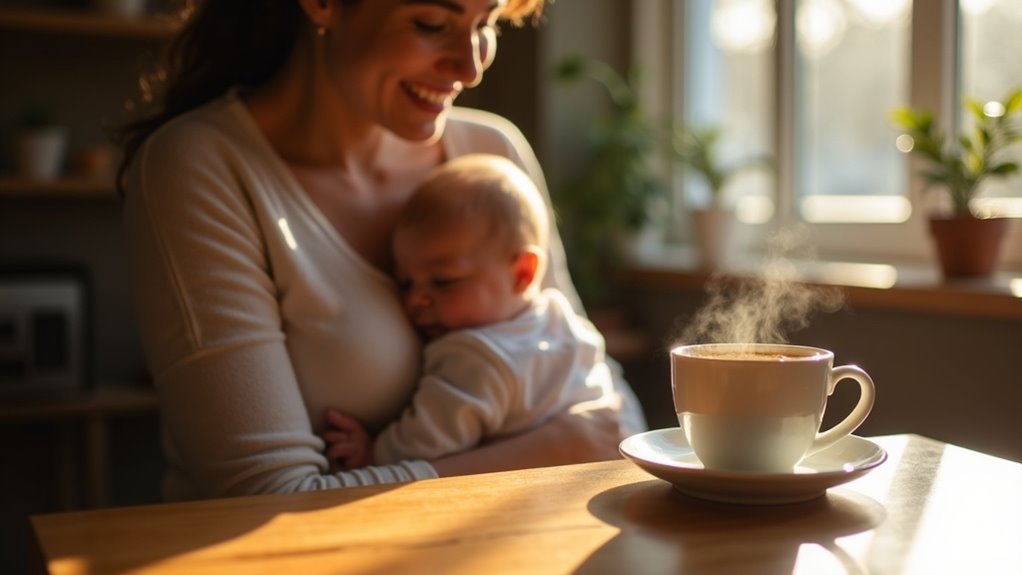
Yes, decaf coffee is generally safe during breastfeeding. It contains only 3 to 15 mg of caffeine per 8-ounce serving, which is significantly less than regular coffee. This allows you to enjoy coffee while minimizing caffeine intake, while still benefiting from its antioxidants. Although caffeine does transfer into breast milk, moderate consumption of decaf is considered acceptable. Just be attentive to your baby’s reactions, particularly if they are under six months old. You’ll find more tips on how to balance caffeine consumption with breastfeeding throughout our site.
Key Takeaways
- Decaf coffee contains significantly lower caffeine levels, typically 2-15 mg per 8 oz, making it a safer choice for breastfeeding mothers looking to enjoy coffee.
- The American Academy of Pediatrics has deemed moderate decaf coffee consumption safe while nursing.
- Decaf coffee retains beneficial antioxidants, offering health advantages without the high caffeine levels of regular coffee.
- It’s important to monitor your baby’s behavior for any signs of caffeine sensitivity, particularly in infants under six months of age.
- To support balanced coffee enjoyment while breastfeeding, it is recommended to limit total caffeine intake to 300 mg per day, including decaf options.
Understanding Caffeine Content in Decaf Coffee
When you’re exploring the world of coffee, particularly decaf options, it’s essential to grasp the caffeine content.
Decaf coffee typically contains about 3 to 15 mg of caffeine per 8-ounce serving, which is significantly lower than the approximately 95 mg found in regular coffee. Although decaffeination removes at least 97% of caffeine, the actual amount can vary based on preparation methods.
Decaf coffee contains 3 to 15 mg of caffeine per 8-ounce serving, much lower than regular coffee’s 95 mg.
The American Academy of Pediatrics considers decaf coffee to be compatible with breastfeeding, deeming it safe to enjoy in moderation. However, it’s worth noting that decaf may affect iron levels in breast milk.
Keeping track of your overall caffeine intake will help you make informed choices that benefit both your health and your baby’s well-being.
Benefits of Decaf Coffee for Nursing Mothers
Decaf coffee provides a wonderful option for nursing mothers who want to savor their favorite beverage without the concerns associated with high caffeine intake.
With only 3 to 15 mg of caffeine per 8 oz cup, it allows for a safe and moderate caffeine consumption while breastfeeding. Decaf coffee retains many beneficial antioxidants, offering health advantages without the risk of excessive caffeine exposure.
Moreover, drinking decaf can enhance hydration levels, which is crucial for maintaining a healthy milk supply.
However, it’s important to monitor the iron content in your breast milk, as the acidity of decaf may impact iron absorption.
Enjoy your cup of decaf coffee worry-free!
Potential Risks of Caffeine for Breastfed Infants
While enjoying decaf coffee can be a safe choice for nursing mothers, it’s important to consider the potential risks associated with caffeine consumption for breastfed infants.
Caffeine does pass into breast milk, with about 1% of your intake reaching your baby, which can lead to caffeine sensitivity. High maternal caffeine consumption, particularly over 450 mg/day, may also lower iron levels in your breast milk, impacting your infant’s nutritional quality.
Younger breastfed infants are especially sensitive, and they may experience irritability and sleep disturbances. Signs such as fussiness or hyperactivity in your baby may indicate that reducing your caffeine intake is necessary for their well-being.
Enjoying coffee mindfully and in moderation can help nursing mothers balance their caffeine desires with their baby’s health needs.
Recommendations for Caffeine Consumption While Breastfeeding
To ensure a safe breastfeeding experience while enjoying your coffee, nursing mothers should be mindful of their caffeine consumption.
Medical advice suggests limiting total caffeine intake to 300 mg per day, which is roughly equivalent to 1-2 cups of coffee. If you prefer decaffeinated coffee, keep in mind that it generally contains 2-15 mg of caffeine per 8 oz cup, making it a safer choice for breastfeeding mothers.
It’s advisable to consume caffeine after nursing or to wait 2-3 hours before breastfeeding to help reduce caffeine levels in breast milk.
Be attentive to your baby’s behavior for signs of sensitivity, such as irritability or sleep issues, particularly in infants under six months, as they’re more affected by caffeine.
Leche League International supports these guidelines for a balanced approach to enjoying coffee while breastfeeding.
Personal Experiences With Decaf Coffee During Breastfeeding
For many coffee-loving breastfeeding mothers, switching to decaf has been a welcomed change that allows them to enjoy their favorite brew without the worry of caffeine impacting their little ones.
Many report no adverse reactions in their infants, affirming that moderate consumption of decaf coffee is generally safe. The significantly lower caffeine levels—often just 3-15 mg per 8 oz cup—compared to regular coffee’s 80-179 mg, make decaf a comforting choice.
Additionally, decaf coffee retains health benefits like antioxidants, enabling mothers to savor the taste and ritual of coffee while prioritizing their infants’ well-being.
It’s a satisfying and safe option for breastfeeding moms who want to indulge in their love for coffee.