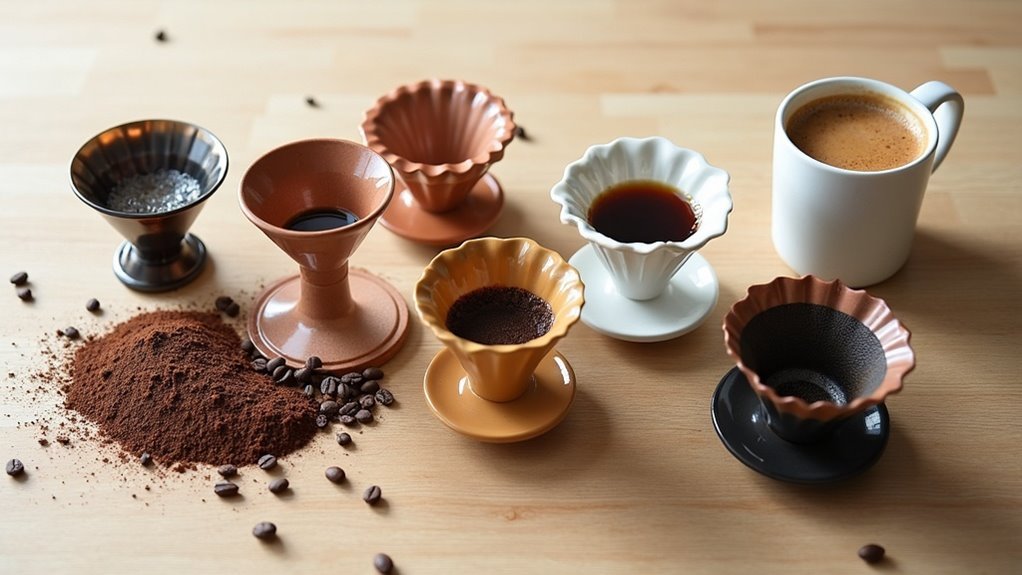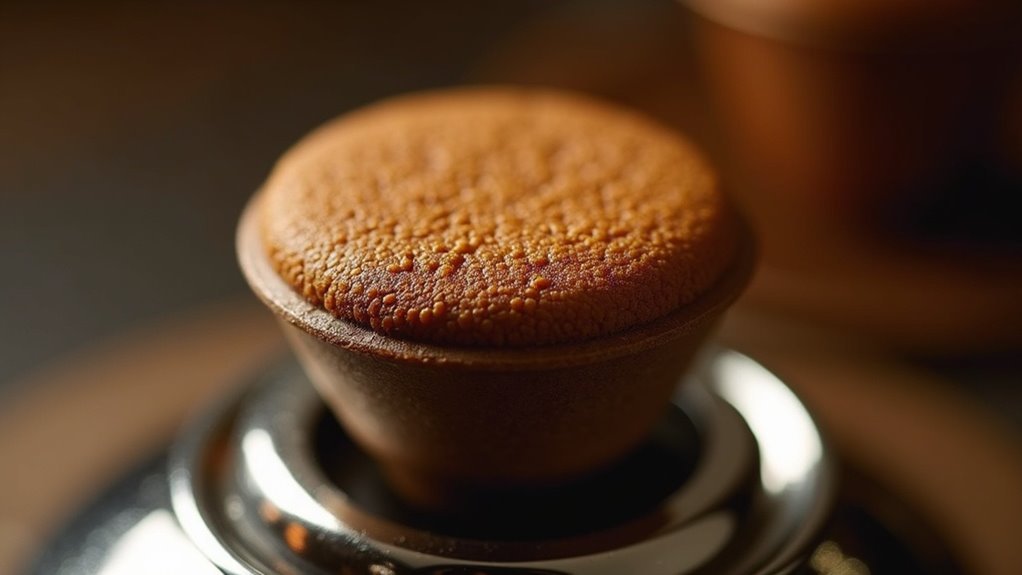
Polishing the espresso puck enhances its visual appeal and can improve water flow during extraction. It smooths out ridges, resulting in a flatter surface that promotes even saturation. However, opinions vary on whether it affects flavor—some say polished shots taste drier and more bitter, while unpolished ones showcase fuller flavors. Balancing aesthetics and taste is essential in the world of coffee. Explore the nuances behind polishing and its impact on your espresso preparations for the best results in your coffee experience.
Key Takeaways
- Polishing enhances the appearance of the espresso puck, making it visually appealing and showcasing the barista’s skill in coffee preparation.
- A smoother puck surface promotes consistent water flow during extraction, potentially improving saturation and flavor profile of the coffee.
- Polished pucks may reduce bitterness in espresso, although this can vary based on extraction methods and the types of coffee used.
- Excessive polishing risks compromising the integrity of the puck, leading to uneven extraction and diminished flavor complexity in the final cup.
- The decision to polish should weigh aesthetic benefits against potential impacts on the quality and flavor of the espresso served.
The Purpose of Polishing the Puck
When you polish the espresso puck, you’re smoothing out those tiny ridges on the surface, which can significantly impact the extraction process.
The main goal is to create a flatter area for the water to flow over, ensuring consistent saturation and potentially enhancing the flavor profile of the shot.
Creating a flatter surface promotes consistent water flow, enhancing saturation and potentially elevating the espresso’s flavor profile.
While some enthusiasts argue that polishing can reduce bitterness, opinions in the coffee community are varied.
Experiments have shown that unpolished pucks tend to retain more water weight, averaging about 5 grams heavier than polished ones, suggesting better saturation.
However, shots made with polished pucks often display uneven extraction patterns, raising concerns about overall shot quality.
The debate surrounding the practice of polishing continues, underscoring the intricacies of brewing the perfect espresso.
Experimentation and Findings on Flavor Profiles
While some baristas swear by polishing the espresso puck, recent experiments reveal a different story regarding flavor profiles in coffee.
Unpolished shots consistently showcase fuller, fruity notes, while polished ones often end up dry and bitter. Measurements show unpolished pucks retain about 5 grams more water post-extraction, indicating better saturation.
Naked portafilter tests highlight that polished shots exhibit spiral extraction patterns, suggesting uneven extraction and inferior flavor development. The fissures and channeling in polished shots compromise their taste, whereas unpolished pucks promote a more uniform extraction.
Ultimately, maintaining puck integrity is essential for enhancing flavor and ensuring a satisfying coffee experience.
The Role of Pre-infusion Techniques
Pre-infusion techniques play a crucial role in how your espresso puck extracts flavors.
By choosing between soft and hard pre-infusion methods, you can either enhance saturation and reduce channeling or risk disrupting the coffee grounds.
Experimenting with these techniques might reveal significant differences in shot quality and overall extraction efficiency, ultimately elevating your coffee experience.
Soft vs. Hard Pre-infusion
Understanding the nuances between soft and hard pre-infusion techniques can considerably influence your espresso extraction. Here’s what you need to know:
- Soft Pre-infusion: Gradually introduces pressure, minimizing channeling and enhancing saturation of coffee grounds, resulting in a smoother flavor profile.
- Hard Pre-infusion: Applies full pressure immediately, which can risk rapid fissures in the puck and lead to uneven extraction.
- Saturation Impact: Proper pre-infusion ensures even saturation, potentially improving flavor extraction while reducing bitterness for a more balanced cup.
- Experimentation: Coffee enthusiasts and baristas should try different pre-infusion methods to observe how they impact shot quality and consistency in flavor.
Impact on Extraction Quality
Refining your pre-infusion techniques can significantly improve the extraction quality of your espresso shots.
For instance, using soft pre-infusion applies gradual pressure, which enhances saturation and reduces the likelihood of fissures in unpolished pucks.
While the impact of polishing on extraction is still largely unstudied, experimenting with different pre-infusion methods can reveal notable differences in shot quality.
Observations of uneven extraction in polished shots indicate that pre-infusion may help mitigate negative effects on water saturation.
As a barista, testing various pre-infusion strategies with both polished and unpolished pucks is essential for understanding their effects on flavor profiles and extraction consistency, ultimately leading to a more satisfying brewing experience.
Tamping Techniques and Their Impact
While many coffee enthusiasts focus on grind size and water temperature, the tamping technique you use can greatly impact the quality of your espresso.
Here are some key considerations for effective tamping techniques:
- Release Pressure: Always release downward pressure before spinning the tamp to ensure even compression.
- Consistency: Aim for uniform tamping pressure to maintain consistent pre-extraction weight.
- Avoid Horizontal Tamping: This can lead to uneven compression and extraction if not done precisely.
- Skip the Spin: Introducing a spin may disrupt grind distribution, causing uneven water flow during extraction.
Mastering these techniques ensures a more reliable espresso shot.
Community Engagement and Feedback on Polishing
As baristas delve into the intricacies of polishing espresso pucks, community engagement has become vital for sharing valuable insights and experiences.
Initially, responses were sparse, prompting you and fellow baristas to conduct experiments and exchange results. Ongoing discussions in forums highlight a variety of opinions on the effectiveness of polishing, with many calling for more data from different coffee shops.
Common Mistakes in Espresso Preparation
Even the most passionate coffee enthusiasts can fall into common pitfalls during espresso preparation that compromise shot quality.
To avoid subpar extraction, watch out for these mistakes:
- Rushing the process, leading to uneven extraction and overlooked steps.
- Improper distribution of coffee grounds, resulting in a flat puck that extracts inconsistently.
- Excessive polishing, which can unseat the puck and compromise its integrity.
- Careless handling of the portafilter, causing cracks that allow water to flow unevenly.
Consequences of Excessive Polishing
Excessive polishing can compromise the integrity of your espresso puck, causing it to unseat during brewing.
This disruption leads to uneven pressure distribution, increasing the risk of channeling and resulting in inconsistent flavor.
Ultimately, over-polished pucks may produce dry, bitter shots instead of the rich, balanced coffee experience you aim for.
Puck Integrity Issues
When you polish the espresso puck too much, you risk compromising its integrity, which can lead to serious extraction issues.
Here are some consequences of excessive polishing:
- Unseated Pucks: Over-polishing can unseat the puck from the portafilter, resulting in poor extraction.
- Structural Distortion: The pressure applied during polishing may distort the puck’s structure.
- Cracks Formation: Excessive polishing can create cracks, leading to unwanted channels that disrupt the flow of water.
- Diminished Flavor: Any disruption in puck integrity negatively impacts the flavor and quality of your espresso, leading to a less enjoyable cup.
To ensure the best extraction and a delicious coffee experience, maintain puck integrity by polishing with care.
Uneven Extraction Risk
While polishing your espresso puck might seem like a simple way to enhance your brew, it can inadvertently lead to uneven extraction. Excessive polishing can compromise the puck’s integrity, causing unseating and distortion.
This distortion results in an uneven surface, impacting water flow during brewing. Tests using naked portafilters reveal that polished shots often show spiral extraction patterns, indicating uneven saturation of the coffee grounds.
Additionally, the risk of channeling increases, allowing water to escape through cracks, which leads to inconsistent flavor profiles. Ultimately, unpolished pucks retain more water post-extraction, suggesting that polishing may diminish the overall quality of your espresso.