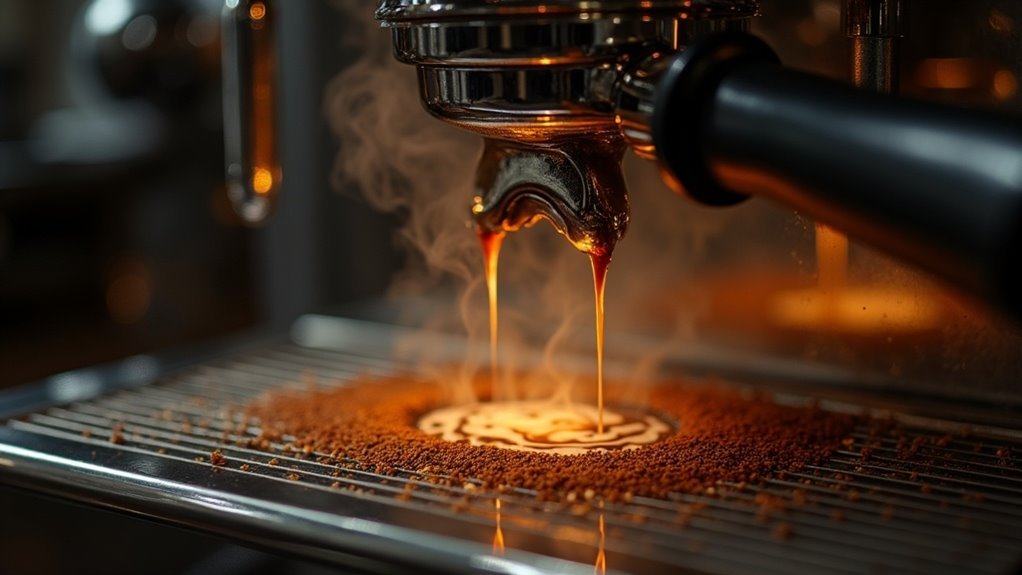
Espresso sputters during extraction mainly due to stale coffee beans, improper grind size, or uneven tamping. When coffee beans lose freshness, they can’t extract flavor properly, leading to inconsistent flow. Additionally, if your grind is too coarse or uneven, water may find a quicker path through the puck, resulting in sputtering. To enhance your espresso, it’s essential to focus on these factors and refine your brewing technique. There are many strategies to effectively prevent sputtering, ensuring a smoother extraction.
Key Takeaways
- Stale coffee beans lose flavor and can cause quick water flow, which may lead to sputtering during espresso extraction.
- An improper grind size, especially if the grind is too coarse, can result in uneven water flow and contribute to sputtering.
- If coffee grounds are distributed unevenly and tamping is inconsistent, channels can form, causing water to flow unevenly and sputter.
- Inconsistent dosing can negatively impact extraction quality; using typical doses around 18 grams can help prevent sputtering.
- Overheating during brewing or inadequate pre-heating of water can also cause sputtering during the extraction process.
Look to Your Coffee
When crafting the perfect espresso, the quality of your coffee beans plays a pivotal role. To avoid sputtering, prioritize fresh beans, ideally used within ten days of roasting.
Stale coffee loses essential flavor compounds, causing water to flow through the grounds too quickly, which leads to spraying during extraction. Adjusting your grind size based on freshness is vital; finer grinds typically enhance extraction and reduce sputtering.
Consistency in preparation, including the right dose and ensuring you use fresh beans, is essential for achieving smooth espresso pours.
Focus on these factors to enhance your coffee experience and maintain safety in preparation.
Check Out Your Recipe
When it comes to brewing espresso, precise dose measurement and consistent timing are essential.
If you don’t measure your coffee dose accurately or maintain a steady extraction time, you’ll likely encounter inconsistencies in shot quality, leading to sputtering.
Dose Measurement Importance
Understanding the significance of dose measurement is crucial for achieving a balanced espresso shot. The dose, typically around 18 grams of ground coffee, directly influences your extraction quality.
Consistency in dosing ensures that each shot maintains its rich flavor and prevents issues like sputtering or uneven flow. Variations in dose can lead to imbalanced extraction, causing undesirable results in your coffee experience.
To optimize your espresso enjoyment, carefully monitor the amount of coffee used. Remember, establishing a precise dose is important not only for enhancing flavor but also for safety, as improper measurements can compromise the entire brewing process and diminish your espresso enjoyment.
Timing Consistency Matters
Achieving timing consistency during espresso extraction is crucial for crafting a quality shot, as it directly affects flavor and texture. A standard shot should take about 30 seconds; any deviations can lead to uneven extraction, resulting in sputtering and channeling.
To maintain precise timing, weigh your coffee dose and yield output, adhering to your espresso recipe. Regularly adjust grind size in small increments to achieve the desired timing and prevent sputtering.
Keeping detailed notes on doses, yields, and extraction times will help you identify patterns and make informed adjustments, ultimately enhancing the overall quality of your espresso experience.
Adjust Your Grinder
Adjusting your grinder is essential for achieving a consistent espresso extraction, as a finer grind can help create a uniform coffee puck that minimizes sputtering.
Start with 18 grams of freshly roasted coffee for a double shot, targeting a yield of 36 grams in about 30 seconds. When modifying grind size, make incremental adjustments of ½ step finer or coarser to avoid sputtering while maintaining ideal extraction times.
After altering grinder settings, purge the grinder to eliminate any old grounds and ensure freshness.
It Could Be Channeling
Even with a properly adjusted grinder, you might still encounter sputtering during espresso extraction due to channeling.
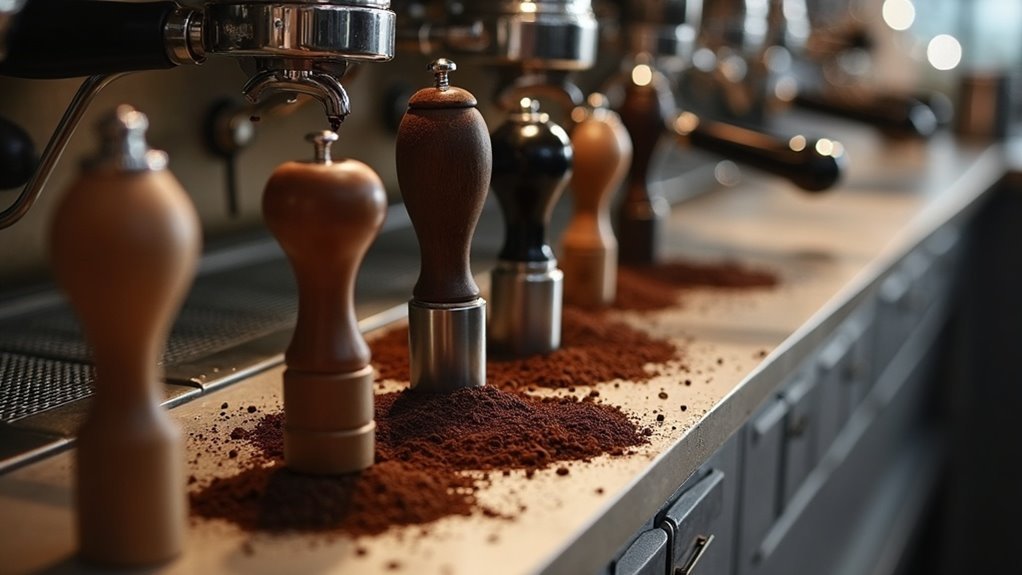
Channeling occurs when water flows unevenly through the coffee puck, resulting in jets of water escaping the filter basket. This issue often arises from uneven coffee grounds or improper tamping techniques, leading to inconsistent extraction quality.
You can identify channeling by visible holes or cracks in the spent coffee grounds, indicating preferential water paths.
To mitigate this, ensure even distribution of coffee grounds and consistent tamping pressure. Monitoring flow rate and adjusting grind size also helps prevent channeling, promoting uniform water dispersion for a perfect cup of coffee.
Brewing Techniques
When brewing espresso, employing the right techniques is essential for achieving ideal extraction and minimizing sputtering.
Pre-heating water guarantees a consistent temperature, preventing fluctuations that can cause sputtering. Maintain a medium to medium-low heat during brewing to avoid overheating, which can lead to uneven extraction.
Pre-heating water and controlling heat levels are vital for consistent espresso extraction and minimizing sputtering.
Ensure coffee grounds aren’t tamped too tightly; over-compression obstructs water flow, resulting in sputtering. Select a burner size that matches the pot’s bottom for even heat distribution, and check for clogs in the moka pot’s filter.
Regular cleaning and maintenance can greatly enhance performance and reduce sputtering, optimizing your brewing time for the perfect espresso.
Enjoy your coffee journey!
Maintenance Tips
To maintain ideal performance and prevent sputtering during espresso extraction, it’s crucial to implement a rigorous cleaning routine for your moka pot.
Regularly clean all components, as coffee oils and residues can impede flow across the entire bed, leading to sputtering.
Inspect and replace gaskets and filters when worn, ensuring proper sealing and even pressure.
Tightening the pot securely helps prevent leaks, which disrupt water flow.
Additionally, check for leaks around the downtube and coffee holder.
If applicable, consider oiling the gasket for a better fit, enhancing the seal and further reducing the risk of sputtering during espresso extraction.
Enjoy your coffee experience to the fullest with these maintenance tips!
User Experiences and Solutions
While many coffee enthusiasts encounter sputtering during espresso extraction, sharing experiences and solutions has proven invaluable in addressing this issue.
Numerous users have reported that tightening the moka pot firmly can significantly reduce sputtering, ensuring a tight seal at the group head.
It’s important to note that new gaskets often require a breaking-in period for optimal performance, which can help minimize sputtering.
Additionally, for some users, replacing the metal funnel has resolved persistent issues, leading to enhanced brewing consistency.
Regular cleaning of all components, especially the cup seal, is essential to prevent leaks and maintain the quality of your brew.
Engaging in community discussions allows coffee lovers to share successful techniques, collectively improving their espresso extraction experiences.