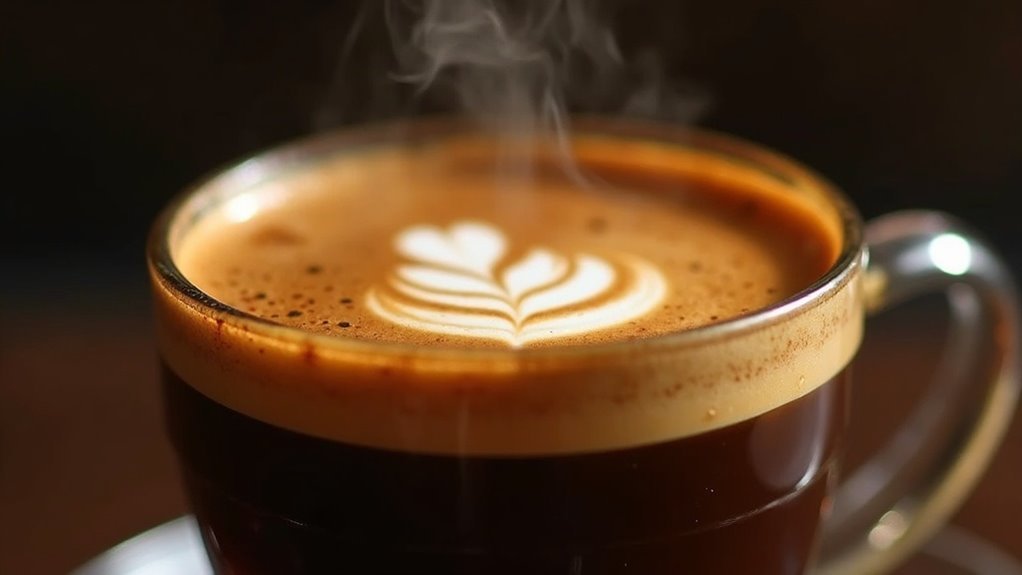
Crema disappears primarily due to the dissipation of carbon dioxide (CO₂) and the breakdown of emulsified oils in your coffee. As CO₂ escapes, the crema’s structural integrity weakens, leading to a thinner layer. Rapid cooling further exacerbates this issue, altering surface tension and promoting evaporation. Larger bubbles lose stability, resulting in quicker bursting, while smaller bubbles provide more resilience. Understanding these interactions can enhance your coffee experience, especially when it comes to maintaining that perfect crema. There’s much more to discover about achieving the ideal crema in your favorite coffee brew.
Key Takeaways
- Crema disappears because carbon dioxide (CO₂) dissipates, weakening its structure and texture.
- After espresso extraction, emulsified oils begin to break down, which compromises the integrity and volume of the crema.
- When the espresso shot cools, the crema thins out due to changes in surface tension and the separation of oils.
- Exposure to air causes evaporation, which alters surface tension and leads to larger bubbles bursting, destabilizing the crema.
- The size and stability of the bubbles in the crema are crucial; smaller bubbles help maintain its longevity, while larger bubbles contribute to quicker collapse.
Dissipation of Carbon Dioxide (CO₂)
As the espresso shot is pulled, carbon dioxide (CO₂) is released under high pressure, contributing to the rich crema that forms atop your coffee.
This pressure, generated by the espresso machine, traps CO₂ within tiny bubbles, creating a foam-like texture that enhances your coffee experience.
However, once extraction is complete, these bubbles begin to escape, leading to the gradual dissipation of CO₂.
Once extraction is complete, the bubbles release CO₂, causing a gradual thinning of the crema.
Environmental factors, like temperature and air exposure, can accelerate this process, causing your crema to thin and eventually vanish within minutes.
As CO₂ escapes, the structural integrity of the crema weakens, resulting in its collapse and disappearance, which can diminish the overall enjoyment of your cup of coffee.
Emulsified Oils Breaking Down
When the pressure of the espresso machine is released, the emulsified oils that contribute to the rich texture and flavor of the crema begin to separate from the liquid.
This breakdown of crema compromises its structural integrity, resulting in a thinner layer atop your espresso. Key factors include:
- The rapid separation of emulsified coffee oils.
- Instability of bubbles that previously supported the crema.
- A decrease in overall volume, diminishing the coffee experience.
As these emulsified oils break down, you’ll notice a less vibrant crema, which impacts both the visual appeal and sensory qualities of your espresso.
Enjoying a well-crafted espresso means appreciating the importance of maintaining those emulsified oils for the perfect crema.
Cooling of the Espresso Shot
As your espresso shot cools, the temperature significantly affects the stability of the crema.
You’ll observe that the breakdown of emulsified oils and the release of CO₂ bubbles result in a thinner texture and a quick decline in visual appeal.
Understanding how cooling alters the surface tension of the crema is essential for maintaining its quality for an extended period.
Temperature Effects on Crema
Maintaining the perfect temperature of espresso is crucial for preserving the quality of crema, as higher temperatures promote the emulsion of gases and oils necessary for its stability.
When espresso cools, emulsification begins to break down, leading to quicker crema dissipation.
- Ideal brewing temperatures range from 185-198°F.
- Lower temperatures reduce gas suspension, compromising crema’s structural integrity.
- Consistent temperature throughout extraction is essential for crema longevity.
To enjoy rich crema in your coffee, make sure your espresso remains within the perfect temperature range, as it directly affects the overall quality and experience of your beverage.
Rapid Cooling Consequences
Although you may savor the rich flavors of a freshly brewed espresso shot, rapid cooling significantly undermines the integrity of its crema.
As the temperature drops below the ideal range of 185-198 degrees Fahrenheit, the emulsion of gases, oils, and water becomes unstable, causing the crema to dissipate quickly.
The CO₂ bubbles within the crema lose their structural integrity, resulting in a thinner layer within minutes.
This cooling accelerates the separation of emulsified oils, diminishing both the visual appeal and textural quality of your espresso.
Ultimately, the creamy texture and stability of the crema suffer, compromising your overall espresso experience.
Surface Tension and Evaporation
When crema forms on the surface of your espresso, it consists of tiny bubbles that create a delicate structure, but this stability is highly susceptible to environmental changes, particularly evaporation.
As air exposure increases, evaporation alters the surface tension of the crema, leading to bubble rupture. This process can be influenced by:
- The size of the bubbles: larger bubbles burst more easily.
- Temperature: higher temperatures accelerate evaporation.
- Humidity: drier air increases evaporation rates.
As bubbles pop and surface tension decreases, the structural integrity of the crema diminishes, resulting in its eventual collapse and disappearance.
Enjoying a fresh cup of espresso is all about preserving that beautiful crema—so be mindful of your brewing conditions!
Size and Stability of the Bubbles
The stability of crema bubbles in coffee greatly depends on their size, as smaller bubbles create a more resilient structure that enhances the overall texture of your espresso.
Larger bubbles, while visually appealing, compromise crema stability, leading to quicker bursting and a thinner layer on the espresso surface. As these larger bubbles pop, the volume of crema diminishes, affecting your espresso’s mouthfeel.
Environmental factors like temperature and evaporation alter surface tension, further impacting bubble stability. By maintaining ideal brewing conditions, you can prolong the presence of these essential bubbles, ensuring a rich, velvety crema that elevates your coffee experience.
Interaction With the Espresso Liquids
As you observe the crema in your espresso, take a moment to appreciate the intricate chemistry at play.
The liquid emulsion of oils and gases within the espresso is delicate and can break down over time. Temperature is a crucial factor in this process; as your espresso cools, the stability of the emulsified oils and gases diminishes, leading to a faster disappearance of that beautiful crema.
Liquid Emulsion Breakdown
Although crema initially forms a stable emulsion of coffee oils and gases during the extraction of espresso, its integrity quickly diminishes once the pressure is released.
This breakdown occurs due to several factors:
- The cooling of liquid espresso reduces the stabilization of CO₂ and oils.
- Exposure to air alters surface tension, causing volatile compounds to evaporate.
- Larger bubbles within the crema are less stable, leading to quicker popping.
As these elements interact, the structural integrity of the crema deteriorates, resulting in a rapid loss of volume and texture, ultimately affecting your espresso experience.
Understanding this breakdown can enhance your appreciation of your brew.
Temperature Influence on Stability
Temperature plays a pivotal role in maintaining the stability of crema in espresso, significantly affecting its longevity and quality. Brewing espresso at temperatures between 185-198 degrees Fahrenheit is crucial for preserving the emulsion of gases and oils that are fundamental for stable crema formation.
As the espresso shot cools, heat loss accelerates the breakdown of emulsified oils and gas suspension, leading to a rapid thinning of the crema. Lower temperatures compromise the structural integrity of the tiny bubbles in crema, increasing their likelihood of collapse.
Consistent brewing temperatures are essential; significant fluctuations can destabilize the crema, ultimately diminishing the overall quality of your espresso shot. Therefore, prioritizing temperature control is critical for achieving ideal crema preservation and ensuring a delicious coffee experience.