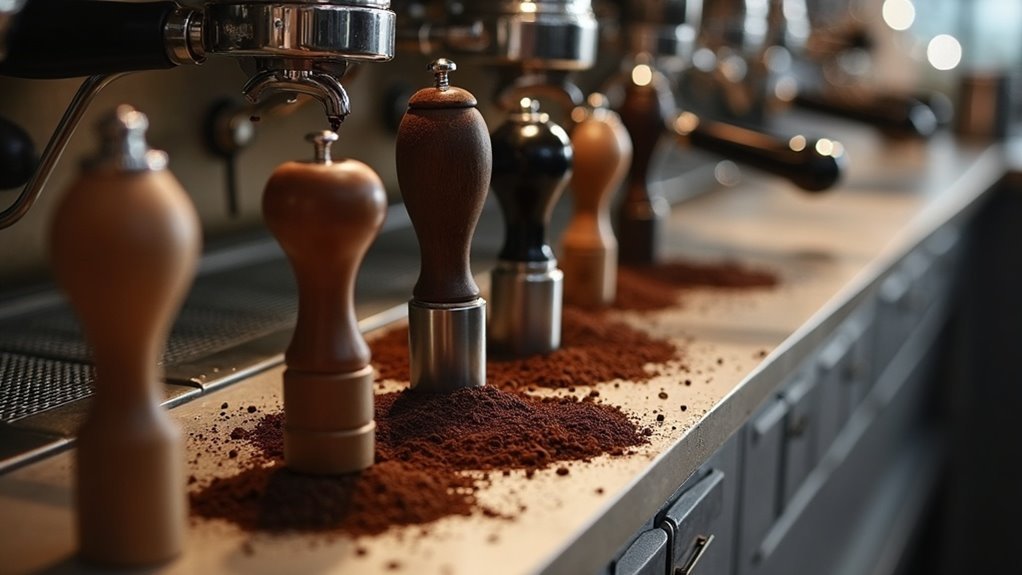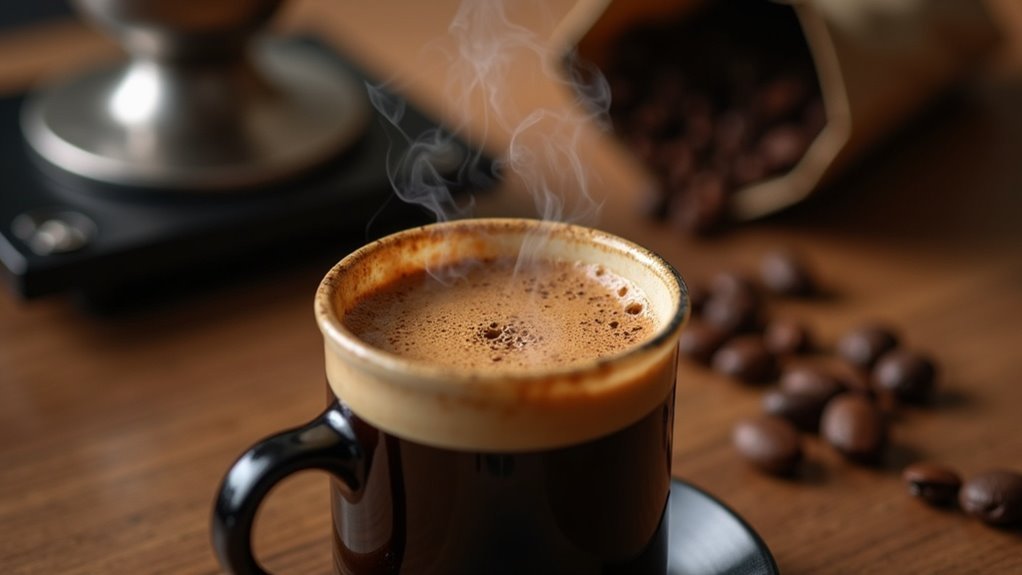
Coffee under-extracts when insufficient soluble flavors are released, resulting in a sour and thin drink. This can happen due to a coarse grind size, low water temperature (below 195°F), short brewing times, or an inadequate coffee-to-water ratio. Each of these factors limits the extraction of flavors, leaving your coffee tasting unbalanced. Understanding these elements is essential for brewing better coffee. To enhance extraction for a richer flavor experience, consider adjusting your grind size, water temperature, brewing time, and coffee-to-water ratio.
Key Takeaways
- Under-extraction happens when not enough soluble flavors are extracted from the coffee, resulting in a sour and thin taste.
- Using a coarse grind size limits the surface area needed for effective flavor extraction from the coffee grounds.
- Brewing with water temperatures below 195°F fails to efficiently dissolve the rich flavors of coffee.
- Short brew times do not provide sufficient contact between the coffee and water for proper flavor extraction.
- An inadequate coffee-to-water ratio restricts the amount of soluble solids that can be extracted into the brew, affecting the overall taste.
Understanding Under-Extraction in Coffee
When brewing coffee, under-extraction can significantly affect the flavor profile, resulting in a cup that tastes sour and thin. This phenomenon occurs when not enough soluble flavors are extracted from the coffee grounds, leading to high acidity and a lack of sweetness.
Key factors that influence extraction include grind size, water temperature, brewing time, and the coffee-to-water ratio. A coarse grind size can hinder extraction, while low water temperatures may prevent the ideal release of flavors.
To achieve a well-balanced cup of coffee, aim for an extraction level above the Specialty Coffee Association’s recommended threshold of 18%. By adjusting these variables, you can enhance the overall quality and satisfaction of your coffee experience.
Common Causes of Under-Extraction
Under-extraction can stem from several common factors that impede the coffee extraction process. If you’re experiencing under-extracted coffee, consider these aspects:
| Factor | Impact on Extraction | Recommendation |
|---|---|---|
| Grind Size | Coarse grounds limit surface area | Use a finer grind |
| Water Temperature | Below 195°F fails to dissolve flavors | Brew with hot water |
| Brew Time | Short times prevent adequate extraction | Adjust based on brewing method |
| Coffee-to-Water Ratio | Too little coffee limits soluble solids | Ensure an ideal coffee ratio |
Identifying the Flavor Profile of Under-Extracted Coffee
To fully appreciate the nuances of coffee, understanding the distinct flavor profile of under-extracted brews is essential.
Under-extracted coffee often presents an aggressive sourness that overshadows any potential sweetness, resulting in a sharp, unbalanced experience. This lack of sweetness leads to a thin mouthfeel, reducing overall satisfaction.
Under-extracted coffee delivers a sharp sourness that masks sweetness, creating a thin, unbalanced mouthfeel.
Additionally, you may notice an abrupt finish, lacking the pleasant linger that characterizes well-extracted coffee. Salty notes can also indicate incomplete extraction from the coffee grounds.
To enhance the flavor profile, consider adjusting the grind size, water temperature, and brew time, as these factors directly influence extraction quality and the final flavor experience.
Techniques to Improve Coffee Extraction
Understanding the flavor profile of under-extracted coffee highlights the need for effective techniques to enhance extraction.
Start by adjusting the grind size; finer grounds increase the coffee bean’s surface area, allowing for better flavor extraction during brewing.
Maintain a water temperature between 195°F and 205°F, as higher temperatures promote efficient extraction.
Extend your brew time—2-3 minutes for pour-over methods and up to 5 minutes for immersion brewing.
Additionally, use a coffee-to-water ratio of 1g of coffee for every 15-18g of water to prevent under-extraction.
Experimenting with these variables helps you identify the ideal conditions for achieving a rich and flavorful cup of coffee.
The Importance of Balanced Extraction for Flavor
While you may not realize it, balanced extraction is crucial for unlocking the full potential of your coffee’s flavor profile. Aiming for an extraction rate of 18-22 percent helps you avoid under-extraction, which can lead to unpleasant sourness and a lack of sweetness. The extraction process depends on several factors, including grind size, water temperature, and brew time, all of which require precise adjustments.
| Factor | Impact on Extraction | Desired Outcome |
|---|---|---|
| Grind Size | Affects surface area | Optimal soluble solids |
| Water Temperature | Influences solubility | Enhanced flavor clarity |
| Brew Time | Determines contact time | Balanced acidity and sweetness |
Achieving this balance results in a complex and enjoyable cup of coffee.