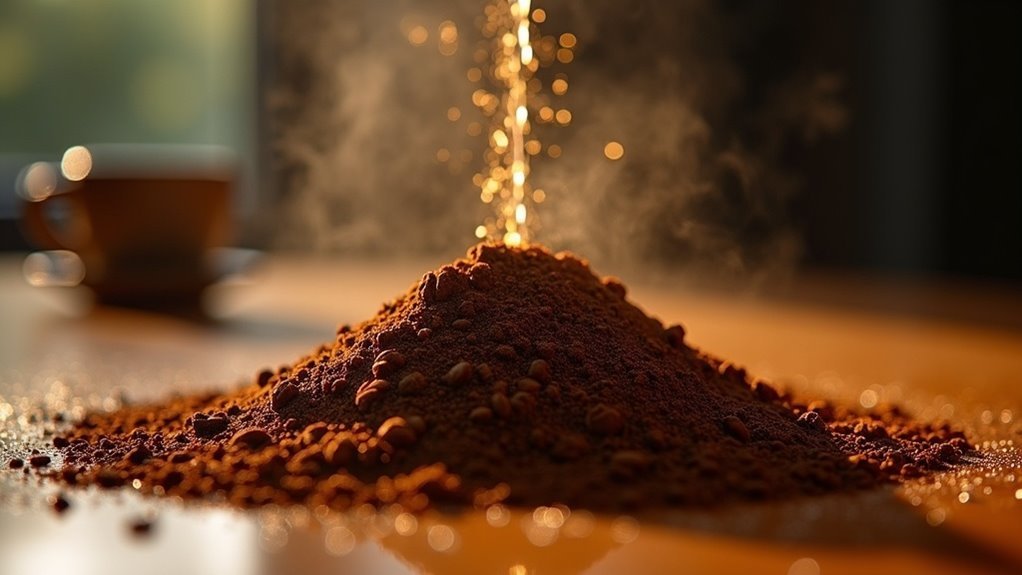
Fresh coffee beans bloom more because they contain a higher concentration of carbon dioxide (CO2) that gets released when you add water. This vigorous release creates visible foaming, enhancing both the brewing process and the flavor of your favorite coffee. Stale beans, on the other hand, lose much of their CO2, resulting in minimal bloom. Grinding fresh beans right before brewing maximizes their surface area, leading to a richer flavor experience in every cup. Explore how different brewing techniques can further enhance your coffee bloom and elevate your coffee enjoyment.
Key Takeaways
- Fresh coffee beans retain higher levels of carbon dioxide (CO2), which results in a more pronounced bloom during brewing.
- Grinding fresh beans just before brewing maximizes their surface area, enhancing gas release and promoting a more vigorous bloom.
- Fresh beans undergo active degassing, with CO2 release peaking within hours of roasting, leading to an impressive blooming effect.
- In contrast, stale coffee loses CO2 due to exposure to air, resulting in minimal bloom and diminished flavor extraction.
- The degree of roast also influences bloom; lighter roasts tend to benefit more from freshness, while darker roasts can still exhibit bloom due to the CO2 that is retained.
Understanding Coffee Bloom
When you brew coffee, understanding coffee bloom is essential to maximizing flavor extraction.
Coffee bloom occurs when fresh coffee grounds release carbon dioxide upon contact with water, creating visible foaming. Fresh coffee beans retain more CO2, resulting in a vigorous bloom that enhances the brewing process. This release helps reorganize the coffee bed, promoting even extraction and richer flavor.
In contrast, stale coffee produces minimal bloom, indicating a loss of freshness and flavor. Properly stored, fresh beans can bloom effectively for up to two weeks post-roasting, with the most significant gas release happening within hours of roasting.
The Role of Freshness in Blooming
Freshness plays a pivotal role in the blooming process of coffee, directly influencing flavor extraction and overall brewing quality.
Fresh coffee beans contain a higher concentration of carbon dioxide, which is released during brewing, resulting in a pronounced bloom. When you grind fresh coffee just before brewing, you maximize surface area, accelerating gas release and enhancing the bloom.
In contrast, stale coffee loses CO2 due to prolonged air exposure, diminishing its blooming potential.
Especially in light to medium roasts, the freshness of your coffee beans is essential for achieving an impressive visual and sensory bloom, indicating ideal flavor extraction during brewing.
Degassing and Its Impact on Bloom
Although many factors contribute to the blooming of coffee, degassing stands out as a critical process that profoundly affects the final brew.
Freshly roasted coffee beans release carbon dioxide (CO2) during degassing, which peaks within the first four hours after roasting. This release enhances the bloom when brewing, creating rapid bubbling and foaming.
Grinding the beans increases their surface area, further accelerating CO2 release. In contrast, stale coffee exhibits minimal bloom due to reduced gas.
Additionally, darker roasts tend to retain more CO2, resulting in a stronger bloom compared to lighter roasts, making freshness essential for an ideal coffee experience.
Brewing Techniques for Optimal Bloom
To achieve peak bloom during brewing, it’s essential to focus on both technique and timing. Start with a coffee-to-water ratio of 1:2, ensuring the coffee is ground evenly. Pour water slowly and evenly to saturate all grounds, preventing dry spots.
Allow 30 to 40 seconds for blooming coffee, facilitating the release of gas. Consider stirring gently to enhance this process, but keep in mind that some prefer to avoid stirring for even saturation. Adjust your bloom duration based on the roast degree; fresher roasts may need longer to effectively degas.
Proper coffee storage also impacts this delicate balance, ensuring that your coffee maintains its optimal flavor and aroma for the best brewing experience.
Factors Influencing Coffee Bloom
The freshness of your coffee beans plays a crucial role in how well they bloom during brewing.
When you grind fresh beans, the increased surface area facilitates a rapid release of carbon dioxide, enhancing the bloom.
Furthermore, the grind size can influence this process, as finer grinds typically produce a more vigorous bloom compared to coarser ones.
Freshness of Beans
When you brew fresh coffee, the freshness of the beans plays a critical role in determining the bloom you experience.
Fresh coffee beans contain a higher concentration of carbon dioxide (CO2) trapped during roasting. Upon contact with water, this CO2 is released, resulting in a pronounced bloom.
The degassing process is most active in the first two weeks post-roasting, peaking within four hours.
Stale coffee, however, has diminished CO2 levels due to exposure to air, leading to minimal blooming.
Grinding fresh beans before brewing further enhances CO2 release, maximizing the bloom and optimizing flavor extraction.
Freshness is essential for a great cup of coffee.
Grind Size Impact
While experimenting with different grind sizes, you’ll quickly notice their significant impact on coffee bloom. Finer grind sizes increase the surface area, leading to a rapid release of carbon dioxide, which helps bloom your coffee more effectively.
In contrast, coarser grinds release less gas, resulting in a less pronounced bloom and potential uneven extraction during brewing. The grind size influences gas displacement; finer particles trap more gas until water permeates, enhancing the bloom.
For ideal results, adjust your grind size based on your brewing method, as a medium grind typically works best for pour-over techniques when coffee is fresh.
Maximizing Flavor Through Blooming
Maximizing flavor through blooming can transform your coffee experience into something extraordinary. When fresh coffee grounds interact with hot water, carbon dioxide is released, creating a robust foam. This blooming process allows trapped gases to escape, enhancing flavor extraction. For optimal results, aim for a 2:1 water-to-coffee ratio and let your coffee bloom for 30-40 seconds to avoid sourness. Dark roasts tend to yield a stronger bloom, enriching the depth and complexity of your brew. Grinding your beans just before brewing accelerates gas release, resulting in a richer flavor profile.
| Blooming Factor | Impact on Flavor |
|---|---|
| Fresh Coffee Beans | More effective CO2 release |
| 2:1 Water-to-Coffee | Ideal blooming ratio |
| 30-40 Seconds | Reduces sourness |
| Dark Roasts | Enhances depth |
| Immediate Grinding | Pronounced bloom |