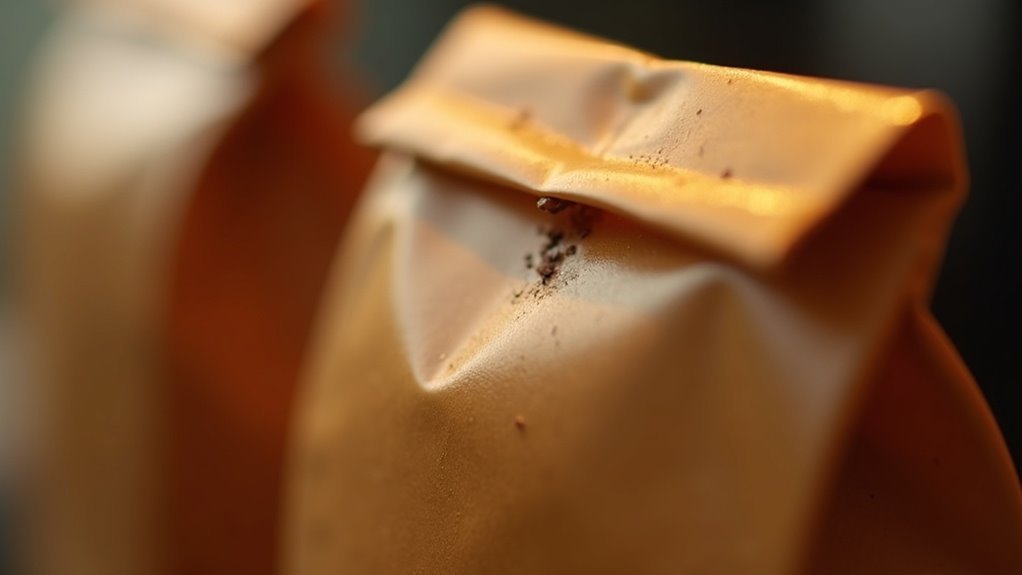
Coffee bags puff up because freshly roasted beans release carbon dioxide (CO2) as they degas. This natural process is a key indicator of the coffee’s freshness and quality. When the beans are sealed in airtight packaging, the buildup of gas creates internal pressure, leading to the bag puffing up. To manage this, one-way valves are often incorporated into the packaging, allowing CO2 to escape while keeping oxygen out and preventing staleness. Understanding this process can greatly enhance your coffee experience, and there’s much more to learn about how packaging plays a vital role in preserving that freshness.
Key Takeaways
- Coffee bags puff up because of the carbon dioxide (CO2) that accumulates during the degassing process of freshly roasted coffee beans.
- When coffee is sealed in packaging, the gases are trapped, creating internal pressure and causing the bag to puff up since there’s no way for the gas to escape.
- Many coffee bags are equipped with one-way valves that allow CO2 to escape while preventing oxygen from entering, which helps maintain the coffee’s freshness and prevents the bag from bursting.
- Darker roasted coffee beans tend to produce more gas, resulting in a puffier bag compared to those containing lighter roasts.
- A puffy coffee bag not only indicates the freshness of the coffee inside but also serves as a visual signal of its quality for consumers.
The Science Behind Coffee Degassing
When you open a bag of freshly roasted coffee, you might notice it puffing up, and that’s all thanks to a fascinating process called degassing.
During the first few days after roasting, roasted coffee beans release carbon dioxide (CO2), causing gases to accumulate inside the packaging. This natural phenomenon doesn’t indicate spoilage; instead, it enhances flavor and aroma, making your coffee experience even more delightful.
Factors like bean size and roast type affect the rate of degassing, with darker roasts producing more gas.
To maintain the freshness of your coffee, proper packaging is essential. Many bags are equipped with a one-way valve that allows CO2 to escape while preventing external air from entering, ensuring that every cup you brew is as flavorful as possible.
The Role of One-Way Valves in Packaging
Although they may go unnoticed at first glance, one-way valves play a crucial role in preserving the freshness of your coffee.
These valves allow carbon dioxide released during the degassing process to escape while blocking oxygen from entering the coffee bags. This prevents staling and maintains the quality of your beans.
One-way valves enable carbon dioxide to escape while preventing oxygen from entering, preserving your coffee’s freshness and quality.
With one-way valves, packaging becomes efficient, as they manage gas release for up to 48 hours post-roasting.
This essential design keeps your coffee fresh during storage and transit, ensuring that you enjoy the best flavor and aroma each time you brew a cup.
Causes of Puffiness in Coffee Bags
When you open a bag of freshly roasted coffee, you might notice it’s puffed up, which is all about the degassing process.
As the beans release carbon dioxide, that gas creates internal pressure, especially if there’s no one-way valve to let it escape.
Understanding this can help you appreciate why some coffee bags puff more than others, depending on the roast type and packaging used.
Degassing Process Explained
As freshly roasted coffee beans release carbon dioxide (CO2) during the natural degassing process, you may notice that your coffee bags puff up considerably. This puffiness occurs as CO2 accumulates, similar to a balloon inflating. Various factors such as bean size, roasting type, and environmental conditions can influence how much gas is released. Generally, darker roasts tend to produce more CO2, resulting in greater puffiness.
| Factor | Impact on Degassing |
|---|---|
| Bean Size | Affects the rate of gas release |
| Roasting Type | Darker roasts emit more CO2 |
| Environmental Conditions | Influences the amount of gas accumulation |
| Packaging Design | One-way valve allows gas to escape while preventing air entry |
Even without a one-way valve, the quality of the coffee remains well-preserved.
Valve Functionality in Packaging
To understand how valve functionality impacts the puffiness of coffee bags, it’s vital to recognize the role of one-way valves in packaging coffee.
These valves allow carbon dioxide to escape during the degassing process, ensuring your coffee remains fresh and flavorful. Without valves, pressure can build up, potentially compromising the quality of your brew.
The puffiness you see often indicates fresh coffee beans, which typically degas for at least 48 hours post-roasting.
While some smaller coffee bags might forgo valves to reduce waste, they still manage to maintain the quality of the coffee inside.
This balance between valve functionality and environmental goals is essential for preserving the freshness of your favorite coffee.
Freshness vs. Bag Appearance
While many coffee lovers might associate a puffed-up bag with freshness, it’s essential to recognize that the appearance of the bag doesn’t always indicate the quality of the coffee inside.
The puffiness occurs as roasted coffee beans release carbon dioxide during the degassing process, and both puffy and vacuum-packed bags can contain high-quality beans. Freshly roasted coffee typically degasses for at least 48 hours, leading to that noticeable puffiness.
On the other hand, deflated bags may suggest older beans that lack freshness. Packaging with a one-way valve helps maintain the coffee’s freshness by allowing gas to escape while preventing air from entering, ensuring your coffee remains safe and flavorful.
Impact of Valve Removal on Coffee Quality
Removing the one-way valve from coffee bags might seem like it could jeopardize the quality of the beans inside, but research shows otherwise. Here are three key points:
- Valve removal in 250g bags doesn’t compromise safety or flavor, ensuring freshness over two years.
- Larger bags still need valves due to higher gas release from degassing.
- Valveless bags support environmental goals while maintaining flavor development.
Ultimately, degassing remains essential for roasted coffee beans, even in valveless packaging.
Embrace this change, knowing that your coffee’s quality and taste can still shine through, aligning with both safety and sustainability.
Enjoy your brew, knowing that innovation and tradition can coexist beautifully in every cup!
Customer Concerns and Clarifications
Understanding the nuances of coffee packaging can help clarify some common customer concerns.
Many coffee lovers wonder why some coffee bags are puffy while others appear vacuum-packed. This puffiness results from carbon dioxide released during the degassing process of freshly roasted beans. One-way valves in these bags allow CO2 to escape, sealing in coffee freshness by preventing external air from entering.
It’s important to note that the bag appearance doesn’t reflect the quality of coffee inside; both puffy and vacuum-packed bags can contain equally fresh coffee.
These packaging mechanisms enhance your appreciation for coffee storage and address numerous customer inquiries about the best ways to preserve coffee freshness.
Embracing the Puff: A Quality Indicator
When you notice a coffee bag puffing up, it’s more than just an interesting visual; it’s a powerful indicator of freshness.
This puffiness signifies that the coffee beans inside are still releasing carbon dioxide, which ensures a superior flavor experience.
Embracing this visual cue not only assures the quality of your coffee but also elevates your brewing ritual.
Visual Freshness Indicator
As you delve into the rich world of coffee, the puffiness of a bag serves as a delightful visual cue for freshness. This inflation indicates that the roasted coffee beans are still degassing and releasing carbon dioxide.
Here are three key points to consider:
- Freshness: An inflated bag signifies that the beans have been roasted recently, which enhances your brewing experience.
- Quality Packaging: One-way valves are designed to allow CO2 to escape while keeping oxygen out, preserving the ideal flavor profiles of your coffee.
- Visual Indicator: Recognizing this puffiness helps you appreciate the quality of the coffee inside, ensuring a truly satisfying cup.
Quality Assurance Mechanism
The puffiness of coffee bags isn’t just a quirky feature; it’s an essential quality assurance mechanism that signifies the freshness of the beans inside.
This inflation indicates that carbon dioxide is still being released during the degassing process, which typically lasts at least 48 hours post-roast.
The one-way valve in coffee packaging allows this gas to escape while blocking air and moisture, thereby preserving quality.
So, when you see a puffy bag, celebrate it as a visual cue of peak freshness.
This ensures that your brewing experience is enhanced, leading to the rich flavors you crave from your coffee.