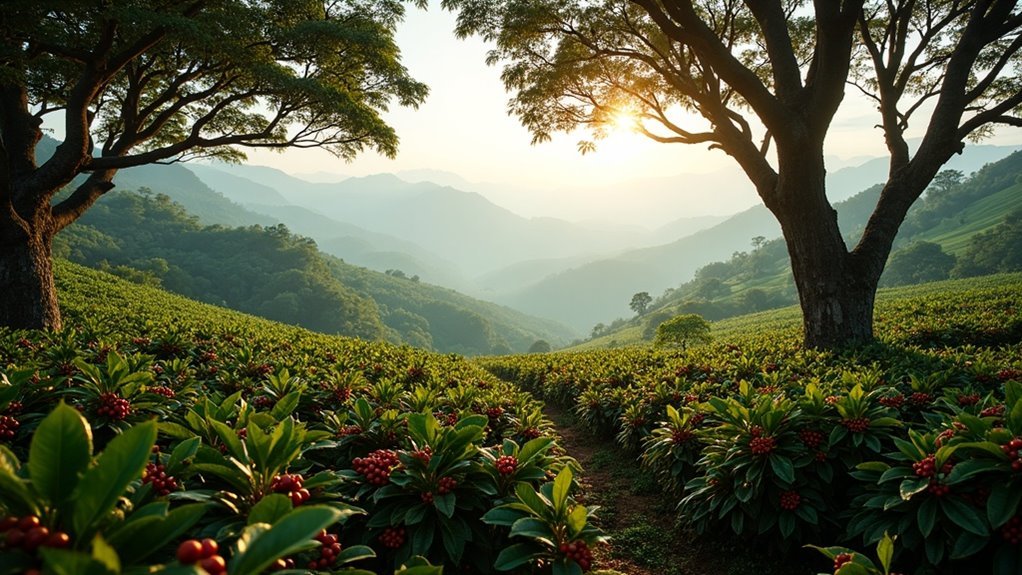
Sumatran coffee grows primarily in the lush, volcanic highlands of Indonesia, particularly in regions like the Gayo Highlands, Mandheling, and Lintong. These areas provide the perfect environment for cultivating Arabica coffee, resulting in rich, earthy flavors and clean acidity. The unique climate and fertile soil contribute to the complex profiles that make Sumatran coffee truly exceptional. There’s a fascinating story behind its distinct taste and production methods that coffee enthusiasts are sure to find intriguing.
Key Takeaways
- Sumatran coffee primarily grows in regions such as the Gayo Highlands, Mandheling, Lintong, and Aceh, each contributing to its unique flavor profile.
- The Gayo Highlands are renowned for their wet-hulling process, which enhances the coffee’s rich, earthy flavors.
- Mandheling and Lintong, located near Lake Toba, produce coffee with complex flavor profiles that coffee enthusiasts appreciate.
- Aceh is distinguished for its unique aged coffee varieties, offering depth and complexity that captivates the palate.
- The cultivation of coffee thrives in Sumatran volcanic soil and humid conditions, creating an ideal environment for high-quality Arabica coffee.
The Heart of Sumatran Coffee: Key Growing Regions
When you think about Sumatran coffee, it’s essential to recognize the key growing regions that shape its unique flavors.
The Gayo Highlands, known for their wet-hulling process, produce Arabica coffee with rich, earthy flavors.
The Gayo Highlands produce rich, earthy Arabica coffee through their distinctive wet-hulling process.
Meanwhile, Mandheling and Lintong, near Lake Toba, offer complex profiles with clean acidity, enhancing coffee production in these areas.
Aceh stands out for its unique aged coffee, where beans mature to develop depth and complexity.
Each region contributes distinct characteristics, making Sumatran coffee a mesmerizing choice for coffee enthusiasts seeking diverse taste experiences while ensuring quality and safety in their selections.
The Impact of Climate and Soil on Coffee Quality
While exploring the world of Sumatran coffee, it’s essential to understand how climate and soil significantly influence its quality. Here’s how these factors come together:
- Volcanic Soil: The nutrient-rich volcanic soil of Sumatra enhances the quality of the coffee beans and contributes to their unique flavors.
- Humid Climate: The region’s consistent rainfall and sunlight create ideal conditions for the growth of arabica coffee.
- Elevation: Higher elevations, such as those found in the Gayo region, slow the maturation of coffee cherries, allowing for the development of complex flavors.
- Wet Processing: This method, shaped by the region’s soil and climate, results in coffee that’s low in acidity and has a full-bodied taste.
Farmers skillfully harness these elements to cultivate exceptional coffee beans, making Sumatran coffee stand out in the global market.
Unique Processing Techniques: The Wet Hulling Method
Although many coffee-producing regions utilize various processing methods, the wet hulling technique, or “Giling Basah,” stands out as a hallmark of Sumatran coffee.
This unique method involves removing the coffee cherry’s skin while the beans still retain about 40% moisture. For farmers in Sumatra, this accelerated drying time is well-suited to the humid climate, resulting in an earthy flavor profile with rich and complex notes.
Wet hulling also leads to lower acidity, providing a smoother, full-bodied experience. This technique isn’t widely replicated, which helps ensure that Sumatran coffee maintains its distinctive identity in Indonesia’s diverse coffee landscape.
The Role of Small Farmers in Coffee Production
The unique processing techniques like wet hulling contribute to the distinctive profile of Sumatran coffee, but it’s the small farmers who are the backbone of this industry. Approximately 90% of Sumatran coffee is produced by smallholder farmers, typically family-run.
Here’s why they matter in the world of coffee:
- High altitudes enhance the unique flavor of Sumatran coffee, making it sought after by coffee enthusiasts.
- Community-based farming fosters collaboration and resource sharing, strengthening the local coffee economy.
- Women’s roles are essential in planting, harvesting, and transporting coffee, highlighting their contribution to the coffee supply chain.
- Fairtrade cooperatives like Ara Cahayani Gayo support over 1,800 farmers in Aceh, promoting sustainable practices and improving socioeconomic conditions within the coffee industry.
Flavor Profiles: What Makes Sumatran Coffee Unique
Sumatran coffee stands out in the global market, and its unique flavor profile is a key reason for its popularity.
Characterized by earthy, spicy, and mushroomy notes, Sumatran coffee derives its distinctive taste from the wet hulling process, which retains moisture in the beans. The fertile volcanic soil and humid climate contribute to a full-bodied profile with low acidity, making it smooth for coffee drinkers.
Regions like Lintong offer complex cedar and spice, while Aceh provides aged varieties with enhanced flavors.
These factors combine to create a unique experience that captivates coffee enthusiasts worldwide, setting Sumatran coffee apart.