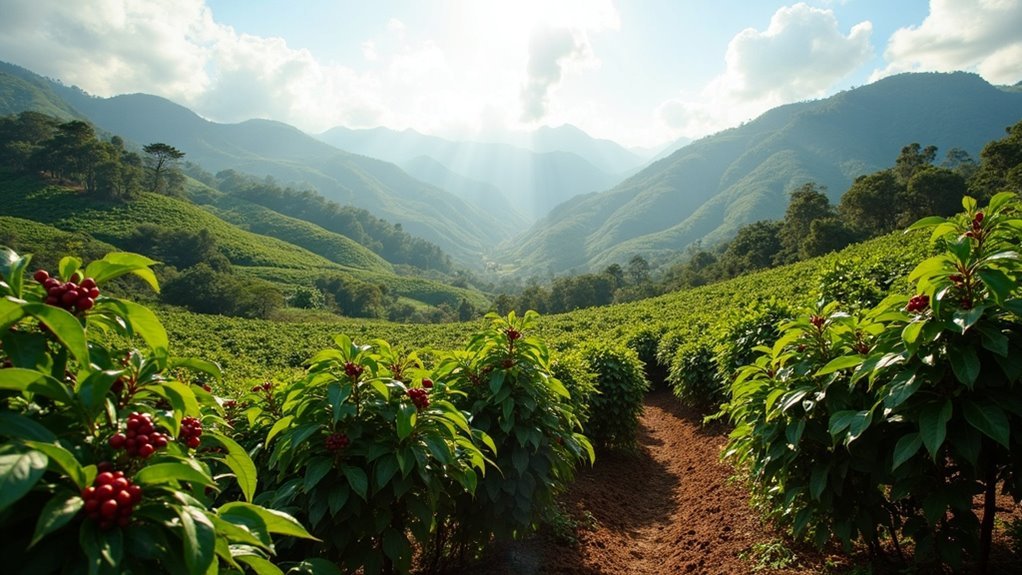
Rwandan coffee thrives in the high-altitude regions surrounding the Virunga Mountains and Lake Kivu. The rich volcanic soil, along with unique microclimates, provides perfect conditions for coffee cultivation. The flavor profiles of Rwandan coffee are known for their bright acidity and complexity, which can be attributed to the high elevations and nutrient-rich soil. Farmers utilize sustainable practices to ensure that only ripe cherries are picked, thereby enhancing the overall quality of the coffee. Explore further to uncover more about the exceptional characteristics and cultivation methods of Rwandan coffee.
Key Takeaways
- Rwandan coffee is primarily grown in the scenic Virunga Mountains and around the beautiful Lake Kivu.
- The coffee is cultivated at high altitudes, ranging from 1,200 to 1,850 meters, which contributes to its unique flavor.
- The region’s rich volcanic soil provides essential nutrients, enhancing the flavor profiles of Rwandan coffee.
- Approximately 1.2 million small farmers are dedicated to producing this exceptional coffee in Rwanda.
- The distinct microclimates within the Virunga Mountains create unique flavor characteristics, making Rwandan coffee truly special.
Major Coffee Growing Regions in Rwanda
When you explore Rwanda’s coffee landscape, you’ll discover that its major growing regions are characterized by high altitudes and fertile volcanic soil, creating ideal conditions for cultivating exceptional coffee.
The Virunga Mountains and Lake Kivu are particularly renowned for producing Rwandan coffee with unique flavor profiles. With approximately 1.2 million small farmers involved, nearly 98% of the coffee grown here is Arabica, primarily the Bourbon varieties.
The coffee harvest occurs twice a year, featuring hand-picked cherries processed at around 300 washing stations. Each region offers distinct taste experiences, ranging from sweet white chocolate to intense fruit and caramel notes, making Rwandan coffee a delightful choice for coffee enthusiasts.
Altitude and Climate Conditions
When you consider Rwandan coffee, the altitude and climate conditions play an essential role in its unique flavor.
Grown between 1,200 and 1,850 meters, the high altitude enhances the beans’ complexity, while the nutrient-rich volcanic soil and consistent rainfall create an ideal environment for growth.
These factors, combined with the specific climate, result in the exceptional qualities of Rwandan coffee, particularly the beloved Red Bourbon variety.
The combination of altitude and climate not only influences the taste but also the overall quality of the coffee, making it a sought-after choice for coffee enthusiasts around the world.
Ideal Growing Altitude
The ideal growing altitude for Rwandan coffee, which ranges from 1,200 to 1,850 meters above sea level, plays a pivotal role in shaping its flavor profile and overall quality. High altitudes provide a distinct environment that enhances flavor complexity, ensuring that every sip is a delightful experience.
| Altitude Range (m) | Flavor Characteristics | Benefits |
|---|---|---|
| 1,200 – 1,400 | Bright acidity | Rich volcanic soil |
| 1,401 – 1,600 | Fruity notes | Optimal cherry ripening |
| 1,601 – 1,850 | Chocolate undertones | Superior quality |
This synergy of altitude, temperature, and soil composition ensures that you can savor vibrant and aromatic Rwandan coffee.
Climate and Rainfall
While high altitude considerably influences the flavor of Rwandan coffee, the climate and rainfall patterns are equally crucial in nurturing these beans.
Rwanda’s temperate climate, with temperatures averaging between 15°C and 20°C, is ideal for cultivating the sought-after Arabica coffee. The country experiences two distinct rainy seasons, primarily from March to May and again from September to November, ensuring that coffee plants receive the essential moisture they need for optimal growth.
This consistent rainfall, combined with the nutrient-rich volcanic soil, creates a stable environment that supports healthy coffee development. Ultimately, these favorable conditions lead to a twice-a-year harvest, resulting in the exquisite coffee Rwandan farmers take great pride in producing.
Soil Quality Factors
Rwanda’s high-altitude regions are pivotal in shaping the quality of its coffee, with elevations soaring up to 1,850 meters enhancing the beans’ complexity and flavor profile.
Here’s why soil quality is essential for coffee:
- Volcanic soil enriches the coffee with vital nutrients.
- High altitudes contribute to slower cherry maturation, resulting in unique flavors.
- The temperate climate ensures consistent rainfall, creating ideal growth conditions.
- Rwanda’s two-harvest cycle allows for the perfect ripening of cherries.
These factors significantly impact Rwanda’s coffee production, with approximately 60% classified as specialty coffee, celebrated for its bright acidity and floral notes.
Soil Composition and Fertility
When you explore Rwandan coffee, you can’t overlook the incredible benefits of volcanic soil.
This nutrient-rich composition not only enhances the flavor complexity of the beans but also supports sustainable farming practices that maintain soil fertility.
Volcanic Soil Benefits
The volcanic soil in Rwanda offers remarkable benefits for coffee cultivation, as it’s packed with essential nutrients and minerals that foster robust plant growth.
Here are four key advantages of volcanic soil for coffee:
- Enhances flavor profiles with bright acidity and complexity, making each cup unique.
- Promotes excellent drainage, preventing waterlogging and ensuring strong root systems for healthier plants.
- Supports organic farming practices, being naturally rich in organic matter that contributes to sustainable coffee production.
- Yields distinctive beans characterized by floral notes and fruity hints, ideal for specialty coffee lovers.
With coffee grown in these high altitudes, Rwandan farmers produce exceptional quality beans, making them a favorite among coffee enthusiasts worldwide.
Enjoy the unique flavors and aromas that volcanic soil brings to each brew.
Nutrient-Rich Composition
While exploring the nutrient-rich composition of Rwandan coffee soil, you’ll uncover a blend of essential elements that significantly enhances the quality of this exquisite brew.
Grown in volcanic soil, which is naturally fertile, Rwandan coffee flourishes in high-altitude regions exceeding 1,850 meters. These ideal conditions promote the development of complex flavors while maintaining soil health.
Sustainable farming practices, such as mulching and intercropping, play a vital role in preserving this nutrient-rich composition. By focusing on shade management, farmers not only support biodiversity but also reduce erosion, ensuring the longevity of their coffee crops.
With adequate rainfall and favorable temperatures, Rwandan coffee thrives in an environment perfectly suited for optimal growth, resulting in a cup that reflects the unique terroir of the region.
Sustainable Fertility Practices
Sustainable fertility practices play a vital role in the success of Rwandan coffee cultivation, contributing to both soil health and the production of high-quality coffee.
Here are some key practices that enhance soil fertility for coffee growers:
- Composting – This method enriches the soil, increasing nutrient availability for coffee trees and promoting robust growth.
- Mulching – Applying organic materials to the soil surface improves its structure and helps retain moisture, which is crucial for coffee plants.
- Intercropping – Growing diverse plants alongside coffee trees promotes biodiversity and encourages natural pest control, resulting in healthier coffee crops.
- Rejuvenating old coffee trees – This practice not only maintains productivity but also supports overall soil health.
By implementing these sustainable methods in Rwandan volcanic soil, coffee farmers can cultivate strong coffee plants while also preserving the surrounding ecosystem.
This ensures that future generations can continue to enjoy exceptional Rwandan coffee.
Coffee Varieties Grown in Rwanda
Rwandan coffee, primarily Arabica, showcases a remarkable variety that captivates coffee enthusiasts worldwide. About 98% of the coffee produced is Arabica, with the Red Bourbon variety standing out for its exceptional quality.
Grown in high altitudes across regions like the Virunga Mountains and Lake Kivu, these beans thrive in fertile volcanic soil. Approximately 60% of Rwandan coffee is classified as specialty coffee, boasting bright acidity and complex flavors.
You’ll discover unique regional notes, such as sweet white chocolate from Lake Kivu, making these coffee varieties grown in Rwanda a delightful exploration for any coffee lover.
Cultivation Practices Employed by Farmers
To truly appreciate the depth of Rwandan coffee’s flavor, it’s essential to understand the meticulous cultivation practices employed by farmers. These practices ensure that only the highest quality beans are harvested, enhancing the coffee’s unique profile.
Here are some key techniques:
- Hand-picking ripe coffee cherries to guarantee exceptional quality.
- Utilizing mulching and composting to maintain soil fertility and moisture levels.
- Practicing shade management to protect the plants and promote biodiversity in the ecosystem.
- Engaging in intercropping to diversify income sources and improve ecological health.
Seasonal Harvesting Periods
While many factors influence the quality of coffee, the seasonal harvesting periods in Rwanda play an essential role in ensuring ideal flavor. The harvest occurs twice a year, from March to July, coinciding with the rainy seasons. Farmers hand-pick ripe cherries during this time, guaranteeing only the best quality beans.
| Harvest Type | Dates |
|---|---|
| Main Crop | March-May |
| Fly Crop | June-July |
| Washing Stations | ~300 |
| Processing Methods | Washed/Natural |
| Altitude Impact | High Altitudes |
These seasonal climates and high altitudes greatly enhance Rwandan coffee’s unique flavor profiles, making it a sought-after choice among coffee enthusiasts.
Impact of Geography on Coffee Quality
The unique geography of Rwanda greatly influences the quality of its coffee, ensuring each cup tells a story of its origins. Here’s how:
- Coffee is cultivated at high altitudes, reaching up to 1,850 meters, which enhances the complexity of the beans.
- The volcanic soil is rich in essential nutrients, contributing to bright acidity and floral notes in the coffee.
- The distinct microclimates in regions like the Virunga Mountains allow for the development of unique flavor profiles, ranging from sweet white chocolate to intense fruit flavors.
- The washed processing method used by Rwandan coffee producers emphasizes clean flavors and aromatic qualities, showcasing the high quality of the coffee.
This geographical diversity truly shapes the exceptional coffee experience that Rwanda has to offer.