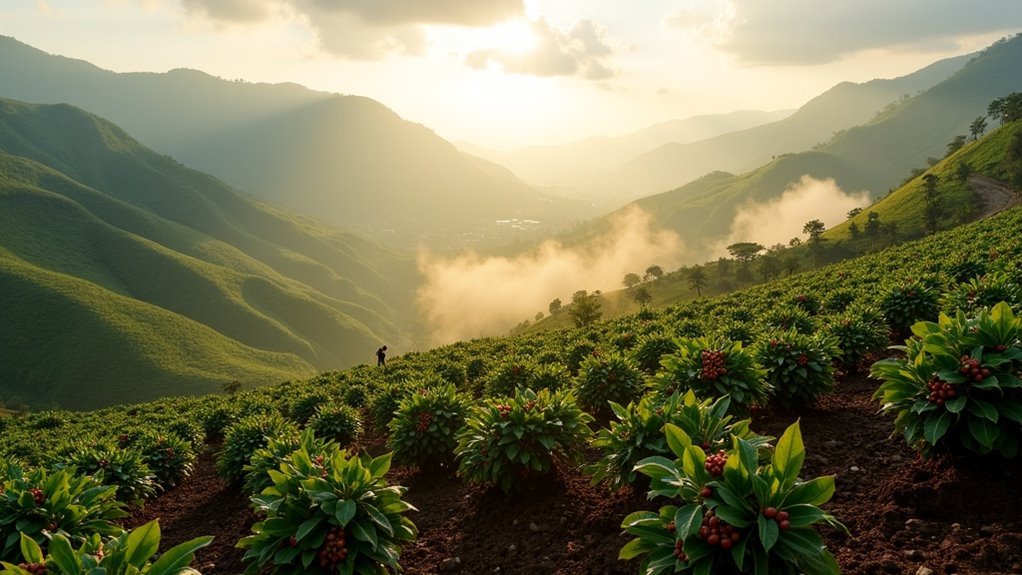
Kenyan coffee flourishes predominantly in high-altitude regions such as the Central, Eastern, Rift Valley, Nyanza, and Coastal areas. The Central region, particularly Nyeri and Kiambu, is responsible for around 60% of the country’s coffee production, attributed to its rich volcanic soils and ideal climatic conditions. Thriving at elevations between 1,400 to 2,000 meters, coffee plants benefit from well-distributed rainfall and favorable temperatures. Each region contributes distinct flavor profiles influenced by local growing conditions. Explore these unique tastes and the rich diversity of Kenyan coffee!
Key Takeaways
- Kenyan coffee primarily grows in the Central region, including Nyeri and Kiambu, which accounts for about 60% of the country’s total coffee output.
- The Eastern region, characterized by high elevations and adequate rainfall, is known for its quality coffee production.
- The Rift Valley is recognized for its fertile volcanic soils, which support a diverse range of coffee varieties.
- In the Nyanza region, rich loamy soils and cooperative systems enhance the coffee farming experience for local farmers.
- The Coastal Areas, despite facing challenges due to arid conditions, produce coffee with unique flavors that stand out in the market.
Overview of Coffee Growing Regions in Kenya
When you explore the coffee-growing regions of Kenya, you’ll discover a landscape that’s as diverse as the flavors of the coffee itself.
The Central region, including Nyeri, is famous for its high-altitude farms, where farmers grow Arabica coffee in rich volcanic soils. This area accounts for around 60% of Kenya’s coffee production, contributing to its distinctive flavor profiles.
The Central region, with its high-altitude farms and volcanic soils, is the heart of Kenya’s rich coffee production.
Other regions, such as the Eastern region with its semi-arid climate, and the Western areas rich in loamy soils, also cultivate unique coffee varieties.
The specific conditions of each region play a crucial role in shaping the quality and taste of Kenyan coffee, making it truly exceptional.
Key Coffee Production Areas
Kenya is home to several key coffee production areas that play a crucial role in its esteemed coffee industry. The Central region, which includes counties such as Nyeri and Kiambu, is responsible for approximately 60% of the country’s coffee output, known for its rich flavor profile. Meanwhile, the Eastern region benefits from high elevations and ideal rainfall conditions, enhancing the quality of its coffee. The Rift Valley, with its fertile volcanic soils, supports a diverse range of coffee varieties. In the Nyanza region, the rich loamy soils contribute to coffee with a full flavor profile, often cultivated through cooperative systems. The Coastal Areas also produce coffee with unique flavor profiles, although they face arid conditions. Harvesting seasons typically vary, occurring from March to July and again from October to early January.
| Region | Characteristics |
|---|---|
| Central | 60% of production, rich flavor |
| Eastern | High elevations, ideal rainfall |
| Rift Valley | Fertile volcanic soils |
| Nyanza | Full flavors, cooperative system |
| Coastal Areas | Unique profiles, arid conditions |
Growing Conditions and Climate
Although coffee can be grown in various climates around the world, the unique growing conditions in Kenya are essential for producing its renowned Arabica beans.
Thriving in high-altitude regions between 1,400 and 2,000 meters, Kenyan coffee benefits from ideal temperatures ranging from 15 to 24 degrees Celsius and well-distributed annual rainfall of 900 to 1,200 mm.
The fertile volcanic soils, which are well-drained and slightly acidic, enhance the flavor profile of the beans.
Key growing regions such as Mount Kenya, Nyeri, Kiambu, and Kirinyaga exemplify how the combination of climate and soil contributes to the exceptional quality of Kenyan coffee.
Specific Farms and Cooperatives
The rich growing conditions in Kenya give rise to a vibrant coffee industry, supported by various farms and cooperatives that emphasize quality and sustainability.
Maguta Estate, located in the Central region, excels in producing high-quality Arabica beans, known for their rich flavor and aroma.
Olochoy Farm showcases the benefits of small-scale farming, focusing on meticulous quality coffee production that highlights the unique characteristics of its beans.
Meanwhile, Kiptebes Society actively supports local farmers through cooperative efforts, fostering community and ensuring exceptional coffee quality.
In the Western region, Lionhills Coffee stands out for its distinct contributions to the market, offering unique blends that appeal to coffee enthusiasts.
Similarly, Kabngetuny Cooperative enhances farmers’ livelihoods and promotes sustainable practices, making a significant impact on the local coffee landscape through collective efforts and shared knowledge.
Flavor Profiles of Kenyan Coffee
Coffee enthusiasts are often enchanted by the vibrant flavor profiles of Kenyan coffee, renowned for their bright acidity and rich fruitiness.
Each region offers unique tasting notes:
- Nyeri: Characterized by sharp acidity and a full body with hints of blackcurrant.
- Kirinyaga: Features bright acidity with citrus and berry flavors, enhanced by fully washed processing.
- Kiambu: Presents a well-rounded acidity complemented by tropical fruit notes, providing a crisp experience.
- Meru & Tharaka Nithi: Known for rich flavors derived from deep red volcanic soils.
- Processing methods: Significantly influence the final taste, highlighting the complexity of Kenyan coffee.
Dive into these flavors for a delightful coffee experience!