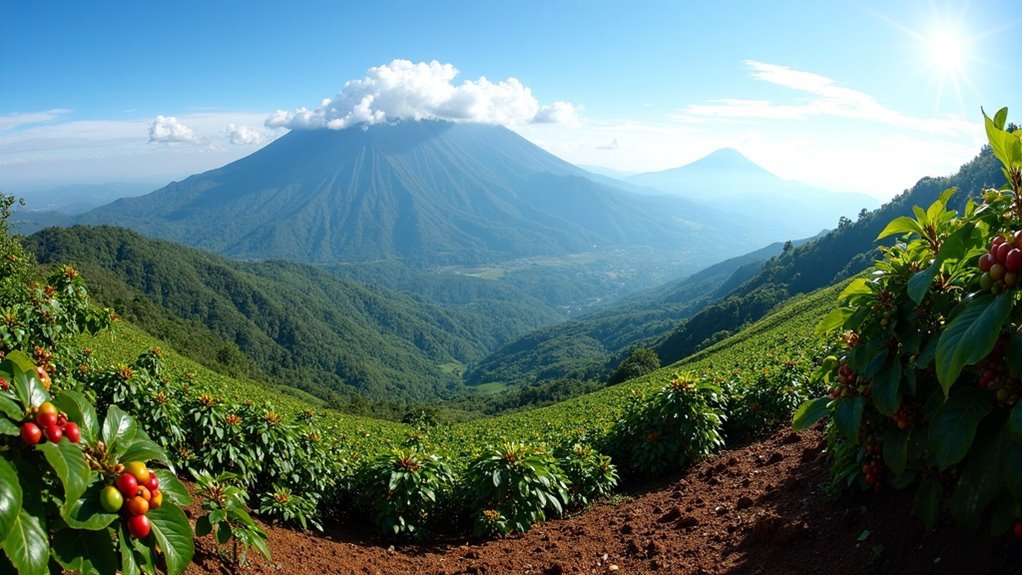
Guatemalan coffee is cultivated primarily in high-altitude regions ranging from 1,200 to 1,800 meters. Notably, areas like Acatenango Valley, Antigua, and Huehuetenango boast rich volcanic soil and unique microclimates that enhance flavor profiles. These regions yield distinct characteristics, such as bold, spicy flavors with hints of chocolate in Huehuetenango and well-balanced nutty notes in Antigua. The interplay of altitude and soil significantly contributes to the quality of coffee produced. To learn more about these exceptional coffee-growing regions, continue exploring our site.
Key Takeaways
- Guatemalan coffee is cultivated in various regions, including Acatenango Valley, Antigua, and Huehuetenango, each offering unique flavor profiles.
- In Acatenango Valley, coffee is grown at elevations of 1,500 to 1,800 meters, which enhances the complexity of the beans.
- The Antigua region benefits from volcanic soil and has elevations ranging from 1,500 to 1,700 meters, resulting in well-balanced flavors.
- Huehuetenango coffee flourishes at altitudes between 1,200 and 2,000 meters, delivering bold and spicy flavor notes.
- Additional regions such as Atitlán and Rainforest Cóban also produce high-quality Arabica coffee, each with their own distinct characteristics.
Ideal Conditions for Coffee Growth in Guatemala
When considering the ideal conditions for coffee growth in Guatemala, it’s essential to recognize how altitude and temperature play pivotal roles in cultivating high-quality coffee beans.
Coffee production flourishes between 500 to 1,500 meters above sea level, with high altitudes enhancing cherry maturation and flavor complexity. The best temperature range of 16 to 32°C supports healthy coffee plants, allowing them to thrive and produce exceptional beans.
Coffee thrives at altitudes of 500 to 1,500 meters, where optimal temperatures enhance flavor complexity and bean quality.
Young coffee plants benefit from shaded environments, especially at lower altitudes, while those growing above 1,500 meters require protection from cold winds to ensure their development.
Additionally, Guatemala’s rich volcanic soil provides essential nutrients, enriching the land and enabling coffee growers to produce unique flavor profiles across various growing regions.
This combination of factors ensures safety and quality in every cup of Guatemalan coffee.
Major Coffee Producing Regions
In exploring the major coffee-producing regions of Guatemala, you’ll discover that each area contributes distinct characteristics to the coffee’s flavor profile.
The Acatenango Valley offers unique microclimates that enhance the coffee’s complexity, while the Antigua region is renowned for its volcanic soil, which enriches the coffee’s sweetness.
Meanwhile, Huehuetenango stands out for its bold, spicy flavors, shaped by high altitudes and unique soil conditions, making it a favorite among coffee enthusiasts.
Acatenango Valley Characteristics
Acatenango Valley stands out as a prime region for coffee cultivation, thanks to its altitude of 1,500 to 1,800 meters (4,900 to 5,900 feet).
This unique microclimate fosters the growth of high-quality coffee, characterized by:
- Rich organic matter enhancing soil nutrients
- High acidity contributing to vibrant flavor profiles
- Strictly Hard Bean classification ensuring dense, flavorful beans
- Consistent rainfall promoting healthy coffee plant growth
The minerals from the nearby Volcán de Fuego further enrich the coffee’s flavor profile, making Acatenango Valley coffees highly sought after by connoisseurs for their fragrant aroma and balanced body.
This region encapsulates the essence of exceptional coffee, appealing to enthusiasts and casual drinkers alike.
Antigua Region Highlights
The Antigua region is a standout player in Guatemala’s coffee landscape, renowned for its exceptional coffee grown at elevations between 1,500 and 1,700 meters (4,900 to 5,600 feet).
This high elevation fosters complex flavor profiles, enhanced by the nutrient-rich volcanic soil from nearby Volcán de Fuego. The resulting coffee is well-balanced, showcasing notes of chocolate, nutty undertones, and bright acidity, making it a favorite among coffee enthusiasts.
Additionally, Antigua’s unique microclimate promotes a diverse range of coffee varietals, with Caturra and Bourbon being particularly prominent.
This ensures a consistently high-quality coffee production that prioritizes both safety and flavor integrity, solidifying Antigua’s reputation in the coffee world.
Huehuetenango Flavor Profiles
Huehuetenango: A Coffee Lover’s Paradise
While exploring Guatemala’s coffee regions, Huehuetenango stands out for its remarkable flavor profiles shaped by high altitudes ranging from 1,200 to 2,000 meters (3,937 to 6,561 feet).
The region’s coffee, primarily Arabica, thrives in nutrient-rich soils enhanced by volcanic ash.
You’ll find that Huehuetenango coffee offers:
- Bold, spicy flavors with a full-bodied profile
- Delicate hints of dark chocolate
- A clean finish with fruity and floral notes
- Diverse flavors due to fluctuating temperatures and microclimates
These elements combine to create a distinctive coffee experience that significantly enhances Guatemala’s esteemed global reputation in the coffee industry.
Overview of Acatenango Valley Coffee
Nestled between the majestic Volcán de Fuego and Volcán de Acatenango, the Acatenango Valley offers an exceptional environment for coffee cultivation.
The region’s rich volcanic soil enhances nutrient content, resulting in high-quality flavor profiles. Grown at altitudes of 1,400 to 1,800 meters, coffee from this area exhibits bright acidity and a fragrant aroma.
The microclimate created by the mountains ensures consistent temperature and humidity, ideal for growth. Smallholder farms in the region prioritize sustainable practices, which contribute to the coffee’s balanced body and clean finish, often featuring tasting notes of chocolate and fruit.
These characteristics highlight the unique qualities of Acatenango Valley coffee, making it a standout choice for coffee enthusiasts.
Characteristics of Antigua Coffee
Antigua coffee stands out due to its unique flavor profile, which balances sweetness with rich aromas of chocolate and nuts, accented by subtle fruity notes.
The growing conditions in the Antigua region, particularly the rich volcanic soil and ideal altitude, play an essential role in developing these distinct flavors.
By understanding how these environmental factors interact, you can truly appreciate the complexity and quality that Antigua coffee has to offer.
Whether you’re a seasoned coffee enthusiast or just beginning your journey, Antigua coffee provides a remarkable experience that highlights the art of coffee cultivation.
Flavor Profile Overview
Although many factors influence the flavor profile of coffee, Antigua coffee stands out due to its unique characteristics. This medium roast showcases a remarkable balance of flavors, making it a favorite among coffee enthusiasts.
- Rich chocolate and nut notes
- High sweetness with vibrant acidity
- Fleeting fruity notes harmonizing with earthy flavors
- Enhanced by volcanic soil and careful processing
Guatemala’s main coffee-producing regions contribute to this complexity, where skilled coffee producers harness the rich nutrients from the volcanic soil.
The result is a well-rounded coffee that offers depth, appealing to those seeking a sophisticated brew.
Growing Conditions Explained
The unique flavor profile of Antigua coffee is a direct reflection of its growing conditions, which play an essential role in shaping its characteristics.
Cultivated in nutrient-rich volcanic soil from Volcán de Fuego, these coffee farms benefit from high altitudes ranging from 1,500 to 1,800 meters. This elevated terrain fosters slow coffee maturation, which enhances the beans’ flavor profile.
The region’s microclimate, characterized by cool nights and low humidity, provides ideal growing conditions for coffee. Regular monitoring of rainfall ensures that the plants receive the right amount of moisture without the risk of saturation.
This careful management promotes balanced acidity and aroma, resulting in a well-rounded cup that exemplifies the meticulous practices involved in coffee production.
Unique Flavors of Traditional Atitlán Coffee
While exploring the unique flavors of traditional Atitlán coffee, you’ll quickly notice its bright citrus acidity paired with a full body, a result of the region’s rich organic volcanic soil.
The coffee’s flavor complexity thrives in this volcanic landscape, nurtured by unique microclimates and elevations between 1,300 to 2,000 meters.
- Influenced by Xocomil winds, which add a refreshing twist to the flavor profile
- Exhibits floral and fruity notes that enhance the overall tasting experience
- Benefits from annual rainfall of 1,500 to 2,500 mm, crucial for the beans’ development
- Slow maturation enhances taste depth, allowing for a richer flavor
These elements contribute to Atitlán coffee’s distinctive profile, making it a remarkable choice among regions in Guatemala for discerning coffee lovers.
Rainforest Cóban: A Distinctive Coffee Region
Nestled within Guatemala’s lush landscape, Rainforest Cóban stands out as a distinctive coffee region characterized by its unique microclimate and rich biodiversity. This area is renowned for cultivating high-quality Arabica coffee beans, thanks to the abundant rainfall and tropical cloud mist that create ideal growing conditions. Coffee cherries thrive at elevations ranging from 1,300 to 1,600 meters, where they mature slowly, allowing for the development of complex flavor profiles.
| Feature | Description |
|---|---|
| Soil | Rich organic soil that enhances flavor |
| Climate | High humidity and a unique microclimate conducive to coffee growth |
| Wildlife | A diverse ecosystem that supports sustainable coffee plantations |
The environment of Rainforest Cóban not only yields coffee with fresh fruit notes and pleasant aromas but also promotes sustainable farming practices, making it a gem in the world of coffee cultivation.
The Impact of Altitude on Coffee Quality
Altitude plays a crucial role in determining coffee quality, especially in Guatemala, where diverse elevations create unique microclimates. Higher altitudes promote slower maturation of coffee cherries, leading to a more complex flavor profile.
- Coffee flourishes between 500 to 1,500 meters above sea level.
- The Strictly Hard Bean classification is assigned to coffee grown above 1,370 meters.
- Cooler temperatures, ranging from 16 to 32°C, contribute to the development of distinctive flavor characteristics.
- Regions such as Huehuetenango and Antigua are renowned for their vibrant acidity and rich flavors.
These factors highlight the significance of altitude in Guatemalan coffee production, showcasing how the intricate relationship between environmental conditions and elevation profoundly impacts the quality and character of the final coffee product.