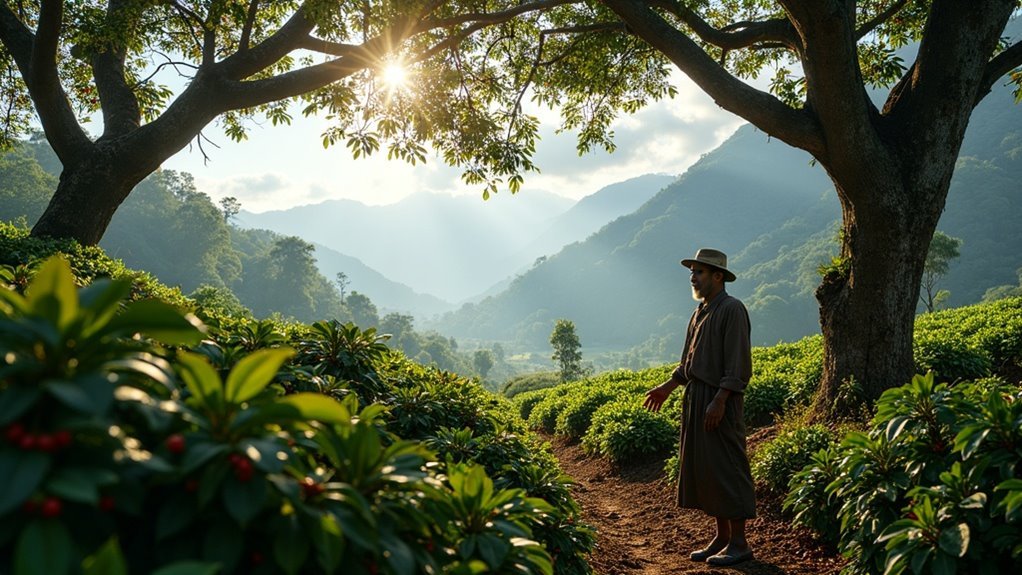
Ethiopian coffee grows in diverse regions, each with unique microclimates that shape flavor profiles. Notable areas include Sidamo, known for its fertile highlands; Yirgacheffe, famous for exquisite washed coffees; and Harrar, which features wild native plants with distinct fruity notes. Limu and Djimma also contribute significantly to Ethiopia’s specialty coffee offerings. The geographical diversity plays an essential role in the quality and variety of the coffee. Exploring these regions reveals their intricate impacts on the global coffee market, showcasing the rich heritage and unique characteristics of Ethiopian coffee.
Key Takeaways
- Ethiopian coffee primarily grows in regions like Sidamo, Yirgacheffe, Harrar, Limu, and Djimma, each offering distinct flavor profiles that coffee enthusiasts cherish.
- Sidamo province features fertile highlands that are ideal for producing a diverse range of coffee qualities, appealing to various palates.
- Yirgacheffe is renowned for its exquisite washed coffees, benefiting from the efforts of numerous cooperatives dedicated to quality.
- The Harrar region stands out for its unique flavors, derived from wild native coffee plants, which often include delightful notes of blueberry and strawberry.
- Limu, with its high elevations, yields coffees that boast sweet, spicy, or winey characteristics, making it a favorite among coffee connoisseurs.
History of Ethiopian Coffee
The journey of Ethiopian coffee begins with Kaldi, a 9th-century goat herder whose discovery of the coffee fruit sparked a cultural phenomenon that endures today.
As the birthplace of coffee, Ethiopia boasts a rich history in coffee production, deeply woven into its social fabric. Over 4 million small-scale farmers cultivate coffee, contributing significantly to the economy.
The Ethiopian government supports this industry through initiatives like the Ethiopia Commodity Exchange, established in 2008 to enhance trade efficiency.
This framework allows farmers to form cooperatives, ensuring fair pricing and fostering sustainable growth, despite challenges in tracing coffee origins and maintaining quality.
Geographical Regions of Coffee Production
While exploring Ethiopian coffee, you’ll discover that its geographical regions play a crucial role in shaping the coffee’s distinct flavors and characteristics. The Sidamo province is renowned for its fertile highlands, which produce a diverse range of coffee qualities. Within Sidamo, the Yirgacheffe sub-region specializes in exquisite washed coffees that are highly sought after. Harrar is known for its unique flavors sourced from wild native coffee plants, offering a heavy body and distinctive taste. Meanwhile, Limu’s high elevations, ranging from 1,100 to 1,900 meters, yield coffees with sweet, spicy, or winey profiles. Each region contributes uniquely to Ethiopia’s rich coffee tapestry, ensuring a variety of choices for coffee enthusiasts.
| Region | Notable Features | Coffee Quality |
|---|---|---|
| Sidamo | Fertile highlands | Diverse |
| Yirgacheffe | Exquisite washed coffees | High |
| Harrar | Distinctive flavors, heavy body | Unique |
| Limu | Elevations 1,100-1,900 meters | Sweet, spicy |
Major Coffee Growing Areas
Ethiopia’s major coffee-growing areas, including Sidamo, Yirgacheffe, Harrar, Limu, and Djimma, each exhibit unique characteristics that greatly influence the flavor profiles of their coffees.
Sidamo’s fertile highlands produce diverse quality coffees, while Yirgacheffe, famed for its washed coffees, boasts 26 cooperatives across 62,004 hectares.
Harrar coffee, sourced from wild native trees, offers distinct flavor notes like blueberry and strawberry.
Limu, grown at altitudes between 1,100 and 1,900 meters, is celebrated for its sweet, spicy, and winey flavors, solidifying Ethiopia’s reputation in the specialty coffee market.
These areas collectively contribute to the rich tapestry of Ethiopian coffee, making it a vital subject for coffee enthusiasts and connoisseurs alike.
Coffee Varieties and Characteristics
When exploring Ethiopian coffee, you’re encountering a rich tapestry of unique flavor profiles shaped by heirloom varietals.
Each varietal, influenced by factors like microclimate and altitude, contributes distinct notes that can vary even within a single region.
Understanding these characteristics is essential for appreciating the complexity and depth of Ethiopian coffee.
This website is dedicated to showcasing the diverse world of coffee.
Unique Flavor Profiles
Ethiopian coffee offers a remarkable diversity in flavor profiles, primarily due to its heirloom Arabica varieties and the unique microclimates where they’re cultivated.
You’ll appreciate the distinct characteristics shaped by the washing process, which enhances the floral and fruity notes.
Here are some exceptional coffees you might encounter:
- Longberry: Known for its large size and high quality.
- Mocha Harars: Offers complex flavors with fruity and wine-like notes.
- Harrar: Features bold blueberry and strawberry notes.
- Yirgacheffe: Known for its bright acidity and floral undertones.
These unique flavor profiles arise from the diverse coffee cherries cultivated on Ethiopian coffee trees, resulting in enchanting tasting experiences that showcase the rich heritage of Ethiopian coffee culture.
Heirloom Varietals Characteristics
Heirloom varietals represent a fascinating aspect of coffee cultivation, showcasing a remarkable range of flavor profiles that stem from their genetic diversity.
As you explore these distinctive flavors, you’ll find floral, fruity, and wine-like notes that arise from the diverse microclimates where the coffee grows. Primarily consisting of Arabica coffee, these heirloom varietals exhibit greater resilience against pests and diseases, ensuring safety in changing climates.
Unlike commercial varieties, heirloom coffees are typically hand-picked, enhancing quality through careful selection. However, the complexity of these wild coffee types can complicate identification, as many remain informally classified within the same growing regions.
This unique diversity not only enriches the coffee experience but also highlights the importance of preserving these heirloom varieties for future generations.
Impact of Climate Change on Coffee Growth
As climate change accelerates, coffee growers in Ethiopia face significant challenges that threaten both their livelihoods and the quality of their beloved coffee.
- Rising mean temperatures may exceed 3.1 degrees Celsius by 2060, putting stress on heat-sensitive coffee plants that are essential for producing high-quality beans.
- Lengthening dry seasons and irregular rainfall patterns disrupt traditional coffee cultivation methods, affecting the consistency and flavor profiles of the coffee.
- Increased temperatures lead to more frequent pest invasions and diseases, jeopardizing the yields of coffee farmers and the overall health of coffee crops.
- Coffee production is particularly vulnerable to specific climatic conditions, and any changes diminish both the quality and quantity of the coffee produced.
These factors necessitate urgent adaptation strategies, compelling farmers to embrace sustainable farming practices to safeguard their coffee growth against an uncertain future and ensure the continuation of this cherished beverage.
Sustainable Practices in Coffee Cultivation
While facing the challenges posed by climate change, coffee growers in Ethiopia are increasingly turning to sustainable practices that enhance the quality of their coffee and protect the environment.
Techniques such as shade-grown coffee not only maintain biodiversity but also support local ecosystems, creating a healthier environment for coffee cultivation.
Shade-grown coffee fosters biodiversity and nurtures local ecosystems, promoting a healthier environment for coffee cultivation.
Water conservation methods, like micro-basin rainwater harvesting, ensure efficient resource use in coffee production, contributing to the sustainability of the industry.
Many farms, including Limmu Coffee Farm, achieve organic certification through cooperatives, promoting environmentally friendly farming practices and reducing chemical usage.
These sustainable approaches benefit over 4 million small-scale farmers, improving the quality of their coffee while supporting their livelihoods in an environmentally conscious manner.
The Role of Cooperatives in Ethiopian Coffee
Cooperatives significantly boost farmers’ bargaining power, enabling them to negotiate improved prices for their coffee.
By coming together within a cooperative framework, members gain access to shared resources and expertise, which ensures quality control and compliance with industry standards.
This collective strategy not only stabilizes income but also promotes sustainable practices that enhance both the quality of the coffee and its environmental impact.
Cooperative Structure Benefits Farmers
In Ethiopia, the cooperative structure significantly enhances coffee farmers’ bargaining power and market access, enabling over 4 million small-scale coffee producers to flourish in a competitive landscape.
By forming cooperatives, you can enjoy several advantages:
- Pooling resources for improved investment in coffee production
- Sharing insights to enhance quality control measures for your coffee
- Gaining access to the Ethiopia Commodity Exchange for fairer pricing on your coffee
- Implementing sustainable farming practices that safeguard ecosystems while cultivating coffee
This collaboration not only leads to better price consistency but also stabilizes incomes for coffee farmers.
As cooperatives thrive, they empower you and your community, ensuring a more sustainable future in the coffee industry.
Quality Control and Standards
The cooperative model not only strengthens farmers’ market presence but also plays a pivotal role in establishing quality control and standards for Ethiopian coffee.
By pooling resources, cooperatives empower small-scale farmers to access fair prices and enhance their bargaining power.
With around 90% of Ethiopia’s coffee traded through the Ethiopia Commodity Exchange (ECX), cooperatives ensure consistent quality control and grading.
Since the post-1991 era, over 1,000 cooperatives have emerged, significantly improving coffee quality through sustainable practices and training programs.
These initiatives promote the production of high-quality coffee while also supporting environmental conservation, ultimately benefiting farmers and elevating the market value of Ethiopian coffee.
Global Influence and Economic Impact of Ethiopian Coffee
Ethiopian coffee isn’t just a beverage; it’s a cornerstone of the nation’s economy and a significant player on the global stage.
- It accounts for 70% of Ethiopia’s export earnings, making it crucial for the country’s financial health.
- Over 15 million Ethiopians, or 35% of the workforce, are employed in the coffee sector, highlighting its role in job creation.
- Coffee contributes significantly to Ethiopia’s GDP, with the country ranking fifth in global coffee production.
- The Ethiopian Commodity Exchange (ECX) has revolutionized the trade landscape, improving access to high-quality coffee.
Through cooperatives, Ethiopian coffee farmers are ensured fair prices, which bolsters economic stability.
This robust domestic market supports Ethiopia’s coffee production, allowing it to maintain a strong influence worldwide, setting high standards for quality and sustainability in the coffee industry.