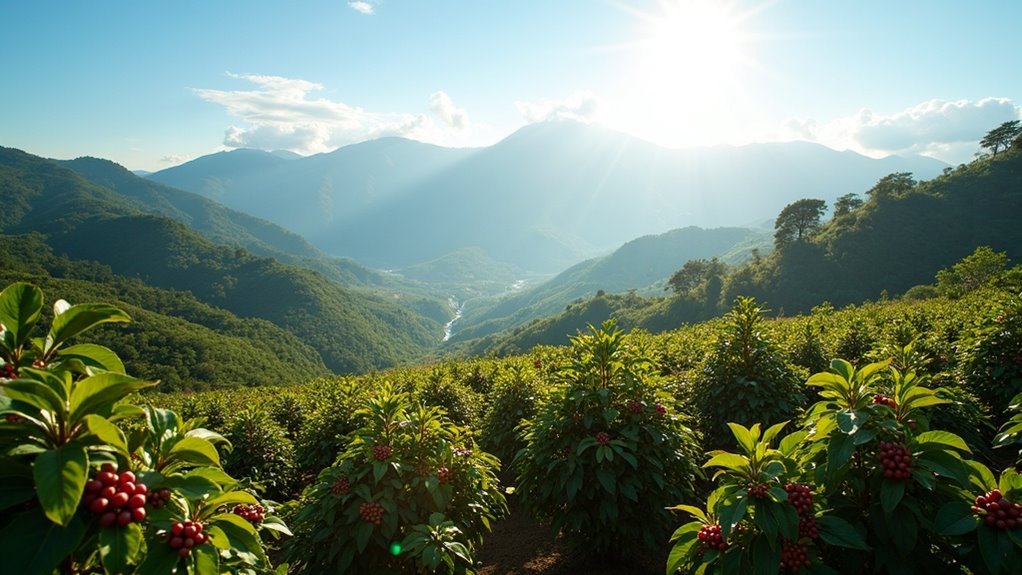
Colombian coffee flourishes in five primary regions: North, Central North, Central South, South, and East. Each region offers unique flavors influenced by its specific altitude and climate. The Andean region, with its high elevations, produces coffee with bright, acidic profiles. Conversely, the Caribbean region features coffees with a heavier body and mellower flavors. The Pacific region is celebrated for its complex and full-bodied brews. Exploring these regions provides insight into the rich tapestry of Colombia’s coffee culture. There is so much more to learn about this exquisite beverage.
Key Takeaways
- Colombian coffee is primarily cultivated in five key regions: North, Central North, Central South, South, and East.
- The Andean Region, situated at approximately 1,500 meters above sea level, is renowned for its bright, acidic flavors and a wide array of tasting notes.
- The Caribbean Region, characterized by a hot and humid climate, yields coffee with a heavier body and smooth, mellow flavors.
- In the Pacific Region, the high altitudes contribute to intricate flavor profiles, with a reputation for full-bodied coffee featuring dark chocolate notes.
- However, climate variability poses a significant threat to these unique coffee-growing areas, potentially impacting the quality of Colombian coffee and its cultural importance.
Overview of Colombian Coffee Growing Regions
Colombia’s coffee-growing regions are a tapestry of diverse climates and altitudes, each contributing distinct characteristics to the coffee beans produced. The Colombian coffee industry boasts five main coffee-producing areas: North, Central North, Central South, South, and East.
In the North, beans exhibit rich chocolate and nutty flavors, while the Central regions yield sweet coffees with delightful panela notes. The high altitudes in the South enhance the acidity of the coffee, resulting in exceptional specialty brews.
However, climate change poses significant threats to these regions, impacting their unique coffee culture. In the East, approximately 5,500 producers face numerous challenges, yet they continue to cultivate coffee under difficult conditions, showcasing the industry’s resilience.
The Andean Region
In the Andean region, coffee flourishes at altitudes around 1,500 meters, where the cool, wet climate creates ideal growing conditions.
This environment supports a slow maturation process, enhancing the beans’ bright, acidic flavor profile with delightful hints of citrus, berries, and chocolate.
Consequently, the Andean region is pivotal in establishing Colombia’s esteemed reputation for high-quality coffee in the global market.
Coffee Characteristics
The Andean region of Colombia is renowned for its exceptional coffee characteristics, attributed to its unique environmental conditions. The high altitudes and nutrient-rich volcanic soil promote the slow maturation of premium Arabica beans, leading to a bright, acidic flavor profile that features delightful notes of citrus, berries, and chocolate. The region’s cool, wet climate further amplifies these qualities, reinforcing its esteemed reputation in the world of Colombian coffee.
| Coffee Characteristic | Description | Importance |
|---|---|---|
| Flavor Profile | Bright, acidic, fruity | Appeals to connoisseurs |
| Body | Light | Enhances drinkability |
| Soil Type | Volcanic | Nutrient-rich |
| Climate | Cool, wet | Ideal for growth |
Ideal Growing Conditions
Renowned for its exceptional coffee characteristics, the Andean region offers ideal growing conditions that greatly enhance the quality of coffee produced.
With high altitudes averaging 1,500 meters, the slow maturation process of Colombian coffee beans results in rich flavors. The cool climate, paired with abundant rainfall, creates an environment perfect for cultivating high-quality arabica coffee with bright acidity.
Additionally, the volcanic soil is nutrient-dense, providing essential minerals that elevate the flavor profile. This unique combination of factors contributes to the distinctive notes of citrus, berries, and chocolate, making Andean coffee highly sought after in the specialty market.
This website is dedicated to exploring the rich world of coffee, highlighting the unique features of Andean coffee and its exceptional qualities.
The Caribbean Region
Although often overshadowed by the more famous Andean region, Colombia’s Caribbean region—encompassing departments like Magdalena, Cesar, and La Guajira—offers unique coffee characteristics shaped by its hot, humid climate.
Here, coffee producers benefit from lower altitudes that accelerate the growing and maturation processes of coffee beans. The distinct climatic conditions contribute to a heavier body and a mellow flavor profile, featuring tasting notes of caramel, nuts, and spices.
While less known, the Caribbean region significantly enhances Colombia’s coffee production, showcasing a rich diversity of flavors that elevates the national reputation for quality coffee. This region is a hidden gem for discerning coffee enthusiasts looking to explore new and exciting profiles.
The Pacific Region
Colombia’s Pacific Region, renowned for its coffee-producing departments like Nariño and Cauca, is characterized by high altitudes that significantly influence coffee bean growth.
Coffee cultivated in this region is celebrated for its exceptional quality, offering a full body and complex flavor profile that includes notes of dark chocolate and berries. The warm, wet climate enriches the soil with organic matter, enhancing the beans’ sweetness and acidity.
Traditional coffee harvesting methods, rooted in Indigenous and African Colombian practices, contribute to the coffee’s unique character. This results in a distinctive cup that beautifully reflects the region’s rich agricultural heritage, making it a must-try for coffee aficionados.
Unique Characteristics of Each Region
Each region of Colombia contributes uniquely to the country’s rich coffee culture, showcasing distinct flavor profiles and cultivation methods.
In the North Region, particularly around Nevada de Santa Marta, you’ll find coffee with chocolate notes, often produced through organic farming by indigenous groups.
The Colombian Coffee Triangle excels with its volcanic soil and mild climate, yielding sweet coffee with hints of panela.
In the South Region, the high altitudes create coffees with impressive acidity, adding to the complexity of flavors.
The East Region, despite facing internal challenges, mirrors the North’s flavor profiles.
Each area highlights how diverse climatic effects shape coffee farming, significantly influencing the quality and character of Colombian coffee.
Climate and Its Impact on Coffee Quality
As the tropical climate of Colombia provides consistent sunlight and ideal rainfall, it plays an essential role in determining coffee quality across the country.
The Sierra Nevada de Santa and Andean regions offer high altitudes, where cooler temperatures contribute to the slower ripening of coffee cherries, enhancing sugar development. This results in complex flavors and brighter acidity, which are highly sought after in specialty coffee.
Nutrient-rich volcanic soil in areas like Caldas and Quindío supplies essential minerals that significantly impact the taste profile of Colombian coffee.
However, climate variability poses a threat to these optimal conditions, with increased temperatures and unpredictable weather potentially disrupting the delicate balance needed for producing high-quality Coffea arabica.
This is vital for maintaining Colombia’s prestigious Denomination of Origin status in coffee, which underscores the unique characteristics of Colombian coffee on the global stage.
Cultural Significance of Colombian Coffee
Coffee embodies a vital aspect of Colombian culture, serving as both a symbol of national pride and a cornerstone of local economies. Its significance extends beyond just a beverage; it shapes the cultural identity of Colombia.
The UNESCO World Heritage-designated Coffee Cultural Landscape showcases the rich traditions and practices of coffee-producing regions like Caldas, Quindío, and Risaralda. The National Federation of Coffee Growers supports sustainable practices and traditional cultivation methods, ensuring the heritage remains intact.
- Celebrates local community practices
- Engages tourists through attractions like National Coffee Park
- Reinforces the importance of the coffee trade in Colombia
This website is dedicated to exploring the cultural significance of Colombian coffee, highlighting its role in the nation’s identity and community life.