You should end your espresso shot when you notice a shift to a yellowish hue, indicating you’ve reached the blonding point. This typically occurs around 20-30 seconds after the first drop. Watch for thinning flow and the appearance of “blonde dots” on the surface, which signal slight over-extraction. Remember, consistent grind size and monitoring your brew ratio are essential for optimizing flavor in your coffee. Keep experimenting with these factors for the best results in your espresso experience.
Key Takeaways
- Stop the espresso shot when a lighter, yellowish hue appears, indicating the blonding point.
- Aim to pull the shot for 20-30 seconds after the first drop to achieve optimal flavor.
- Look for the formation of “blonde dots” on the surface as a sign of slight over-extraction.
- Puckering of coffee grounds signals that you are nearing the end of the extraction process.
- Monitor and adjust grind size to maintain consistent extraction times and flavor balance.
Understanding the Blonding Point
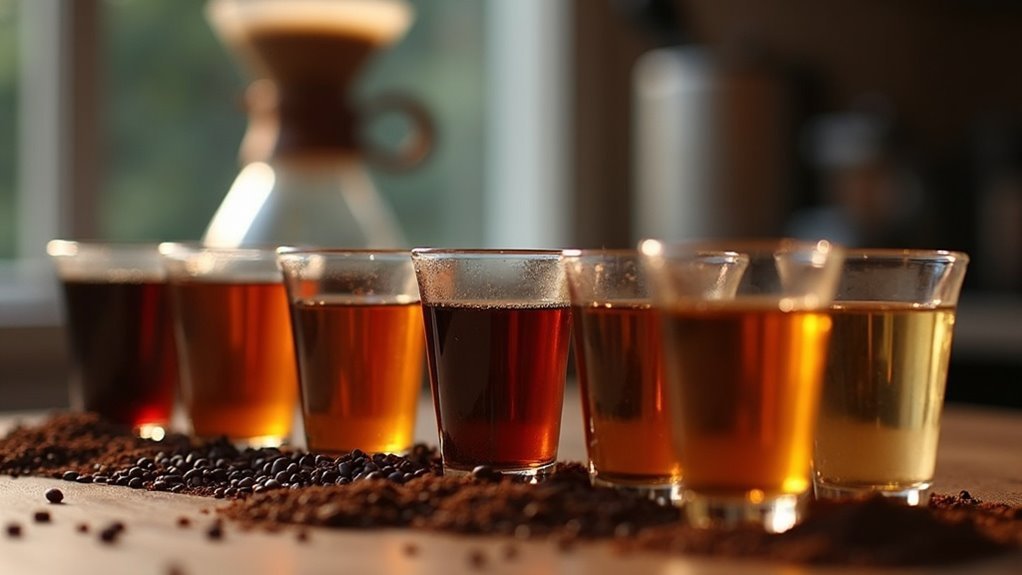
How can you ensure your espresso shot reaches its peak flavor? Understanding the blonding point is crucial. This stage signifies the transition from a rich, dark color to a lighter hue, indicating the end of ideal extraction.
If you continue to pull the shot past this point, you risk introducing undesirable flavors such as sourness or bitterness. Pay attention to the thinning flow and lighter dots on the surface—these indicators will help you know when to stop pulling.
Each coffee has its distinct blonding point, so it’s important to adjust your extraction time based on your taste preferences to achieve that thick, crema-rich espresso you crave.
Visual Cues for Stopping the Shot
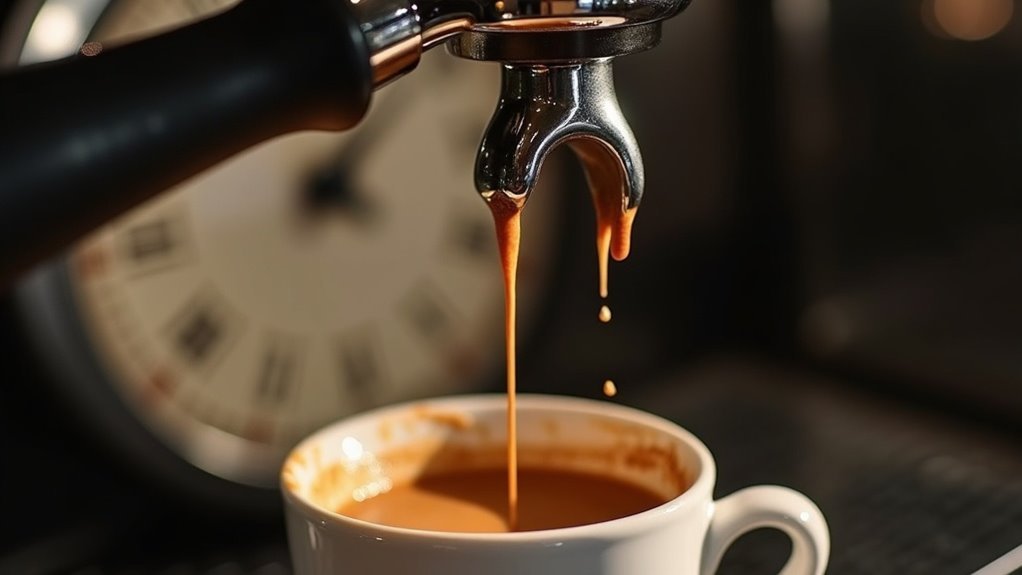
What tells you when to stop an espresso shot? The key visual cue is blonding, where the espresso shifts to a lighter, yellowish hue.
Ideally, you should stop the shot around 20-30 seconds after the first drop. Using a bottomless portafilter enhances your ability to observe these changes.
Look for “blonde dots” on the surface, indicating slight over-extraction, which means it’s time to stop the shot to prevent bitterness.
Additionally, puckering of the coffee grounds signals that extraction is nearing completion, usually about five seconds before you reach this ideal stopping point.
Stay vigilant for these visual cues to ensure a perfect cup of coffee.
Factors Influencing Shot Quality
Visual cues are just one aspect of crafting a high-quality espresso shot; several factors greatly influence the overall outcome and flavor profile of your coffee. The extraction time should ideally be between 20-30 seconds, with a focus on 20 seconds for a balanced flavor. Consistency in grind size and brew ratio is essential to avoid over-extraction. The following table summarizes key factors impacting shot quality:
| Factor | Ideal Range | Impact on Flavor Profiles |
|---|---|---|
| Extraction Time | 20-30 seconds | Balances bitterness and sweetness |
| Grind Size | Consistent | Affects flow rate and extraction |
| Brew Ratio | 1:2 (coffee to water) | Enhances overall taste balance |
Keep these factors in mind while pulling your espresso shot for the best results in your coffee journey.
Adjusting Grind Size and Extraction Time
To achieve the perfect espresso shot, it’s essential to adjust grind size and extraction time, as these variables are closely linked and directly impact the flavor and quality of your brew.
Aim for an extraction time of 20-30 seconds, targeting around 20 seconds for a double shot of approximately 60 mL. If your shot is pulling too quickly, coarsening the grind can help slow down the extraction process, leading to a more balanced flavor profile.
Maintaining a consistent grind size is crucial; variations can disrupt extraction times and negatively affect the taste of your coffee.
Regularly monitor grind size, extraction time, and brew ratios for the ideal espresso results.
Experimentation and Personal Preferences
While traditional guidelines provide a solid foundation for brewing coffee, personal experimentation plays an essential role in fine-tuning your cup.
To refine your coffee experience, consider these three strategies:
- Experiment with brewing times: Adjust your brew times to identify your flavor preferences, noting the impact on sweetness and bitterness.
- Adjust grind size: Tweak the grind to see how it interacts with brewing times and enhances your cup.
- Engage in community discussions: Participate in tasting sessions to gather insights on how others perceive flavors at different brewing points.
Your journey toward the perfect cup is unique and rewarding!