Espresso’s history began in early 20th century Italy, revolutionizing coffee brewing. Angelo Moriondo’s 1884 steam machine paved the way for Luigi Bezzera’s high-pressure espresso machine in 1901. Desiderio Pavoni commercialized it in 1906, while Achille Gaggia’s 1938 design enhanced flavor extraction. These innovations, coupled with the rise of espresso culture, transformed casual coffee breaks into social experiences. As you explore further, you’ll uncover the nuances of espresso’s global impact and its nutritional benefits, making it a fascinating topic for coffee enthusiasts.
Key Takeaways
- Espresso originated in Italy in the early 20th century, with Angelo Moriondo’s steam-powered coffee machine patented in 1884, marking the beginning of a new coffee brewing era.
- Luigi Bezzera’s 1901 high-pressure espresso machine revolutionized the coffee experience by enabling quicker brewing times and enhancing flavor extraction, setting a new standard for coffee lovers.
- Achille Gaggia’s 1938 lever-driven design further refined espresso quality and played a pivotal role in popularizing this rich coffee style among enthusiasts.
- The introduction of electric pumps, such as those in the Faema E61, provided baristas with precise control over brewing conditions, elevating the art of coffee preparation.
- Espresso has become a cultural phenomenon, fostering social connections and influencing global coffee trends, with its significance celebrated in events like the World Barista Championship.
The Origins of Espresso
How did espresso evolve into the beloved coffee beverage we recognize today? Its origins trace back to Italy in the early 20th century.
Angelo Moriondo first patented a steam-powered coffee machine in 1884, which was designed for brewing bulk coffee rather than individual servings.
In 1901, Luigi Bezzera revolutionized the coffee brewing process by patenting a high-pressure espresso machine, enabling faster extraction and enhancing the coffee experience.
Desiderio Pavoni then commercialized this innovation at the 1906 Milan Fair, introducing café espresso to a wider audience.
Later, Achille Gaggia’s 1938 lever-driven design further improved flavor extraction, solidifying espresso’s status in coffee history as a quick and flavorful delight enjoyed by many coffee lovers around the world.
The Evolution of Espresso Machines
As espresso gained popularity, the machines used to brew this beloved coffee underwent considerable transformations to enhance both efficiency and flavor.
Luigi Bezzera’s 1901 steam pressure espresso machine laid the foundation for espresso brewing, with Pavoni showcasing it in 1906.
The introduction of semi-automatic machines by Francesco Illy in 1933 allowed for more consistent espresso preparation, making it easier for coffee enthusiasts to enjoy their favorite beverage.
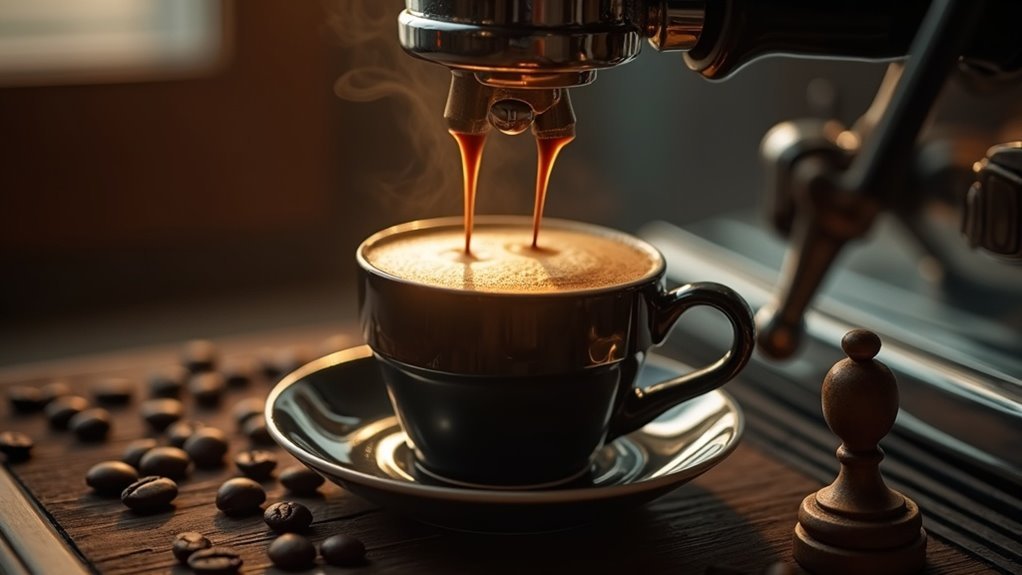
Later, the Faema E61 revolutionized the brewing process with its motorized pump that achieved nine atmospheric bars of pressure, significantly improving the overall quality of espresso.
Achille Gaggia’s post-WWII lever-driven machine further increased brewing pressure to 8-10 bars, enabling the creation of the rich crema that defines a great espresso and setting a new standard for this cherished drink.
Key Innovations in Brewing Techniques
The advancements in espresso machines have significantly shaped the coffee landscape through innovative brewing techniques.
Luigi Bezzera’s introduction of the high-pressure method allowed for a quicker brewing time, while Desiderio Pavoni’s pressure release valve and steam wand improved the functionality of espresso preparation.
Achille Gaggia’s lever machine increased brewing pressure, which enhanced flavor extraction and resulted in a rich crema on top of the espresso.
Achille Gaggia’s lever machine revolutionized espresso by boosting brewing pressure, resulting in enhanced flavor extraction and a luscious crema.
The Faema E61 further revolutionized coffee brewing with its electric pump, achieving precise control over pressure and water temperature.
These innovations have placed a strong emphasis on meticulous control over extraction, enabling baristas to craft distinctive flavor profiles.
In today’s coffee experience, computerized measurements ensure ideal coffee dosing, enhancing both the quality and safety of every brewing session.
The Cultural Significance of Espresso
While many view espresso simply as a drink, it embodies a rich cultural experience deeply rooted in Italian society and has become a significant part of the global coffee culture.
This beverage serves as a cultural cornerstone, influencing various aspects of life:
- Enjoyed standing at the bar, it fosters a communal social experience that’s integral to coffee culture.
- ‘Caffè sospeso’ reflects generosity, allowing patrons to support those in need while enjoying their coffee.
- Its global popularity surged in the 1990s, particularly through coffee shops in Japan, showcasing the international embrace of espresso.
- The World Barista Championship highlights the artistry and skill involved in espresso making, celebrating coffee craftsmanship.
- Italian innovations in coffee preparation techniques and equipment continue to inspire coffee enthusiasts around the world.
Espresso is more than just a drink; it’s a celebration of coffee culture and community.
Nutritional Value and Health Benefits
Espresso’s cultural significance extends beyond its rich flavors and communal experience; it also offers notable nutritional benefits that contribute to its allure.
With only 2.0 kcal per 100g, espresso is a low-calorie beverage, making it an excellent choice for coffee lovers mindful of their caloric intake. It provides essential vitamins and minerals—15% of your daily value for riboflavin, 33% for niacin, and 19% for magnesium—enhancing its nutritional profile.
Each 30 ml serving contains about 65 mg of caffeine, which can boost mental alertness and improve focus. Furthermore, espresso is packed with antioxidants, which may help reduce the risk of certain diseases, making it not just a delightful coffee experience but also a potential ally in maintaining your overall health.
Espresso-Based Drinks and Their Variations
Numerous espresso-based drinks have emerged, each offering unique flavors and experiences that cater to diverse preferences.
These coffee drinks showcase the versatility of espresso, providing options for every palate.
- Macchiato: A shot of espresso with a dollop of milk foam.
- Cappuccino: Espresso topped with steamed milk and foam.
- Americano: Espresso diluted with hot water for a milder taste.
- Ristretto: A concentrated shot of espresso, delivering bold flavor.
- Doppio: A double shot of espresso for those craving a stronger boost.
These variations emphasize the rich, concentrated nature of espresso, often served in traditional demitasse cups, making them a delightful choice for coffee enthusiasts.