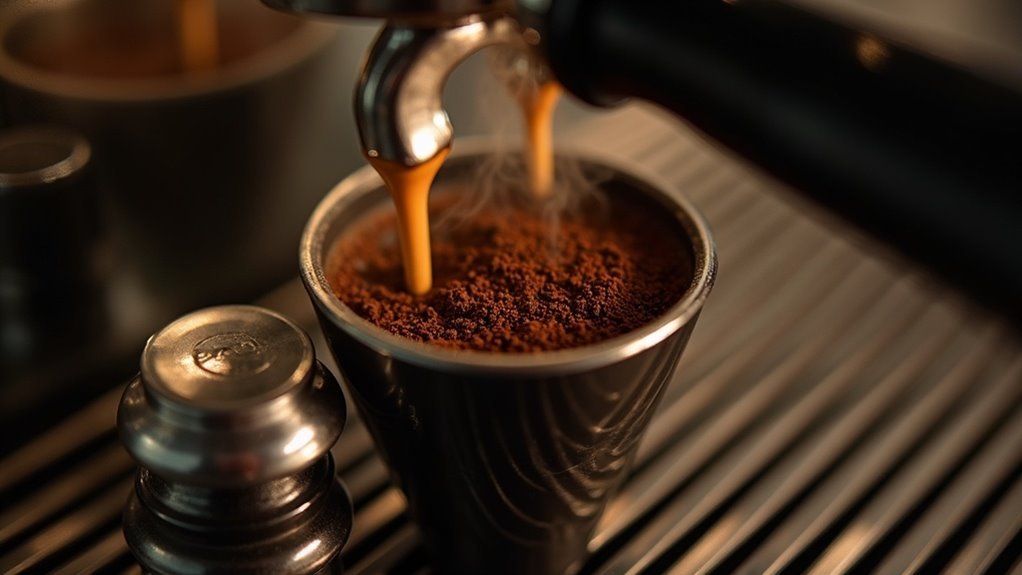
Puck prep in espresso is a crucial process that involves grinding, distributing, and tamping coffee grounds to ensure an even and balanced extraction. Utilizing techniques like the WDT (Weiss Distribution Technique) for distribution and maintaining consistent tamping pressure can significantly enhance flavor consistency while preventing channeling issues. Proper puck preparation results in a uniform coffee bed, which is essential for achieving peak espresso quality. If you’re interested in diving deeper into the detailed steps and tools that lead to a perfect puck, there’s so much more to discover about the art of coffee!
Key Takeaways
- Puck prep is the process of grinding, distributing, and tamping coffee grounds to achieve optimal espresso extraction.
- Proper puck preparation ensures even extraction and enhances flavor consistency in each espresso shot.
- Techniques such as the Weiss Distribution Technique (WDT) help to prevent clumping and channeling within the coffee bed.
- Maintaining consistent tamping pressure (around 30 lbs) is crucial for achieving uniform water distribution during the brewing process.
- Utilizing tools like dosing funnels and puck screens helps minimize spills and improve the overall quality of extraction.
Understanding Puck Prep in Espresso
Understanding puck prep in espresso is essential for achieving a rich and consistent flavor profile. Proper espresso puck preparation involves grinding, distributing, and tamping coffee grounds to create an even extraction surface.
Techniques like the WDT tool help break clumps, ensuring uniform density and resistance in the puck. This meticulous distribution prevents channeling, where water flows unevenly, leading to inconsistent flavors.
The Importance of Puck Preparation
Puck preparation is essential for achieving even extraction quality in your espresso.
When you ensure a uniform coffee bed, you enhance flavor consistency while preventing channeling issues that can lead to undesirable tastes.
Even Extraction Quality
When you prepare an espresso puck with care, you’re setting the stage for an even extraction that significantly influences the final flavor profile of your coffee.
Achieving even density in the coffee bed is essential for uniform water flow, which helps prevent extraction issues like channeling. An uneven puck can lead to both over-extraction and under-extraction, resulting in undesirable flavors in your brew.
Utilizing techniques like the Weiss Distribution Technique (WDT) and a tamping tool promotes even distribution of coffee, enhancing the quality of your espresso shot.
A well-prepared puck not only elevates the flavor of your coffee but also reduces common problems such as spraying when using a bottomless portafilter.
Flavor Consistency Enhancement
Proper puck preparation plays a pivotal role in enhancing flavor consistency in espresso. Ensuring even distribution of coffee grounds is essential; it allows water to flow uniformly, reducing the risks of channeling.
A well-prepared puck provides balanced flavor profiles, minimizing sour or bitter notes. Inconsistent puck prep can lead to uneven resistance, causing under-extraction or over-extraction, which detracts from the overall coffee experience.
Employing techniques like the Weiss Distribution Technique (WDT) and applying around 30 lbs of tamping pressure greatly improve puck uniformity. Using tools such as dosing funnels and puck screens further enhances water distribution, resulting in a superior espresso experience.
Preventing Channeling Issues
Ensuring an even coffee bed during espresso preparation is essential to prevent channeling issues that can compromise flavor extraction.
Using a WDT tool can help break up clumps and promote an even distribution of coffee grounds, significantly reducing the risk of channeling.
It’s also crucial to maintain a consistent tamping pressure of around 30 lbs; uneven tamping can create weak points that allow water to flow inconsistently.
Incorporating a puck screen enhances water distribution over the coffee bed, providing uniform resistance in your espresso machine.
Lastly, maintaining a consistent grind size and dose tailored to your portafilter basket size is vital for achieving an even bed of coffee, further minimizing channeling.
Essential Steps for Puck Preparation
Three vital steps define effective puck preparation for espresso: grinding, distribution, and tamping.
Start with grinding, using a dosing funnel to contain spills and streamline your process.
After grinding, implement a distribution tool, such as the Weiss Distribution Technique (WDT), to break up clumps and ensure even density. This step is essential for ideal tamping.
When tamping, apply consistent pressure—around 30 lbs—to form a dense puck without risking joint stress.
Proper puck preparation enhances extraction quality, preventing channeling and leading to a balanced flavor profile in your espresso.
Master these steps for safer, more effective coffee-making.
Grinding Techniques for Optimal Puck Prep
When prepping your espresso puck, using a dosing funnel can significantly reduce spills and improve your workflow efficiency.
It’s crucial to adjust your grind settings, as a uniform grind size directly influences the quality of extraction.
Additionally, implementing the Ross Droplet Technique (RDT) can effectively minimize static, thereby enhancing the overall performance of your coffee grind.
Dosing Funnel Benefits
While precise grinding is essential for extracting the best flavor from your coffee, using a dosing funnel significantly enhances the puck preparation process.
This handy tool helps contain coffee grinds, minimizing spills and waste while keeping your workspace tidy. With a dosing funnel, you can smoothly transition from grinding to distributing the coffee into the portafilter basket without losing any grinds.
Its design ensures an even distribution of coffee, which is crucial for achieving consistent extraction and flavor in your espresso shots. By incorporating a dosing funnel, you elevate the puck preparation process, leading to superior quality in brewing espresso and a more uniform coffee puck.
Grind Settings Importance
Understanding grind settings is essential for maximizing your coffee preparation, as the grind size you choose directly influences the extraction process.
Finer grinds yield richer flavors, while coarser ones can result in under-extraction and sour notes. Using a quality coffee grinder with precise adjustments allows you to fine-tune your grind size to fit your brewing method.
Consistency is key for an evenly distributed coffee bed, promoting level tamping and ideal water flow.
Additionally, employing the Ross Droplet Technique (RDT) can minimize static electricity and enhance the consistency of your grounds, ensuring effective coffee preparation for the best flavor extraction.
RDT for Static Reduction
Achieving ideal puck preparation involves addressing the static that can interfere with grind consistency. The Ross Droplet Technique (RDT), developed by David Ross in 2005, effectively minimizes static by lightly spraying water on coffee beans before grinding. This simple step enhances the uniformity of the coffee bed, reducing the risk of channeling during extraction. Here’s a quick comparison of RDT benefits:
| Aspect | Without RDT | With RDT |
|---|---|---|
| Static | High | Low |
| Grind Consistency | Inconsistent | Consistent |
| Risk of Channeling | Increased | Decreased |
| Overall Espresso Quality | Lower | Higher |
Implementing RDT can greatly enhance espresso quality, especially with lower-end grinders.
Distribution Methods: WDT and Beyond
When it comes to espresso preparation, mastering the distribution of coffee grounds is essential for consistent extraction and flavor.
The Weiss Distribution Technique (WDT) tool employs thin metal needles to break up clumps, ensuring even distribution within the coffee puck. This method effectively prevents channeling, allowing water flow to be uniform, which is crucial for achieving peak shot quality.
Additionally, creating a flat surface enhances the tamping process, resulting in a more compact puck.
Exploring various distribution methods, such as WDT and the Ross Droplet Technique (RDT), can significantly elevate your espresso experience, particularly when using lower-end grinders that may struggle with consistency.
The Art of Tamping
With a well-distributed coffee puck, the focus shifts to the art of tamping, the final step in preparing your espresso.
Proper tamping creates a dense, level, and uniform coffee bed within the portafilter basket, which is essential for achieving ideal extraction.
Apply around 30 lbs of pressure; excessive force can lead to channeling, which compromises the quality of your espresso.
Ensure that your wrist and elbow remain perpendicular to the tamping surface for optimal stability and control.
Using a tamper with a flat base guarantees an even surface, preventing uneven water distribution and enhancing the overall espresso experience.
This attention to detail helps you achieve that perfect espresso puck every time.
Tools to Enhance Your Puck Prep
To elevate your coffee preparation, employing specialized tools can greatly enhance the consistency and quality of your espresso.
Using a WDT tool helps break clumps and evenly distribute grounds in the portafilter, preventing uneven extraction. A dosing funnel minimizes spills, ensuring accurate dosing while you grind.
Distribution tools create a level surface for tamping, allowing uniform compression of the coffee puck. Proper tamping is essential for achieving the correct resistance during brewing.
Finally, puck screens improve water distribution, reducing excessive puck expansion during pre-infusion and enhancing overall extraction quality, ultimately leading to a great cup of espresso.
Common Puck Preparation Challenges and Solutions
Even with the right tools for puck preparation, challenges can still arise that affect espresso quality. Uneven distribution of coffee grounds can lead to channeling, but using a WDT tool can break clumps and create a uniform coffee bed. Additionally, inconsistent tamping pressure—ideally around 30 lbs—can vary extraction quality. To combat this, maintain consistent pressure while tamping. Using a puck screen guarantees even water distribution, enhancing extraction consistency. Below is a summary of common challenges and their solutions related to coffee puck preparation:
| Challenge | Solution |
|---|---|
| Uneven Distribution | Use a WDT tool |
| Inconsistent Tamping | Maintain 30 lbs pressure |
| Improper Dosing | Follow basket size guidelines |
| Channeling | Employ a puck screen |