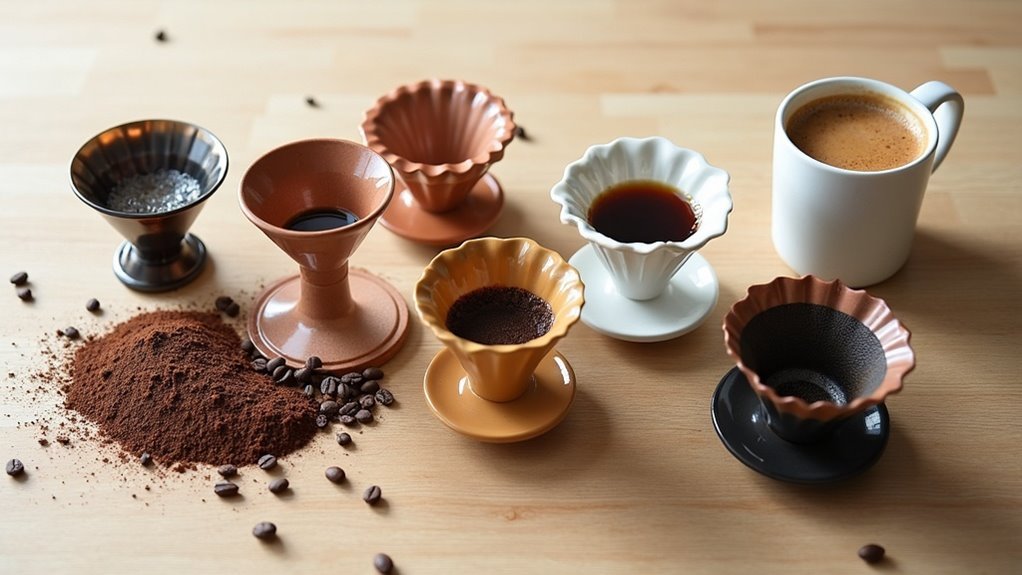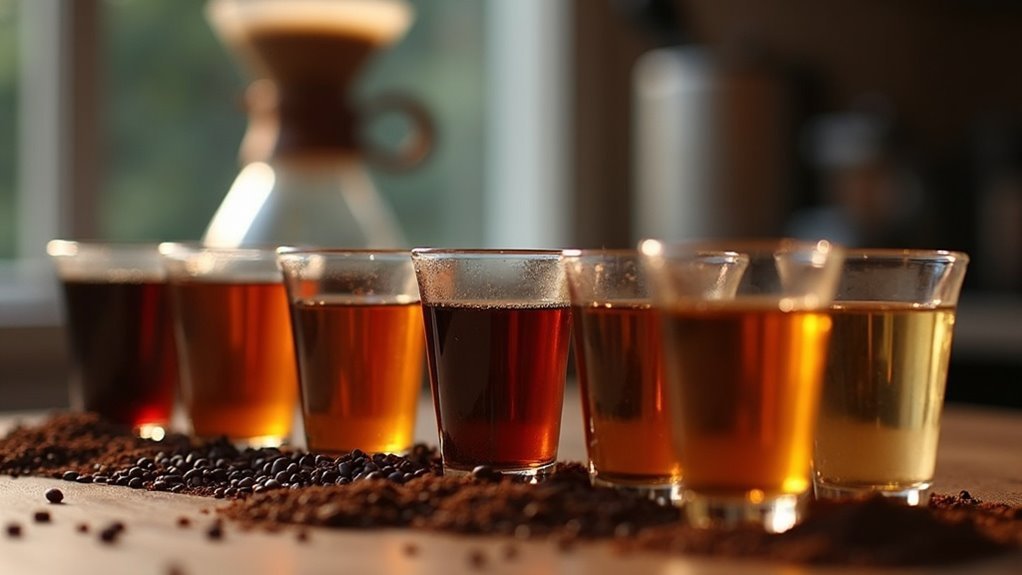
Immersion brewing is a delightful coffee method that involves steeping coarsely ground coffee in water for an extended period. This technique unlocks richer, bolder flavors by enhancing extraction while keeping bitterness at bay. Popular methods include the French press, AeroPress, and cold brew, each providing a distinct coffee experience. With immersion brewing, you have the freedom to control steeping times, though achieving consistency may be a challenge initially. By adjusting your brewing process, you can discover your perfect flavor profile, and there’s a vast world to explore within this brewing style. Enjoy the journey of perfecting your coffee craft!
Key Takeaways
- Immersion brewing is a method that involves steeping coarsely ground coffee in water for an extended period, which enhances flavor extraction and creates a delightful coffee experience.
- Popular immersion brewing techniques include the French press, AeroPress, and cold brew, each providing its own unique approach to brewing coffee.
- Using coarser coffee grounds is crucial in this method as it helps prevent bitterness and ensures a well-balanced flavor profile.
- One of the great aspects of immersion brewing is that users can easily adjust steeping times to achieve different flavor intensities, making it accessible for beginners.
- Generally, immersion brewing results in a richer, fuller-bodied coffee compared to traditional drip brewing methods, offering a more satisfying taste for coffee enthusiasts.
Understanding Immersion Brewing
When you dive into immersion brewing, you’ll find it’s a method that allows coffee grounds to steep in water for an extended period, maximizing flavor extraction.
This technique requires a coarser grind to prevent over-extraction and bitterness. Adjusting the steep time is crucial; longer steeping can yield a bolder flavor.
The recommended coffee-to-water ratios vary, with the French press typically using 1:12 to 1:15 and cold brew at 100 grams per liter.
This brewing method offers richer, more robust flavors compared to pour-over techniques, making it perfect for those seeking a deeper coffee experience while ensuring safe preparation.
Popular Immersion Brewing Methods
Immersion brewing encompasses several popular methods that each offer unique flavor profiles and brewing experiences for coffee lovers.
The French Press, known for its rich, full-bodied coffee, requires coarsely ground coffee steeped for about 4 minutes.
The French Press delivers a rich, full-bodied coffee experience with coarsely ground beans steeped for 4 minutes.
The AeroPress, a versatile option, can produce espresso-style coffee with a fine grind in just 2 minutes and 30 seconds.
Cold brew, on the other hand, involves steeping coarsely ground coffee in cold water for 48 hours, yielding a sweet, complex flavor.
Each method emphasizes safety through proper brewing times and ratios, ensuring you enjoy a delicious cup of coffee without compromising quality or taste.
Benefits of Immersion Brewing
While many brewing methods exist, immersion brewing stands out in the world of coffee for its ability to deliver a rich and nuanced flavor profile. This technique enhances extraction, allowing you to accommodate various coffee strengths.
By using coarser coffee grounds, immersion brewers minimize bitterness and over-extraction, resulting in a smoother, fuller-bodied cup of coffee. For beginners, it’s user-friendly, offering control without the need for precise pour techniques.
The flexibility in steeping times lets you experiment, adjusting flavor intensity easily to suit your taste. Compact and accessible, immersion brewing methods like the French press or AeroPress are perfect for home use or travel, ensuring that your coffee quality is never compromised.
Challenges of Immersion Brewing
While immersion brewing presents an accessible way to brew coffee, it also introduces specific challenges that can influence the final taste of your cup. Achieving consistency is essential; it’s important to keep a close eye on steeping time to prevent over-extraction, which can lead to bitterness. Furthermore, certain immersion methods, such as the French press, may result in sediment that obscures flavor clarity. The brewing time can vary significantly, necessitating some trial and error to discover your ideal strength. Lastly, immersion methods might not fully capture the intricate flavor notes that pour-over techniques can achieve, often resulting in a more uniform taste.
| Challenge | Description | Solution |
|---|---|---|
| Consistency | Can be challenging for beginners | Monitor steeping time |
| Sediment | May detract from flavor clarity | Use a finer filter or strain |
| Brewing Time Variability | Requires experimentation to suit personal taste | Adjust steeping duration |
| Flavor Extraction | May lack the complexity found in other brewing methods | Experiment with grind size |
Comparing Immersion and Drip Brewing
When comparing immersion and drip brewing, you’ll notice distinct differences in techniques and flavor profiles that are crucial for coffee enthusiasts.
Immersion brewing allows for a robust extraction thanks to longer contact times, resulting in a fuller-bodied coffee with rich flavors.
In contrast, drip brewing emphasizes clarity through precise pouring methods, delivering a cleaner cup with bright notes.
Additionally, the equipment and setup vary greatly; immersion methods offer more flexibility for experimentation with different coffee grounds and brewing times, while drip brewing requires a controlled environment to achieve consistent results.
Brewing Techniques Differences
Understanding the differences between immersion and drip brewing techniques can greatly enhance your coffee-making experience.
In immersion brewing, coffee grounds are steeped in water, allowing for complete flavor extraction, resulting in a rich and robust cup of coffee. On the other hand, drip brewing utilizes gravity to create a distinct flavor profile that’s often lighter and more nuanced.
The two methods also vary in terms of grind size; immersion brewing typically calls for coarser grinds to prevent bitterness, while drip brewing benefits from medium grinds that promote clarity in flavor.
Additionally, the brew time in immersion brewing directly impacts the strength of the coffee, providing flexibility for beginners to experiment. In contrast, the precision required in drip brewing can sometimes lead to inconsistencies in the final product.
Flavor Profiles Comparison
While both immersion and drip brewing produce delicious coffee, their distinct flavor profiles cater to different preferences and experiences.
Immersion brewers, such as the French press and AeroPress, create a bolder, fuller-bodied coffee due to prolonged flavor extraction. The brew ratio typically ranges from 1:12 to 1:15, enhancing the robustness of the brew.
On the other hand, drip brewing emphasizes nuanced flavors with a cleaner cup, following a 1:15 to 1:17 ratio. This method allows for consistent extraction, although it may be susceptible to human error.
Ultimately, your choice depends on whether you desire a rich, intense coffee experience or a delicate, complex flavor profile.
Equipment and Setup
Choosing the right equipment for brewing coffee can greatly impact your experience, especially when comparing immersion and drip methods.
Immersion brews, like the French press or AeroPress, utilize simpler brewing devices, requiring just a vessel and a plunger. These methods favor a coarse grind to prevent over-extraction, resulting in a bolder flavor profile.
In contrast, drip brewing involves more complex setups, such as pour-over cones or electric coffee makers, using medium to fine grinds for ideal extraction.
While immersion allows for longer brewing times and fuller-bodied coffee, drip brewing focuses on achieving a cleaner cup with delicate flavors, making it a popular choice for those seeking a refined coffee experience.
Tips for Successful Immersion Brewing
To achieve a successful immersion brewing experience, you’ll want to pay close attention to several key factors that can greatly influence the flavor of your coffee.
Start by maintaining a coffee-to-water ratio of 1:12 to 1:15, adjusting for your preferred strength. Opt for coarser grinds to minimize bitterness.
Experiment with steeping times, typically between 2 to 4 minutes, to find your ideal flavor. Use high-quality water heated between 195°F to 205°F for prime extraction.
Preheat your brewing equipment with hot water for better temperature stability, and familiarize yourself with your specific immersion brewer to master the nuances of this brewing method.