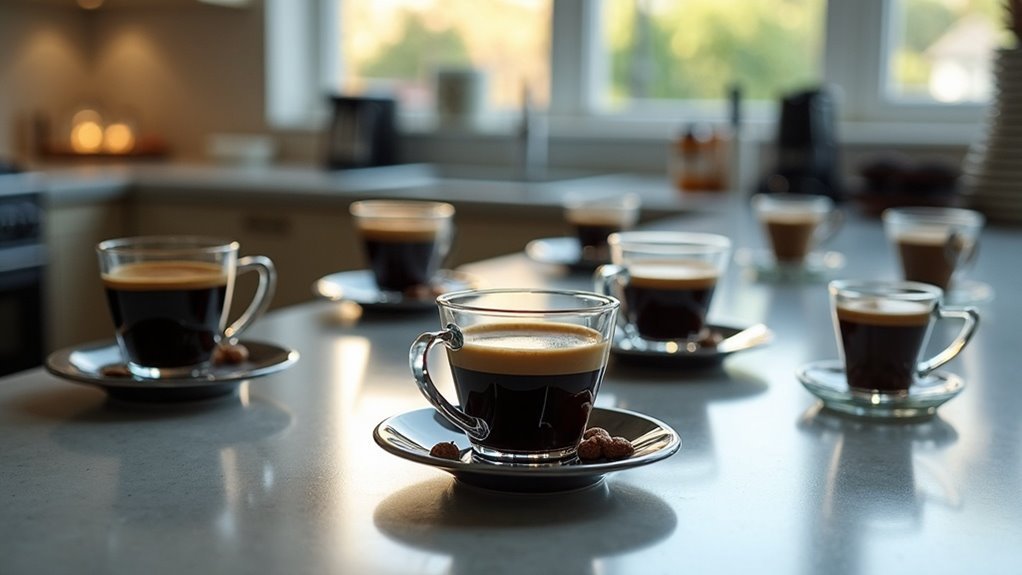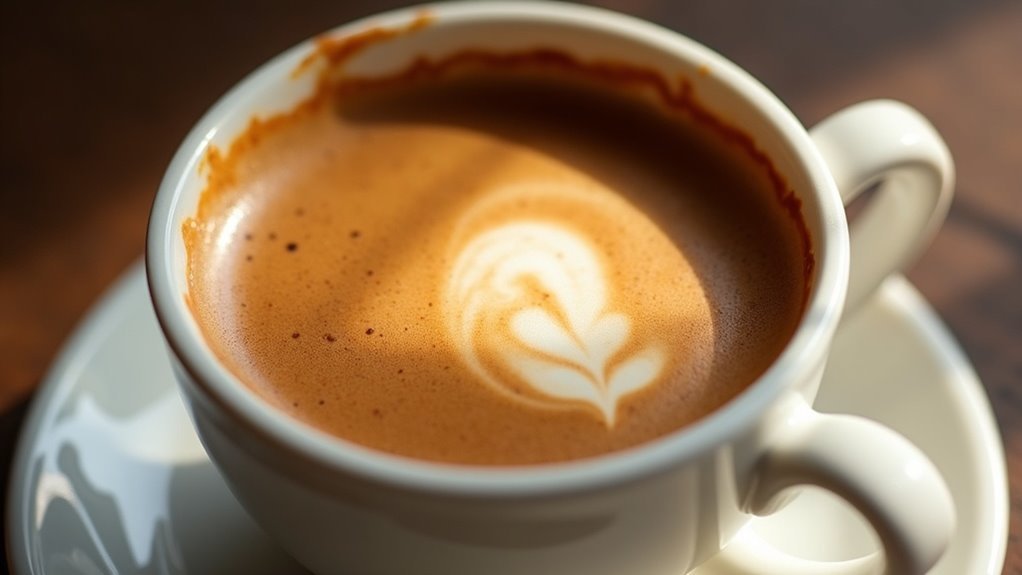
Crema color tells you a lot about your coffee. A light crema suggests under-extraction, while a dark one indicates over-extraction. If you’re enjoying a thicker, darker crema, it often means you’re using dark-roasted Robusta beans, which provide rich oils and robust flavors. Meanwhile, a golden crema typically comes from lighter-roasted Arabica beans, indicating gentler extraction. Each shade reflects different aromas and flavors, suggesting that mastery of these nuances can significantly enhance your coffee brewing experience.
Key Takeaways
- Crema color ranges from light caramel to dark brown, indicating the roast depth of the coffee beans used in your brew.
- A darker crema, often resulting from dark roasts or robusta beans, suggests richer flavors and a thicker texture in your coffee.
- Conversely, lighter crema indicates a gentler extraction, commonly associated with light roasts and a silkier mouthfeel.
- Variations in crema color can signal extraction quality; lighter crema may suggest under-extraction, while darker crema could indicate over-extraction.
- Crema not only enhances aroma perception but also elevates the overall flavor experience, reflecting both the brewing technique and the specific bean variety used in your coffee.
The Origin of Crema Color
While many may see crema as merely an aesthetic component of espresso, its color actually stems from several critical factors that reflect the quality of the coffee and the brewing process.
The crema color can range from light caramel to dark brown, primarily influenced by the roast depth of the beans. Darker roasts yield a richer crema due to increased melanoidins.
Additionally, the type of coffee bean plays a role; Robusta contributes to darker crema because of its higher CO2 content.
Ultimately, the crema color serves as an indicator of extraction quality, providing valuable feedback on your brewing technique, making it an essential aspect of the coffee experience.
Understanding the Extraction Process
To fully appreciate the crema’s role in espresso, it’s essential to understand the extraction process that leads to its formation. The brewing process plays a significant role in determining the crema’s color.
Here are three key factors:
- Grind Size: A finer grind increases extraction, influencing the crema’s color and texture, essential for a rich coffee experience.
- Water Temperature: Ideal temperatures enhance flavor extraction, directly affecting the stability and richness of the crema, which contributes to the overall coffee flavor.
- Extraction Time: Balancing the extraction time is crucial; it ensures the right flavor compounds surface, impacting not just the crema’s appearance but also the depth of flavor in your coffee.
Understanding these factors can help you brew the perfect cup of coffee, highlighting the importance of crema in espresso.
The Impact of Roast Level on Crema
When you examine the impact of roast level on crema, you’ll notice distinct characteristics between dark and light roasts.
Dark roast crema is typically thicker and darker, showcasing a rich extraction of oils and compounds, while light roast crema appears more golden and creamy, reflecting a gentler extraction process.
Understanding these differences can enhance your appreciation of the espresso’s flavor profile and overall quality.
Dark Roast Crema Characteristics
Dark roast crema showcases distinctive characteristics shaped by the roasting process, which greatly impacts its visual appeal and flavor profile. Here are three key traits you’ll notice:
- Color and Stability: Dark roasts yield a richer crema hue, enhanced by melanoidins that contribute to foam stability, making each cup visually enticing.
- Flavor Robustness: The reduced acidity in dark roast coffee results in a deeper, more robust flavor profile that often overshadows subtler tasting notes, appealing to those who enjoy bold coffees.
- Thickness and Bitterness: Expect a thicker crema with a pronounced bitterness, which may limit the complexity of aromas but adds to the overall intensity of the coffee experience.
While dark roast crema enhances your coffee enjoyment, be mindful that its lifespan may be shorter due to oil breakdown that occurs during the roasting process.
Light Roast Crema Effects
Light roast crema offers a unique visual and sensory experience that sets it apart from its darker counterparts. With its lighter, golden-brown hue, light roasts indicate a lower roasting degree, yielding brighter flavors and higher acidity.
This crema tends to be less stable due to fewer melanoidins, which are essential for crema stability, resulting in a silkier texture and delicate mouthfeel. However, it dissipates quickly, so it’s best to savor your espresso soon after brewing.
The distinct characteristics of light roast crema enhance your overall coffee experience, making the choice of light roasts an intriguing option for coffee enthusiasts seeking something different.
Differentiating Between Bean Varieties
Understanding the nuances between coffee bean varieties is essential for appreciating the complexities of crema color in your favorite brew. Here are three key distinctions:
- Roast Level: Darker roasted coffee beans yield a darker crema, while lighter roasts or Arabica beans produce a lighter crema that can enhance the overall flavor profile.
- Bean Type: Robusta beans create a thicker, darker crema due to their higher CO2 content, in contrast to the lighter, less stable crema produced from Arabica beans.
- Oil Content: Arabica beans, known for their higher lipid content, contribute to a golden crema, showcasing how oils and melanoidins influence the crema color and texture.
Recognizing these differences not only helps you assess brewing quality but also enriches your coffee appreciation journey.
Sensory Perception and Flavor Influence
When you examine crema on your espresso, you notice its color can reveal much about the roast and extraction level, yet its influence on taste mightn’t be as profound as expected.
The aroma it enhances can elevate your sensory experience, but the actual flavor profile remains largely tied to the coffee beans themselves.
Understanding this interaction between crema and flavor can help you appreciate the complexity of your espresso beyond just its visual appeal.
Crema and Taste Interaction
Crema plays an essential role in shaping your sensory experience of coffee, as its color and texture can greatly influence how you perceive flavor and aroma.
Consider these key points about crema color and taste interaction:
- Lighter crema suggests under-extraction, while darker crema indicates over-extraction or a darker roast.
- Crema enhances aroma perception, elevating your overall tasting experience.
- Skimming crema can reduce bitterness, allowing the coffee’s flavor profile to shine.
While crema enriches your coffee experience, any unpleasant flavors from fine particles can detract from the overall enjoyment, emphasizing the importance of proper management.
Aromatics and Flavor Perception
The intricate relationship between aromatics and flavor perception greatly shapes your coffee experience, as the aromas released during brewing are crucial for enhancing taste.
Crema plays an essential role by trapping volatile compounds, intensifying your sensory journey with every sip. While darker crema signals longer extraction or a darker roast, it also influences how you perceive those rich aromatics.
Though the taste difference between espressos with and without crema may be minimal, its presence can amplify roasted notes, making each cup more enjoyable. Fine coffee particles within the crema might introduce a hint of bitterness, emphasizing the need for balance in flavor profiles.
Keep in mind that crema is just one aspect of your coffee’s overall quality, contributing to the complex experience of savoring your favorite brew.
Adjusting Brewing Techniques Based on Crema Color
As you observe the color of the crema in your espresso, you’ll find it can reveal crucial insights about your brewing process.
To adjust your techniques based on crema color, consider these factors:
- Grind Size: Finer grinds yield a darker crema, enhancing extraction, while coarser grinds produce a lighter crema, affecting the overall flavor profile.
- Brewing Temperature: Higher temperatures lead to darker crema by increasing oil solubility; lower temperatures may result in lighter crema, which can alter the taste experience.
- Coffee Bean Type: Robusta beans typically create a darker, thicker crema compared to lighter Arabica beans, influencing both texture and flavor intensity.