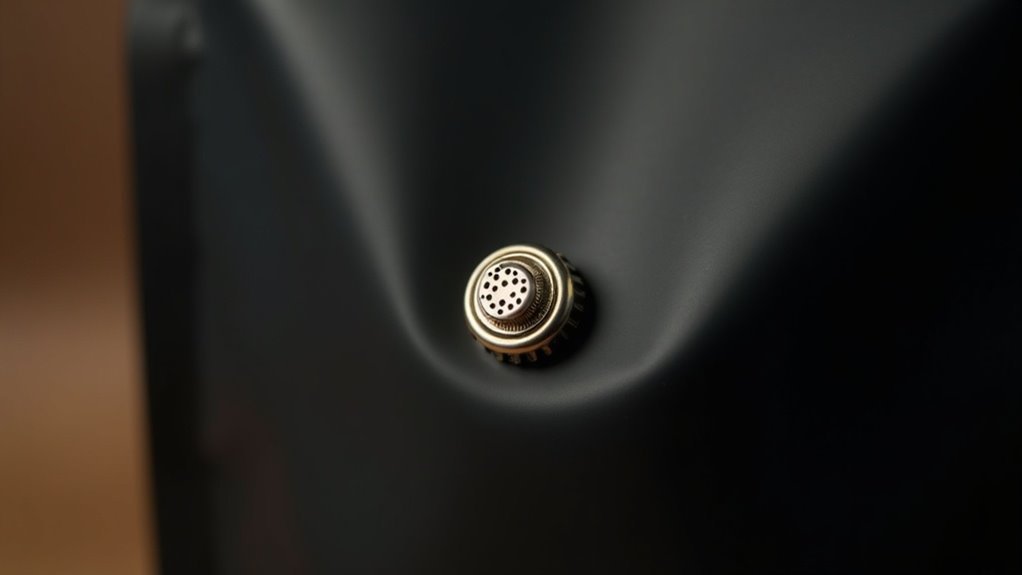
A one-way valve on coffee bags, commonly referred to as a degassing valve, plays a crucial role in maintaining the freshness and flavor of your coffee after roasting. This valve allows carbon dioxide produced during the roasting process to escape while preventing oxygen and moisture from entering the bag. This mechanism is vital for preserving the rich taste and aroma of your coffee. By managing internal pressure, it prevents the bag from inflating and potentially rupturing, which helps to extend the shelf life of your coffee. Understanding how these valves work can enhance your overall coffee experience, ensuring you enjoy every cup at its best. Discover the importance of these valves in maintaining the quality of your favorite brews during storage and transport.
Key Takeaways
- A one-way valve on coffee bags, also referred to as a degassing valve, is designed to allow carbon dioxide to escape while preventing oxygen from entering.
- This feature is crucial for maintaining the freshness of coffee by minimizing oxidation and preserving the rich flavor oils.
- The valve effectively regulates pressure buildup within the packaging, which helps reduce the risk of bag ruptures during shipping, ensuring your coffee arrives in perfect condition.
- While this technology is essential for larger coffee packages, it may not be necessary for smaller or single-serve products.
- Incorporating one-way valves significantly enhances the shelf life and overall quality of coffee, encouraging repeat purchases by ensuring customers enjoy fresh coffee with every brew.
What Is a Degassing Valve?
A degassing valve, often referred to as a one-way valve, is an essential feature on coffee bags that regulates the release of carbon dioxide (CO2) emitted during the roasting process.
This specialized vent allows CO2 to escape while preventing oxygen and moisture from entering, which is crucial for preserving the freshness of coffee.
By limiting exposure to oxygen, the degassing valve helps maintain the flavor oils, ensuring that your coffee retains its rich quality.
These valves are especially important for larger packages or during long-distance shipping, as the time from roasting to consumption can vary significantly.
The Importance of Degassing Valves For Coffee Packaging
Degassing valves are vital for keeping your coffee fresh by permitting carbon dioxide to escape while blocking oxygen from entering the package.
This exclusion of oxygen is crucial for preserving flavor and preventing staleness, which significantly enhances your coffee experience.
Furthermore, these valves boost packaging efficiency, ensuring your coffee stays in optimal condition throughout storage and transportation.
Freshness Preservation Mechanism
When coffee is roasted, it releases carbon dioxide (CO2) that needs to escape to maintain freshness, which is where one-way valves come into play.
These valves allow excess CO2 to exit the packaging while preventing oxygen from entering, which is essential for preserving flavor and extending shelf life.
By releasing CO2, one-way valves also prevent bag inflation and potential rupturing, ensuring the integrity of coffee packaging during storage and transportation.
This minimizes oxidation risk, safeguarding delicate flavor oils.
Ultimately, using degassing valves enhances product quality, reduces staleness, and encourages repeat purchases due to improved freshness in your coffee experience.
Oxygen Exclusion Benefits
Maintaining coffee’s flavor and aroma hinges on effectively keeping oxygen at bay. Degassing valves play an important role by allowing carbon dioxide to escape while preventing oxygen from entering the bag.
This exclusion of oxygen greatly reduces staleness, extending the shelf life of your coffee. Without these valves, the buildup of carbon dioxide could lead to bag inflation or bursting, compromising the integrity of your packaging.
Packaging Efficiency Enhancement
To ensure optimal packaging efficiency for coffee, incorporating one-way valves is essential.
Degassing valves enable carbon dioxide to escape, preventing bag inflation and potential rupture after roasting. This feature allows for the quick packaging of fresh coffee without compromising its flavor during transit.
By minimizing oxygen exposure, these valves significantly extend the shelf life of your coffee, preserving its delicate flavors and aromas.
Moreover, the implementation of degassing valves greatly reduces the risk of bag blowouts during shipping, enhancing the overall quality and appeal of your coffee.
Therefore, these valves are vital for maintaining safety and freshness in coffee packaging.
How Degassing Valves Function
Degassing valves play a crucial role in preserving the freshness of coffee by allowing carbon dioxide to escape while preventing outside air from entering the coffee bag.
This one-way gas release mechanism effectively manages pressure buildup, ensuring that the airtight seal essential for maintaining coffee quality remains intact.
One-Way Gas Release
When coffee is roasted, it produces carbon dioxide (CO2) that must escape to prevent pressure buildup in packaging. A one-way vent, or degassing valve, allows this CO2 to exit without letting oxygen or moisture in, ensuring safe storage of freshly roasted coffee.
This function is crucial; it prevents bags from expanding or bursting while preserving the coffee’s flavor and aroma. By facilitating the escape of CO2, the valve reduces oxidation risks, extending shelf life and maintaining quality.
Degassing valves are particularly important for larger coffee packages, safeguarding delicate flavor oils during shipping and storage, so you can enjoy fresh coffee every time.
Oxygen Prevention Mechanism
The one-way degassing valve plays a crucial role in coffee packaging by allowing carbon dioxide to escape while preventing oxygen from entering.
This mechanism is vital as excess carbon dioxide can cause bags to inflate or even burst, threatening the coffee’s freshness and flavor.
The design of the one-way valve ensures that gas escapes more quickly than oxygen can enter, effectively preserving the coffee’s delicate flavor oils and preventing staleness caused by oxidation.
Benefits of Using Degassing Valves
Utilizing degassing valves on coffee bags offers significant advantages for both consumers and retailers.
These valves effectively allow carbon dioxide to escape while preventing oxygen from entering, which helps preserve the coffee’s rich flavor and enticing aroma. By minimizing oxygen exposure, degassing valves enhance freshness, resulting in a longer shelf life for your favorite coffee.
They also reduce the risk of bag blowouts during transit, ensuring that the product remains intact and visually appealing. Additionally, coffee packaged with degassing valves retains its quality without the need for artificial preservatives, making it a safer and more natural choice for coffee lovers, as well as an efficient packaging solution for retailers.
When Degassing Valves Aren’t Necessary
While degassing valves are advantageous for many coffee packaging scenarios, they aren’t always essential, especially for smaller or single-serve products.
In instances of quick consumption, such as with instant coffee, the necessity for gas escape significantly decreases. Here are some key considerations:
- A quick turnover of products minimizes gas buildup.
- Smaller packages mean less time between roasting and consumption.
- Long-distance shipping often doesn’t apply to these products.
- Market demand plays a crucial role in determining packaging choices.
- Safety is maintained without valves for short-term storage of coffee.
Coffee Packaging Solutions With Degassing Valves
When you select coffee packaging solutions featuring degassing valves, you’re ensuring that your freshly roasted coffee retains its rich flavor and enticing aroma.
These specialized valves allow carbon dioxide to escape while effectively blocking oxygen, thus preserving the coffee’s freshness. They’re crucial for managing internal pressure, which prevents bloating or bursting during the important degassing phase.
Specialized valves enable carbon dioxide to escape while blocking oxygen, preserving coffee freshness and preventing packaging bloating.
Additionally, high-barrier films enhance the effectiveness of the packaging by keeping moisture and oxygen at bay, ultimately prolonging the shelf life of your coffee.
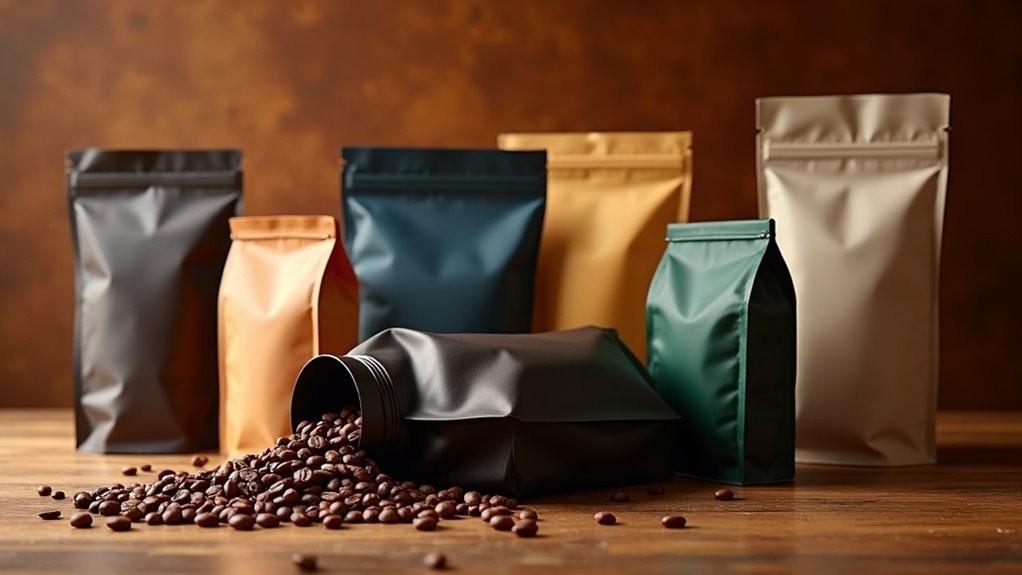
Custom options such as side gusset bags and stand-up pouches can be equipped with degassing valves for optimal results.