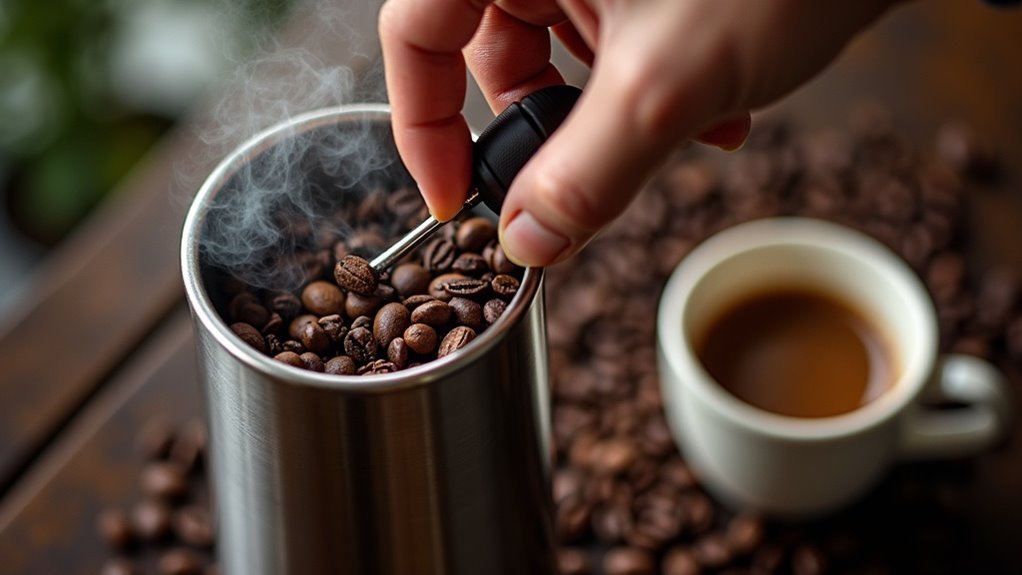
To calibrate your burr grinder for optimal coffee extraction, start by setting it to a baseline of 11. Adjust the burrs to touch by turning the dial counterclockwise, then turn it one click clockwise for standard burrs. Use a Doppio shot for testing, aiming for a 30-second extraction time to ensure a rich flavor profile. Regularly monitor the grind based on the type of coffee you are using and the current weather conditions, making adjustments as needed. Consistent calibration guarantees peak flavor extraction and quality in every cup. For more tips on maintaining your grinder effectively, explore additional resources on our website.
Key Takeaways
- Begin by setting the grinder to setting 11 for baseline calibration before starting the calibration process.
- Carefully remove the dial cover and turn the dial counterclockwise until the burrs touch, then make a slight adjustment by turning one click clockwise.
- Use a Doppio shot for calibration, aiming for an extraction time of 30 seconds to achieve the best flavor profile.
- After calibration is complete, reattach the dial cover and ensure that it rotates freely for ease of use.
- Regularly monitor and adjust grind settings based on the type of coffee being used and environmental factors to maintain a consistent brew quality.
Understanding Grind Size
When you’re brewing espresso, understanding grind size is crucial to achieving the perfect extraction. If your grind is too fine, you’ll experience delayed flow rates, leading to bitterness and over-extraction.
Ideally, a standard espresso shot should extract in about 30 seconds, while a ristretto should be ready in 20 seconds. If you notice pale crema or a fast flow, it means your grind is too coarse, which indicates under-extraction.
To adjust this, rotate your grinder collar clockwise for a finer grind or counterclockwise for a coarser one. Remember, maintaining a consistent grind size is key to high-quality espresso, so be sure to regularly calibrate your grinder for the best results.
Preparing Your Grinder
Before diving into calibrating your burr grinder, it’s essential to prepare it correctly. Follow these steps to ensure safety and efficiency when working with coffee grinders:
- Carefully read all manufacturer instructions.
- Check out available walkthrough videos for visual guidance.
- Set the grinder to setting 11 before installation.
- Use a brush to clean the grinder and eliminate any old coffee grounds.
- Unplug the grinder to avoid electrical hazards during disassembly.
Initial Calibration Steps
Start the calibration process by adjusting your grinder to setting 11, which establishes a baseline for optimal coffee performance.
Next, remove the dial cover and turn the dial counterclockwise until the burrs touch, then rotate one click clockwise for standard burrs or five clicks for SSP burrs.
Remove the dial cover and adjust the dial until the burrs touch; then turn clockwise for the desired burr type.
For calibration, use a Doppio, requiring a double dose of coffee grounds to achieve the ideal extraction time of 30 seconds for a 2-ounce shot of espresso.
Start your kitchen timer simultaneously with the extraction, ensuring it begins around 4 seconds.
Finally, reattach the dial cover, ensuring it moves freely, completing the calibration process safely for your coffee brewing setup.
Testing Your Grind
To test your grind, begin by extracting a Doppio and aim for an ideal extraction time of 30 seconds.
Consider how weather conditions can impact your grind adjustments; factors like humidity and temperature can influence the flow of espresso.
Optimal Extraction Timing
While calibrating your burr grinder, understanding ideal extraction timing is essential for achieving the best flavor in your espresso.
For optimal results with the Ode Gen, aim for these extraction times:
- 30 seconds for a single ounce of espresso
- 20 seconds for a Ristretto
- 30 seconds for a Doppio (double shot)
Coarser grinds speed up extraction; finer grinds slow it down.
Consistent monitoring prevents weak or overly bitter drinks.
Adjusting grind size precisely allows you to hit these targets, ensuring quality in your brewing process.
Accurate timing is key to revealing rich flavors and aromas, making every cup a delightful experience.
Weather Impact Adjustments
Changes in weather can significantly impact your coffee grind performance, making it crucial to adjust your burr grinder for optimal extraction.
In humid conditions, it’s advisable to use coarser grinds, like those produced by the Ode, as they help counteract slower extraction rates caused by moisture absorption.
On the other hand, during dry weather, a finer grind is preferred to prevent rapid extraction that may lead to bitterness.
To ensure consistent results, regularly monitor weather fluctuations and recalibrate your grinder as needed.
Additionally, incorporating fresh coffee beans into your routine can help mitigate moisture issues, allowing you to achieve excellent brewing quality regardless of the external conditions.
Adjusting for Flavor
Adjusting for flavor is essential in achieving the perfect cup of coffee.
By modifying the grind size, you can directly impact the taste profile; a finer grind can lead to bitterness from over-extraction, while a coarser grind may result in a weak brew.
Regular adjustments, based on brewing times and daily humidity, will help you fine-tune your coffee’s flavor.
Impact on Espresso Taste
The grind size of your coffee beans significantly influences the flavor profile of your espresso. Utilizing a burr coffee grinder allows for precise adjustments that can greatly enhance taste.
- Finer grinds may amplify richness but carry the risk of bitterness.
- Coarser grinds can soften flavors, potentially leading to a weak body.
- Adhering to ideal extraction times is crucial for optimal flavor—30 seconds for Doppio and 20 seconds for Ristretto.
- Regular calibration of your grind size helps counteract the effects of humidity on extraction.
- Always opt for fresh beans to preserve flavor integrity.
Maintaining consistency in grind size is essential for a satisfying espresso experience, making regular calibration a must for coffee enthusiasts.
Grind Size Variations
While experimenting with grind size, you can discover how slight variations can dramatically alter your coffee’s flavor profile.
A grind that’s too coarse can lead to under-extraction, resulting in a weak and bland taste. For espresso, aim for a fine grind to achieve ideal extraction around 30 seconds. If you’re making ristretto shots, a finer grind is essential, as they necessitate a 20-second extraction.
Remember, humidity affects your grind adjustments; higher moisture levels may require coarser settings to maintain flavor.
Regularly calibrate your grinder to guarantee consistency and adjust based on your taste preferences for the best coffee results.
Fine-Tuning Your Grind
How can you guarantee your coffee grind size is perfectly calibrated for ideal extraction? Fine-tuning your grind is essential for brewing the perfect cup.
Adjust the grinder collar as needed, since a finer grind slows extraction while a coarser grind speeds it up.
- Monitor extraction times: target 30 seconds for a Doppio and 20 seconds for a Ristretto.
- Start with a Doppio shot; smooth flow should begin around 4 seconds.
- Adjust for humidity: coarser grinds for high humidity, finer for low.
- Regularly clean your grinder to prevent buildup and ensure optimal performance.
- Always check consistency to verify quality in your coffee.
Make sure to follow these guidelines for the best coffee experience.
Maintaining Your Grinder
Regular maintenance of your burr grinder is essential for achieving consistent grind size and ideal flavor extraction in your coffee.
Always unplug the grinder before cleaning to ensure your safety. Use a brush specifically designed for grinder cleaning to remove coffee residue from the burrs and grind chamber.
Frequently check and adjust the grinder settings, especially when you switch coffee beans or notice changes in humidity. For peak performance, calibrate your grinder every morning before use.
This practice ensures you maintain grind consistency and achieve quality espresso extraction, ultimately enhancing your overall coffee experience.
Troubleshooting Common Issues
When you encounter issues with your burr grinder, it’s essential to pinpoint the problem quickly to guarantee ideal coffee extraction.
Here are common issues and adjustments you can make:
- If your espresso extracts too quickly, adjust the grind size to be coarser.
- For a bitter taste resulting from slow extraction, grind the coffee finer.
- Be mindful of humidity; use coarser grinds in high humidity and finer grinds in dry conditions.
- Start your calibration at the recommended grind size (setting 11).
- Make it a habit to regularly clean the grinder to prevent ground coffee build-up, ensuring consistency in your brewing process.