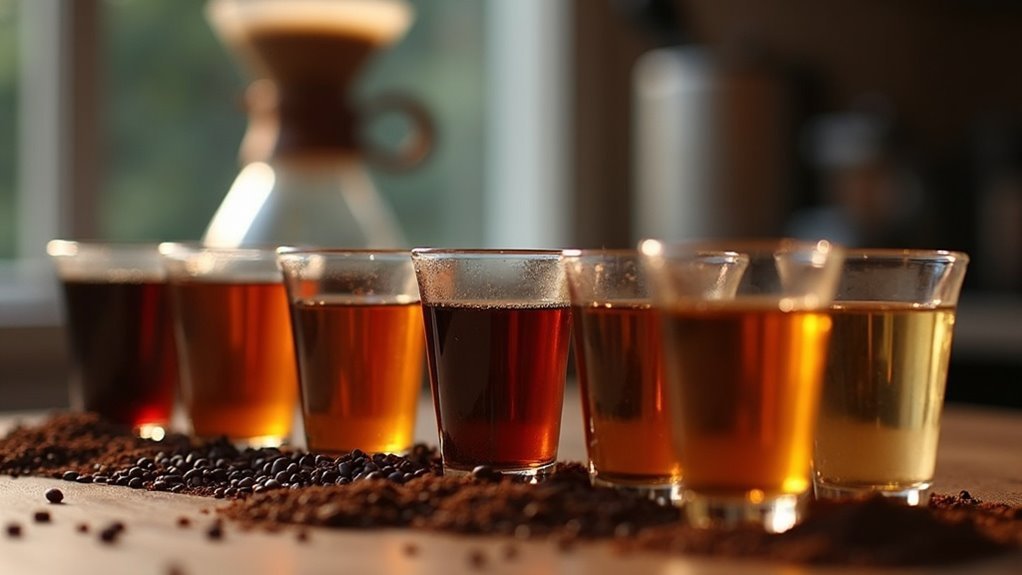
Yes, you can use softened water for brewing coffee, but it may negatively impact the flavor. Softened water is often low in essential minerals like calcium and magnesium, which are important for extracting the rich flavors of your coffee. Additionally, the higher sodium content in softened water can dull the taste, particularly in lighter roasts, resulting in a less vibrant cup. For a superior brewing experience, consider using filtered or hard water, as this can significantly enhance the complexity of your coffee’s flavor. Keep experimenting to discover the best water choice for your perfect brew!
Key Takeaways
- Softened water can be used for coffee, but it may negatively affect flavor extraction due to altered mineral content.
- Higher sodium levels in softened water can mute flavors, resulting in a dull taste, especially in lighter roasts.
- Softened water lacks essential minerals like calcium and magnesium, which are important for vibrant coffee flavor.
- Brewing with softened water may lead to a gelatinous residue with coffee grounds and diminished complexity in taste.
- For optimal coffee flavor, using filtered water with balanced mineral content is recommended over softened water.
Understanding Softened Water and Its Composition
Softened water, commonly found in many households, is produced by removing hardness minerals like calcium and magnesium through an ion exchange process.
This method typically replaces these minerals with sodium or potassium ions, which alters the water’s mineral content.
While softened water is generally safe for consumption, its higher alkalinity can influence flavor compounds in coffee brewing.
The absence of beneficial minerals may result in muted flavors and reduced complexity in your brew, ultimately affecting the overall quality of the coffee.
Therefore, understanding the composition of softened water is crucial; it’s generally not recommended for brewing coffee due to its potential negative impact on extraction efficiency and flavor profile.
The Impact of Softened Water on Coffee Flavor
When brewing coffee, the choice of water can significantly influence the final flavor, and using softened water can lead to less than ideal outcomes.
- It often lacks essential minerals like calcium and magnesium, which are vital for achieving rich and vibrant coffee tastes.
- The higher sodium content in softened water can mute flavors, resulting in a bland cup that lacks depth.
- The altered mineral composition may hinder the extraction process, potentially creating a gelatinous residue with coffee grounds.
Many coffee enthusiasts advise against using softened water for brewing, as its elevated alkalinity can accentuate bitterness and reduce the complexity of the coffee’s flavor profile, often failing to meet the high standards set by the Specialty Coffee Association.
Pros and Cons of Using Softened Water for Brewing
Using softened water for brewing coffee presents both advantages and drawbacks that warrant careful consideration.
| Pros | Cons | Impact on Coffee Taste |
|---|---|---|
| Reduces scale buildup | High sodium levels | Muted flavors |
| Extends machine lifespan | Lacks essential minerals | Diminished complexity |
| Convenient alternative | High alkalinity | Dull taste, especially in lighter roasts |
While softened water may simplify maintenance of your coffee machine, it often compromises the flavor and caffeine extraction in your cup. For the best coffee experience, consider using filtered water that retains essential minerals, which can enhance the brewing process and elevate the taste of your coffee.
Comparing Softened Water With Hard Water
When comparing softened water to hard water for brewing coffee, you’ll notice distinct differences in flavor profiles and extraction efficiency.
Softened water, often containing higher sodium levels, can lead to muted flavors and less effective caffeine extraction.
In contrast, hard water’s beneficial minerals enhance the taste and complexity of your brew.
Understanding these differences can help you make an informed choice about the water you use for your coffee, ultimately improving your overall coffee experience.
Flavor Profile Differences
Although many coffee drinkers mightn’t realize it, the type of water you use greatly influences the flavor profile of your brew. Softened water, often high in sodium, can mute flavors and lead to a dull taste. In contrast, hard water, rich in calcium and magnesium, enhances complexity and extraction efficiency.
- Softened water may create gelatinous substances with coffee grounds, affecting the overall texture and mouthfeel.
- High bicarbonate levels in water can emphasize bitterness in your coffee, overshadowing its more delicate flavors.
- Hard water contributes to better caffeine extraction, resulting in a more robust cup.
Choosing filtered or hard water can markedly improve your coffee’s taste, making it a safer bet for a flavorful experience. By paying attention to your water quality, you can elevate your daily cup of coffee to new heights.
Extraction Efficiency Comparison
While many coffee enthusiasts may overlook the impact of water quality on extraction efficiency, the differences between softened and hard water can greatly alter the brewing process.
Softened water, primarily composed of sodium, often lacks the essential minerals found in hard water, which enhances flavor complexity. This deficiency can lead to less effective extraction, resulting in a dull taste profile.
Research indicates that ideal extraction occurs within 50-175 ppm of hardness, a range softened water typically misses. Consequently, coffee brewed with hard water generally produces a more robust flavor and higher caffeine extraction than that brewed with softened water, which may disappoint coffee lovers seeking a rich experience.
Recommendations for Optimal Brewing Practices
To brew the best coffee, prioritize using filtered water that maintains an ideal mineral balance.
Optimal brewing temperatures play an essential role in flavor extraction, ensuring you get the most from your coffee grounds.
Filtered Water Benefits
Using filtered water is essential for achieving the best possible flavor and consistency in your coffee. By choosing filtered water, you guarantee ideal brewing conditions that elevate your coffee experience.
- Enhances coffee flavors through better extraction
- Prevents mineral buildup, extending your coffee machine’s lifespan
- Maintains a neutral pH for a balanced taste profile
Filtered water typically has low mineral content, avoiding the drawbacks of softened water.
The Specialty Coffee Association recommends aiming for total dissolved solids (TDS) around 150 ppm, which filtered water can help you attain, resulting in a more enjoyable cup of coffee.
Ideal Brewing Temperatures
Achieving the perfect cup of coffee hinges greatly on brewing temperature, as it directly influences flavor extraction and overall quality. The ideal range is between 195°F and 205°F (90°C to 96°C), ensuring you extract the best flavors without bitterness.
Brewing coffee at temperatures below 195°F risks under-extraction, while going above 205°F may lead to undesirable bitterness.
To enhance your coffee experience, consider using a water softener to improve water quality and ensure your coffee maker maintains a consistent temperature.
Investing in a temperature-controlled kettle can provide precise brewing, allowing you to enjoy a superior cup of coffee with every brew.
Mineral Balance Importance
Maintaining the right mineral balance in your brewing water is essential for extracting the best flavors from your coffee.
The Specialty Coffee Association recommends a total hardness of 50-175 ppm to optimize extraction efficiency. Softened water often has elevated alkalinity, which can dull flavors.
To guarantee your coffee shines, consider the following:
- Use water with balanced calcium and magnesium levels.
- Test your water’s hardness and alkalinity regularly.
- Experiment with different water sources to find the best fit.
Exploring Alternative Water Sources for Coffee
While many coffee enthusiasts may not realize it, the quality of water you choose plays a pivotal role in the final taste of your brew. Exploring different water sources can greatly enhance your coffee experience. For instance, using unsoftened tap water often yields a richer flavor profile compared to softened water. Here’s a quick comparison of water types:
| Water Type | Mineral Content (ppm) | Flavor Profile |
|---|---|---|
| Unsoftened Tap Water | 50-175 | Complex & Rich |
| Filtered Water | Variable | Clean & Balanced |
| Bottled Spring Water | Low to Moderate | Crisp & Invigorating |
Experimenting with these options will elevate your brewing process and overall enjoyment of coffee.