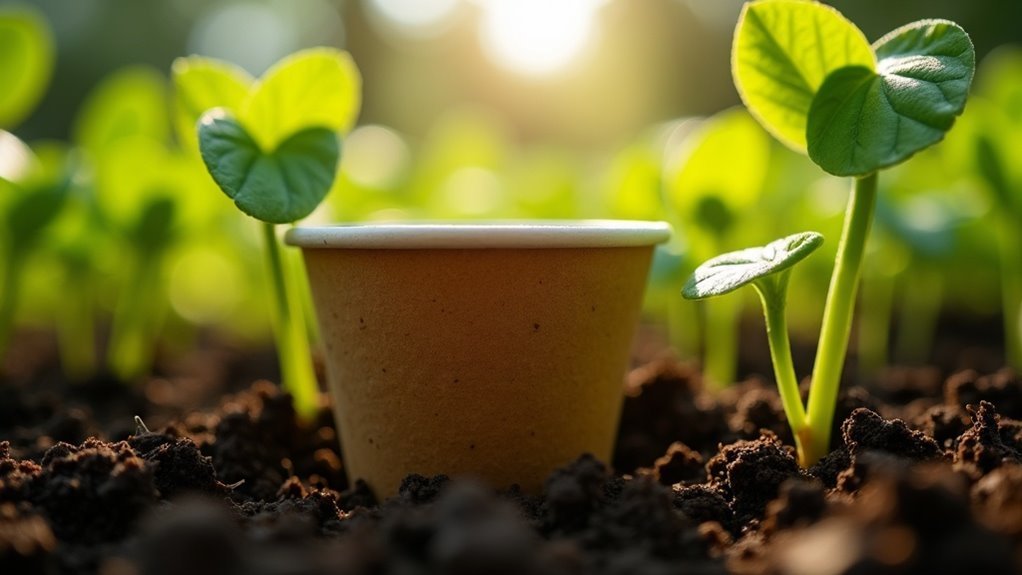
Compostable coffee cups aren’t likely to break down effectively in home composting systems. They require high temperatures and active microbes for proper decomposition, conditions that most home systems typically can’t provide. At home, it can take 6-12 months for these cups to decompose, while industrial composting can process them in just 60-90 days. Therefore, seeking certified disposal options is crucial for sustainability. For coffee enthusiasts, it’s important to be aware of proper disposal methods and explore alternatives to ensure that your love for coffee has a minimal environmental impact. You’ll find more insights on these topics ahead.
Key Takeaways
- Compostable coffee cups are primarily designed for industrial composting and can struggle to break down efficiently in your home composting system.
- While home composting often takes 6-12 months, industrial facilities can process these cups in just 60-90 days.
- Most compostable coffee cups do not have certification for home compostability, which increases the risk of improper disposal.
- Achieving the necessary high temperatures and microbial activity needed for effective breakdown is often challenging in home composting environments.
- To ensure responsible disposal, always check for compostability certification labels before adding coffee cups to your compost bin.
Understanding Compostable Coffee Cups
While you might think that compostable coffee cups are a straightforward eco-friendly option, understanding their composition and disposal requirements reveals a more complex situation. Made primarily from plant-based materials like PLA, these cups break down efficiently in industrial composting facilities within 60-90 days, making them a great choice for environmentally conscious coffee drinkers.
However, they struggle in home composting environments due to lower temperatures and insufficient microbial activity, which can hinder their decomposition. Many of these cups lack certification for home compostability, potentially taking 6-12 months or more to break down in a backyard compost pile.
Proper disposal in designated facilities is crucial to prevent contamination of recycling streams and ensure these cups fulfill their intended environmental benefits, allowing coffee lovers to enjoy their favorite beverage while supporting sustainable practices.
Composting Conditions for Home Systems
Composting compostable coffee cups at home requires creating an ideal microbial environment, which can be challenging.
To effectively break down the cups, you need to maintain specific temperature ranges and ensure adequate moisture and oxygen levels.
Without these conditions, the cups may not decompose as intended, which emphasizes the difficulties of home composting.
For coffee lovers looking to reduce waste, understanding these composting conditions can be essential for a sustainable coffee experience.
Ideal Microbial Environment
To effectively compost coffee cups at home, you need to create an ideal microbial environment that supports their breakdown.
Most coffee cups aren’t designed for home composting, requiring specific conditions often unmet in backyard systems. They typically need higher temperatures and robust microbial activity to decompose efficiently.
Shredding these cups before adding them to your compost can enhance surface area, potentially aiding decomposition. However, without the right heat and microbial balance, expect a timeline of 6-12 months or longer for breakdown, which is markedly slower than traditional organic waste.
Verify your compost system is actively maintained for best results, especially if you enjoy brewing your favorite coffee at home.
Temperature Requirements
Achieving the right temperature for composting is essential for breaking down compostable coffee cups effectively. Most home composting systems don’t reach the required 200 degrees Fahrenheit, making it difficult for these cups to decompose properly.
Here are some critical points to evaluate:
- Commercial composting can break down cups in 60-90 days, ensuring they’re disposed of properly.
- Home systems may take 6-12 months or longer, leading to delays in effective decomposition.
- Most compostable cups lack certification for home use, which can complicate disposal options.
- Lower microbial activity in home composting hinders breakdown, impacting overall compost quality.
Understanding these temperature requirements can help you make informed decisions about the disposal of compostable cups as part of your coffee enjoyment and sustainability efforts.
Moisture and Oxygen Needs
While many people recognize the importance of temperature in brewing the perfect cup of coffee, moisture and oxygen levels are equally essential for breaking down compostable coffee cups in home systems.
These cups require ideal moisture to support microbial activity, which aids in decomposition. However, typical home composting environments often lack the necessary oxygen supply, leading to anaerobic conditions that hinder breakdown.
To improve decomposition, consider shredding the cups to increase surface area, but remember that even with this method, efficient breakdown may still not occur.
Most compostable cups are designed for industrial composting, so check for home compostable certification before adding them to your bin.
Enjoying coffee responsibly includes considering how to dispose of its packaging!
The Difference Between Commercially and Home Compostable
Understanding the difference between commercially and home compostable coffee cups is essential for effective waste management, especially for coffee lovers. Here’s what you should know:
- Commercially compostable cups are designed to break down in industrial facilities within 60-90 days, making them a great option for coffee shops and businesses.
- Home compostable cups require specific conditions typically found in backyard compost setups for proper decomposition.
- Decomposition times for home compostable cups can take anywhere from 6-12 months or even longer, which is important to consider for your home brewing and sipping habits.
- Certification matters; not all cups labeled as compostable are suitable for home composting, so check for the appropriate certifications.
Recognizing these distinctions helps you choose the right cup for your coffee enjoyment while ensuring responsible composting.
Make sure you’re aware of the conditions required for each type to maximize their environmental benefits as you enjoy your favorite brew.
Challenges of Composting at Home
Composting at home presents several challenges that can hinder the effective breakdown of compostable coffee cups. Many of these cups contain a bioplastic lining made from PLA, which requires temperatures above 200°F (93°C) for proper decomposition.
Unfortunately, typical home composting systems rarely reach these temperatures, making it difficult to break down these materials effectively. Additionally, the decomposition process can take 6-12 months or longer, which is considerably slower than the 60-90 days needed in commercial facilities designed for composting.
Home composting often lacks the necessary microbial activity and oxygen levels, further slowing the breakdown of organic materials. Moreover, many compostable coffee cups aren’t certified for home composting, which complicates their disposal and increases the risk of contaminating recyclable materials.
This makes it essential for coffee lovers to be mindful of their cup choices.
Proper Disposal Methods for Compostable Cups
When it comes to enjoying your coffee, understanding the proper disposal methods for compostable coffee cups is vital.
Most of these cups aren’t suitable for home composting due to the specific conditions required for effective breakdown, making industrial composting the necessary option.
To ensure you’re disposing of them correctly after savoring your favorite brew, always check for certification labels that indicate their composting capabilities.
Home Composting Limitations
While many coffee enthusiasts are eager to embrace eco-friendly practices, home composting of compostable coffee cups poses significant challenges that can hinder their sustainability efforts.
- Most coffee cups require industrial composting for effective breakdown.
- Home composting may take 6-12 months, while facilities can process them in 60-90 days.
- PLA coffee cups need high temperatures that are often unachievable at home.
- Without certification for home compostability, there’s a risk of contamination.
To ensure proper disposal of your coffee cups, it’s best to seek commercial facilities that accept compostable cups instead of relying on home composting methods that may not produce the desired results.
Industrial Composting Necessity
To effectively manage the disposal of compostable coffee cups, it’s crucial to recognize the role of industrial composting facilities.
These facilities provide the necessary conditions—higher temperatures and adequate oxygen—that enable compostable cups, typically made from PLA, to break down efficiently within 60-90 days.
In contrast, home composting often fails to achieve these conditions, leading to prolonged decomposition times of 6-12 months or more.
Improper disposal of these cups can increase landfill waste and emissions, impacting our environment.
Therefore, as a coffee lover, you should seek local commercial composting programs or collection points that accept compostable coffee cups.
This ensures responsible disposal and helps minimize contamination in recycling streams, contributing to a more sustainable coffee culture.
Alternatives to Home Composting
While home composting is a popular option for many coffee enthusiasts, it often doesn’t provide the necessary conditions for effectively breaking down compostable coffee cups.
Instead, consider these alternatives for your used coffee cups:
- Return cups to collection locations like Simply Cups, which specialize in recycling coffee-related materials.
- Utilize industrial composting facilities that are equipped to properly break down coffee cups.
- Choose cups explicitly labeled as home compostable, ensuring they can decompose effectively in suitable environments.
- Look for certifications from organizations like OK Compost HOME to guarantee that your cups meet compostability standards.
These options ensure that your compostable coffee cups are processed safely and effectively.
Remember, while home composting may be convenient for other materials, it’s essential to recognize its limitations when it comes to coffee cups.
Opting for certified solutions can further enhance your commitment to sustainability in your coffee habits.