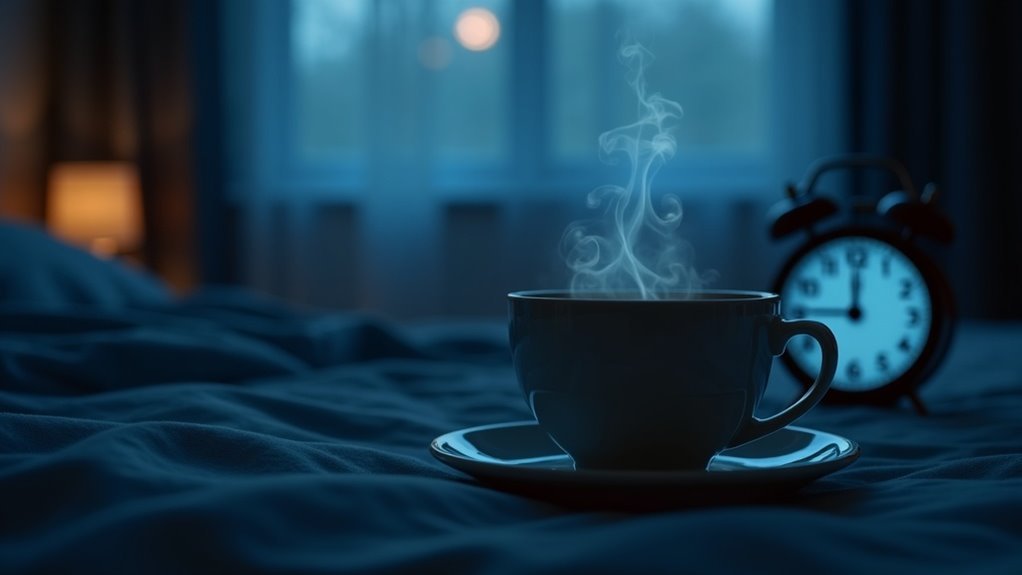
Yes, coffee can greatly affect your sleep quality. Caffeine blocks adenosine receptors, disrupting natural sleep patterns and reducing restorative sleep. Consuming coffee, especially within six hours of bedtime, can delay sleep onset and diminish sleep quality. Individual sensitivity to caffeine varies, with some people experiencing more pronounced effects. To maintain better sleep, it’s advisable to limit caffeine intake and be mindful of when you drink coffee. To learn more about managing your coffee consumption for improved sleep, explore our resources on caffeine and its impact.
Key Takeaways
- Caffeine found in coffee can disrupt natural sleep patterns by blocking adenosine receptors in the brain, which may lead to reduced sleep quality.
- Consuming coffee within 12 hours of bedtime can significantly lower sleep quality and delay the onset of sleep.
- The half-life of caffeine in coffee ranges from 2 to 12 hours, influencing how long its stimulating effects can persist and impact sleep.
- High consumption of coffee may reduce deep, restorative sleep, potentially contributing to a cycle of insomnia for those who are chronically sleep-deprived.
- To maintain a healthy sleep schedule and improve overall sleep quality, it’s advisable to avoid coffee at least 8 hours before bedtime.
How Caffeine Influences Sleep Patterns
When you enjoy a cup of coffee, the caffeine it contains actively blocks adenosine receptors in your brain, which can disrupt your natural sleep patterns.
This interference can delay sleep onset, with research indicating that consuming a 400 mg dose of caffeine (roughly equivalent to four cups of coffee) within 12 hours of bedtime markedly reduces sleep quality.
Consuming 400 mg of caffeine within 12 hours of bedtime can significantly impact your sleep quality.
The half-life of caffeine ranges from 2 to 12 hours, meaning the stimulating effects of your favorite brew can linger and further impact your sleep architecture.
Frequent coffee drinkers may develop a tolerance, which can diminish caffeine’s sleep-disrupting effects, while individuals with slower metabolism may experience heightened disturbances.
Studies show that caffeine reduces restorative slow-wave sleep, which is essential for waking up refreshed and alert the next day.
Enjoy your coffee, but be mindful of when you sip to ensure a good night’s rest!
The Relationship Between Caffeine and Insomnia
While many people enjoy coffee for its rich flavor and energizing effects, its impact on sleep can be detrimental, especially for those struggling with insomnia. High coffee consumption, particularly later in the day, can delay sleep onset and reduce total sleep hours.
This creates a vicious cycle where chronic insomniacs turn to coffee to combat fatigue, further worsening their sleep quality. Research indicates that coffee can decrease deep, restorative sleep, which is vital for feeling refreshed.
To enhance sleep quality, it’s advisable to avoid coffee at least eight hours before bedtime, as individual sensitivity to caffeine varies greatly. Monitoring your coffee intake is essential for maintaining a healthy sleep schedule.
Duration of Caffeine’s Effects on the Body
Caffeine’s effects from coffee can linger for hours, significantly impacting your sleep quality if consumed too late in the day.
The half-life of caffeine varies from 2 to 12 hours, meaning that the effects can last well beyond your last cup. Typically, you’ll feel the boost from your coffee within 30 minutes, and it can persist for up to five hours or longer, depending on how your body metabolizes caffeine and your coffee consumption habits.
Research indicates that drinking coffee within six hours of bedtime can greatly disrupt sleep duration and quality, highlighting the importance of timing your coffee intake for optimal rest.
Individual Sensitivity to Caffeine
Understanding individual sensitivity to coffee is essential for managing its impact on sleep quality. This sensitivity varies greatly, influenced by genetic factors, habitual coffee consumption, and metabolic rates.
For instance, frequent smokers may metabolize coffee faster, reducing its stimulating effects, while pregnant individuals experience a slower metabolism, potentially leading to greater sleep disruptions.
The half-life of caffeine in coffee can range from 2 to 12 hours, causing varied responses among users. Some might face sleep disturbances with small amounts of coffee, while others tolerate larger quantities.
Monitoring your unique sensitivity helps determine ideal cut-off times for coffee consumption, minimizing adverse effects on sleep quality.
Recommended Caffeine Consumption Guidelines
To maintain ideal sleep quality while enjoying your coffee, it’s important to adhere to recommended caffeine consumption guidelines. The FDA suggests a maximum daily caffeine intake of 400 milligrams for adults, although individual sensitivity can vary.
To minimize sleep disruption, it’s advisable to avoid coffee at least 8 hours before bedtime. Keep track of your daily caffeine consumption to identify any negative effects, such as insomnia or anxiety, and adjust as needed.
Remember that caffeine’s half-life can range from 2 to 12 hours, meaning its stimulating effects can linger. For those with a typical 9 to 5 schedule, cutting off coffee by 2 or 3 p.m. is generally a good practice to prevent sleep issues.
Enjoy your coffee, but be mindful of your intake for better sleep!
Signs That Caffeine May Be Disrupting Your Sleep
If you’re enjoying your coffee but struggling to fall asleep or frequently waking during the night, caffeine might be the culprit.
Research indicates that indulging in your favorite brew too close to bedtime can significantly disrupt your sleep quality, resulting in daytime fatigue.
Keeping an eye on these signs is crucial for understanding how your coffee habits may be impacting your overall rest.
Sleep Onset Delay
Caffeine, a key component found in coffee, can considerably disrupt your ability to fall asleep, especially when consumed within a few hours of bedtime.
Research shows that caffeine blocks adenosine receptors, which play a vital role in promoting sleepiness. This blockage can lead to significant delays in sleep onset, extending the time it takes for you to fall asleep.
If you enjoy your coffee within 4 to 12 hours of bedtime, you may experience reduced total sleep hours and poorer sleep quality.
To minimize these effects and ensure your love for coffee doesn’t interfere with your sleep, it’s advisable to avoid caffeine at least 8 hours before bedtime, helping you achieve a smoother transition into restful sleep.
Frequent Night Awakenings
Although many people enjoy a cup of coffee to stay alert during the day, frequent night awakenings can be a clear sign that caffeine is undermining your sleep quality.
Caffeine, a beloved component of coffee, blocks adenosine receptors, disrupting sleep continuity and fragmenting your rest. Consider these indicators:
- Increased awakenings throughout the night
- Difficulty returning to sleep after waking
- Caffeine consumed within 12 hours of bedtime
- High doses, particularly over 400 mg, before bed
- Correlation between caffeine intake and reduced perceived sleep quality
While coffee can be a delightful part of your daily routine, reducing caffeine may help enhance your sleep quality and alleviate nighttime disruptions, leading to a more restful night.
Enjoy your coffee, but be mindful of your consumption for better sleep!
Daytime Fatigue Symptoms
While many coffee enthusiasts enjoy their daily brews, persistent daytime fatigue may signal that your coffee habits are impacting your sleep more than you realize. Difficulty falling asleep or staying asleep can often be linked to excessive caffeine consumption. If you find yourself battling excessive daytime sleepiness, experiencing headaches, or feeling unusually nervous, these symptoms might indicate that your coffee intake is affecting your sleep quality.
| Symptoms | Potential Causes | Suggested Actions |
|---|---|---|
| Daytime fatigue | Poor sleep | Track your coffee intake |
| Difficulty falling asleep | High caffeine dose | Reduce coffee intake after noon |
| Excessive sleepiness | Sleep disorders | Consult a healthcare provider for advice on coffee consumption |
Alternative Strategies for Staying Alert Without Caffeine
To stay alert without relying on coffee, consider the benefits of morning light exposure and short power naps.
Morning light helps regulate your internal clock, enhancing your alertness throughout the day.
Meanwhile, a quick nap of up to 20 minutes can restore energy levels and improve focus without interfering with your nighttime sleep.
Morning Light Exposure
Coffee consumption serves as a popular strategy for enhancing alertness and boosting energy levels. By enjoying a cup of coffee shortly after waking, you can effectively combat daytime sleepiness and improve focus.
The caffeine in coffee works to block adenosine receptors in the brain, which helps to elevate mood and cognitive functions.
- Enhances alertness and mood
- Provides a quick energy boost
- Improves mental clarity and focus
- Increases stamina for daily tasks
- Can be part of a morning routine
Incorporating coffee into your daily regimen can lead to immediate benefits for your productivity and overall performance throughout the day.
Short Power Naps
Short power naps, lasting up to 20 minutes, can be a refreshing addition to your daily routine, much like a good cup of coffee.
While coffee is a popular choice for a quick energy boost, these brief rests offer a practical alternative for enhancing alertness and cognitive performance.
Research indicates that power naps can elevate your energy levels without significantly impacting your nighttime sleep quality.
To make the most of your napping experience, schedule them earlier in the day, ideally before 3 p.m., to avoid interfering with your sleep patterns.
Regular napping can also improve your mood and reduce fatigue, contributing to your overall well-being.
To optimize your napping effectiveness, find a quiet, dark space and set an alarm to avoid oversleeping, which could lead to grogginess, similar to that feeling you sometimes get after too much coffee.