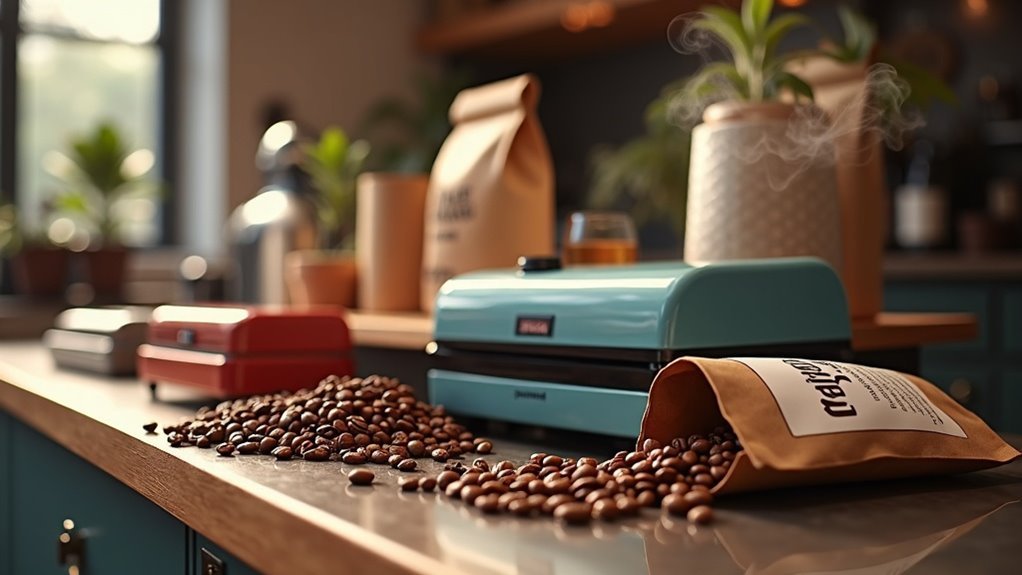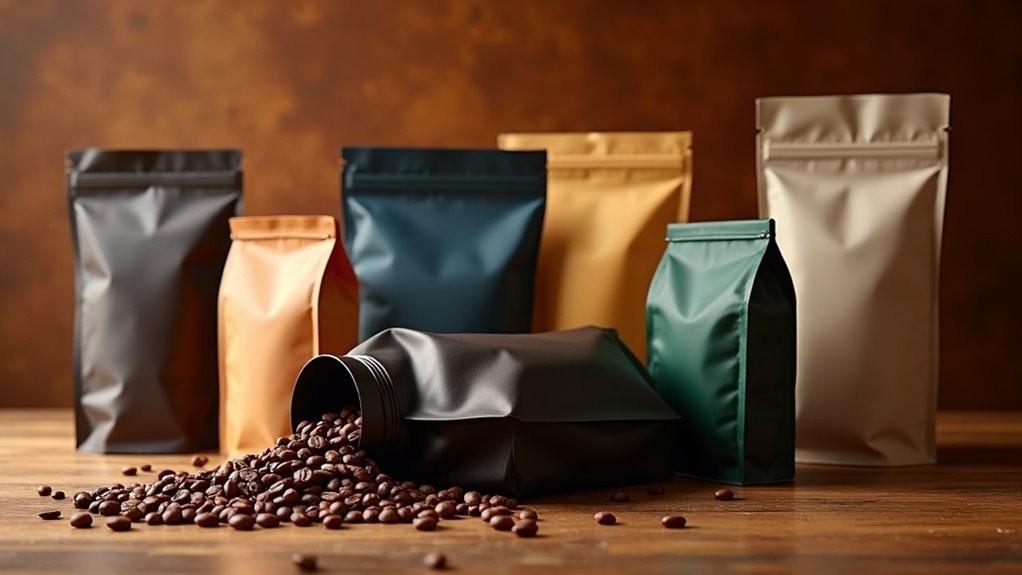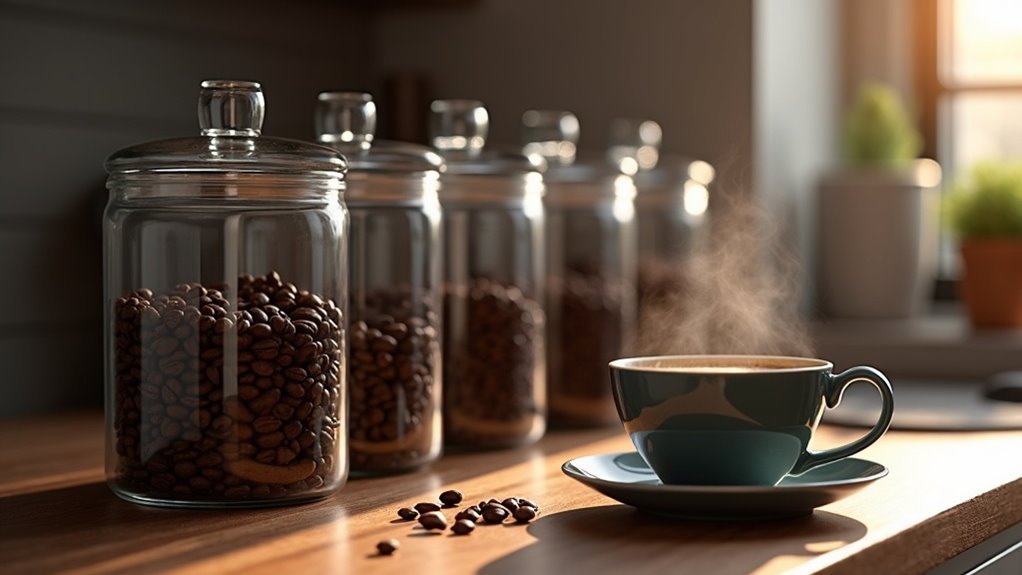
Airtight canisters are essential for preserving your coffee’s freshness and flavor. They block excess air, moisture, and light, which can lead to oxidation and staleness. Whole beans can stay fresh for up to four weeks in these containers, while ground coffee lasts just one to two weeks. If you want your coffee to maintain its aroma and avoid spoilage, investing in an airtight container is a smart choice. There are also other effective storage methods worth exploring to enhance your coffee experience.
Key Takeaways
- Airtight canisters are crucial for maintaining the freshness of coffee by preventing excess air, moisture, and light from affecting the beans.
- When stored correctly in airtight containers, whole coffee beans can stay fresh for 3-4 weeks.
- These containers significantly reduce oxidation, allowing coffee to remain fresh for up to three months.
- While alternatives such as resealable bags or mason jars can be useful, airtight canisters offer the best protection for your coffee.
- Storing coffee in airtight containers helps avoid problems like flavor degradation, mold growth, and staleness, ensuring you enjoy the best taste in every cup.
The Importance of Coffee Storage
When it comes to enjoying your coffee, proper storage is essential for maintaining its freshness and flavor.
Using an airtight container is vital for effectively storing coffee beans. Exposure to excess air, moisture, and light can lead to stale and rancid flavors. Whole beans can retain their freshness for three to four weeks in a sealed bag, while ground coffee loses its flavor within one to two weeks.
To guarantee optimal coffee storage, keep your airtight container in a dark place, away from heat. This practice considerably extends the shelf life and quality of your coffee, ultimately enhancing your brewing experience.
How Airtight Containers Preserve Freshness
Airtight containers play a crucial role in preserving the freshness of your coffee by effectively blocking out elements that can compromise its quality.
By using an airtight container, you can:
- Prevent moisture absorption that degrades flavor and aroma, ensuring each cup is as delightful as the last.
- Minimize oxidation, extending the freshness of your coffee beans for up to three months.
- Reduce the risk of staleness and rancidity, resulting in a better brewing experience every time.
- Combat the release of CO₂, which can lead to sour flavors in your coffee, keeping it tasting just right.
- Preserve the integrity of coffee oils, preventing mold growth that negatively impacts taste and aroma.
Choosing the right storage systems is vital for maintaining the delightful essence of your coffee beans, allowing you to enjoy the rich flavors and aromas that make each brew special.
Alternatives to Airtight Canisters
While airtight canisters are popular for keeping coffee fresh, there are several alternatives that can effectively maintain the quality of your beans.
Resealable coffee bags can work well if you remove excess air after opening, helping to preserve flavor.
Resealable coffee bags are effective for flavor preservation when excess air is removed after opening.
Mason jars are another great option, as they block oxygen and moisture, making them suitable for storing smaller batches of ground coffee.
Vacuum-sealed bags can also help keep coffee fresh for a limited time, especially when paired with freezing.
Simple opaque containers can protect your coffee from light, which can degrade flavor, and using the original packaging with a tight seal can serve as a quick fix before transferring to a more ideal storage solution.
The Impact of Moisture and Light on Coffee
Moisture and light can significantly affect the quality of your coffee, often resulting in a less enjoyable brew.
To keep your beans fresh and preserve their flavor and aroma, consider these key points:
- Roasted coffee is hygroscopic, meaning it absorbs moisture from the air.
- Excess moisture can lead to flavor degradation and encourage mold growth.
- Using airtight containers is essential for preventing moisture-related issues.
- Exposure to light breaks down important oils in the coffee, leading to staleness.
- Storing your coffee in a cool and dark place is critical for maintaining its flavor integrity.
Signs Your Coffee Has Gone Bad
How can you tell if your coffee has gone bad? Look for these signs:
| Sign | Meaning |
|---|---|
| Flat or dull flavor | Indicates oxidation and loss of freshness |
| Weak or nonexistent aroma | Symptoms of degradation |
| Mold or slimy film | Clear spoilage; discard immediately |
| Digestive discomfort | Result of stale coffee quality |
If you notice any of these issues, your coffee beans or grounds have likely deteriorated. Proper storage in an airtight container can help maintain freshness and prevent spoilage, ensuring you enjoy high-quality coffee.
Best Practices for Storing Coffee Beans
When you want to preserve the rich flavors and aromas of your coffee, proper storage is essential. Here are best practices for storing coffee beans:
- Use airtight canisters to prevent exposure to air and moisture.
- Store beans in a cool, dark cupboard to extend their shelf life.
- Choose containers with CO2 valves to manage gas release while keeping beans sealed.
- Buy smaller amounts of whole beans and grind only what you need to maintain freshness.
- Avoid pre-ground coffee, as it loses flavor quickly, usually within one to two weeks.
Following these steps guarantees your coffee stays fresh and flavorful longer.