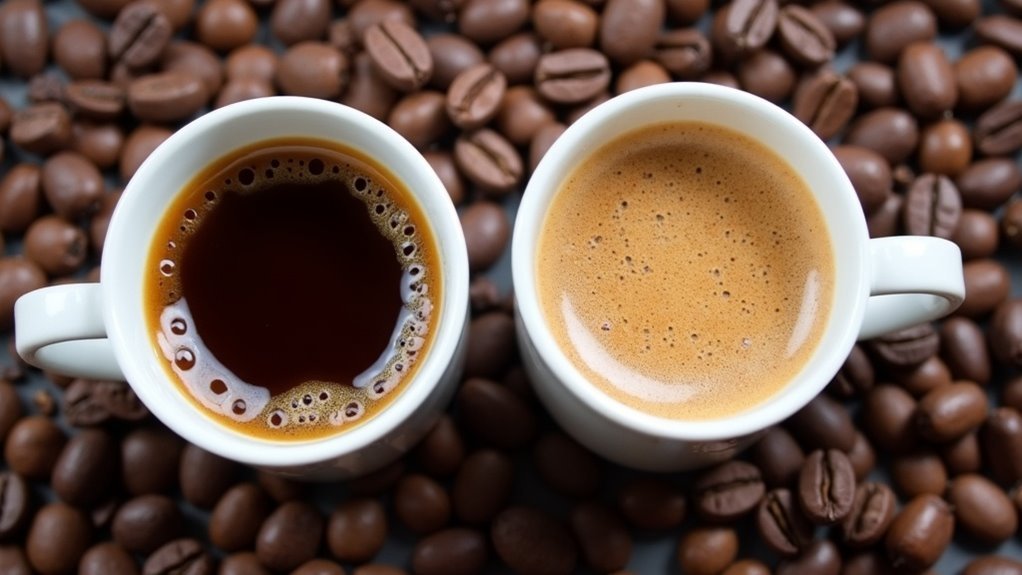
Arabica and Robusta coffee beans have distinct flavors that cater to different tastes. Arabica boasts sweet, fruity, and chocolatey notes, resulting in a smoother mouthfeel. In contrast, Robusta offers a bold, bitter taste with earthy undertones. The differences in flavor stem from their sugar and fat compositions, caffeine levels, and growing conditions. While Arabica shines in lighter roasts, Robusta thrives in darker ones. Exploring further will reveal more insights about the unique characteristics of each type of coffee bean and how they can enhance your coffee experience.
Key Takeaways
- Arabica coffee is known for its smoother, sweeter flavor profile, characterized by fruity and chocolatey notes, while Robusta coffee has a bolder, more bitter taste.
- The sugar and fat content in Arabica is nearly double that of Robusta, which contributes to its sweeter flavor and creates a smoother mouthfeel.
- With a higher caffeine content, Robusta imparts a stronger flavor, making it an excellent choice for espresso blends, where it enhances body and crema.
- Arabica coffee thrives in cooler, elevated climates, resulting in a more nuanced flavor profile, whereas Robusta is adaptable to various growing conditions, which leads to its earthy taste.
- When it comes to roasting preferences, Arabica is typically best suited for lighter roasts, while Robusta performs well in medium to dark roasts, which accentuates its inherent bitterness.
Overview of Arabica and Robusta Coffee
When you delve into the fascinating world of coffee, you’ll quickly encounter the two main varieties: Arabica and Robusta.
Arabica coffee is renowned for its nuanced, aromatic flavor, often highlighting sweet, fruity, and chocolatey notes. It boasts nearly double the sugar and 60% more lipids than Robusta, which contributes to its smoother mouthfeel.
On the other hand, Robusta presents a strong, bold flavor profile characterized by bitterness, largely due to its lower sugar content.
The brewing methods also set them apart; Arabica is usually washed, resulting in a cleaner taste, while Robusta is often naturally processed, which amplifies its robust characteristics.
Key Flavor Profiles
When you explore the flavor profiles of Arabica and Robusta coffee, you’ll notice distinct differences that cater to various palates.
Arabica offers a sweet, fruity experience with subtle chocolate notes, making it a favorite for those who enjoy a smoother cup.
On the other hand, Robusta delivers a bold, bitter flavor enriched with earthy undertones, appealing to those who prefer a stronger brew.
Additionally, the brewing method you choose can greatly influence these taste characteristics, further enhancing the unique qualities of each coffee bean.
Arabica’s Sweet Fruity Notes
Arabica coffee captivates your palate with its enticing sweet and fruity notes, often reminiscent of berries, citrus, and rich chocolate. The sweetness arises from Arabica beans containing nearly twice the sugar concentration of Robusta, delivering complexity and richness. Processed using the washed method, these beans enhance their clean and vibrant flavors, resulting in a bright cup that coffee enthusiasts adore.
| Flavor Notes | Description |
|---|---|
| Berries | Juicy and vibrant hints |
| Citrus | Bright, zesty undertones |
| Chocolate | Rich and velvety backdrop |
| Clean Finish | Crisp and invigorating aftertaste |
| Full Body | Rich mouthfeel enhancing sweetness |
Whether you’re a seasoned coffee drinker or new to the world of brews, Arabica coffee offers a delightful experience that showcases the artistry of coffee cultivation and preparation.
Robusta’s Bold Bitter Flavor
Robusta coffee is renowned for its bold, bitter flavor profile, which offers a striking contrast to the sweeter notes found in Arabica coffee.
The bitterness associated with Robusta beans is attributed to their significantly lower sugar and fat content—approximately 60% less than that of Arabica. With a caffeine content of around 2.7%, this robust flavor also serves a practical purpose as a natural pest deterrent.
While some may perceive the flavor as harsh or rubbery when not roasted properly, a skillfully crafted roast can reveal rich, earthy, and nutty undertones.
This distinctive bold and bitter flavor makes Robusta a popular choice in espresso blends, where it enhances both body and crema.
Brewing Method Influences Taste
While choosing the right brewing method, you can greatly influence the flavor profile of your coffee. For Arabica beans, lighter methods like pour-over or drip enhance their fruity, nuanced characteristics.
In contrast, Robusta beans thrive in espresso blends, where their boldness withstands high pressure and heat. Techniques such as the French press extract oils, highlighting the earthy notes of Robusta.
Cold brewing smooths out bitterness, allowing Robusta to deliver a robust cup thanks to its higher caffeine content, while Arabica’s natural sweetness shines through.
Additionally, grind size plays a crucial role; finer grinds favor the delicate flavors of Arabica, whereas coarser grinds accentuate the boldness and bitterness of Robusta.
Choose your brewing method wisely for the best taste experience!
Caffeine Content and Its Impact on Flavor
When considering the flavors of coffee, the caffeine content plays a crucial role in shaping the overall taste experience. Arabica coffee, with its lower caffeine content of 1.5%, offers a sweeter, more nuanced flavor, allowing for complex fruity and chocolate notes. In contrast, Robusta contains nearly double the caffeine at 2.7%, resulting in a stronger, more bitter profile. This table illustrates the differences:
| Coffee Type | Caffeine Content |
|---|---|
| Arabica | 1.5% |
| Robusta | 2.7% |
Ultimately, the caffeine levels influence consumer preferences, often favoring the milder taste of Arabica. Enjoy exploring the unique flavors that different caffeine contents can offer in your coffee journey!
Sugar and Fat Composition Differences
When comparing the sugar concentrations in Arabica and Robusta coffee beans, you’ll find that Arabica contains nearly twice as much sugar, contributing to its sweeter flavor profile.
In contrast, Robusta has significantly lower sugar and fat content, which results in a bolder, more bitter taste.
These differences not only define the unique flavor characteristics of each coffee type but also shape your overall tasting experience and preferences.
Sugar Concentration Comparison
Arabica coffee beans boast nearly double the sugar concentration of Robusta beans, which significantly influences their unique flavor profiles.
This higher sugar concentration contributes to Arabica’s signature sweetness and aromatic complexity, often showcasing fruity and chocolate notes.
In contrast, Robusta contains 60% less sugar, resulting in a bolder, more bitter taste that some may find less appealing.
The stark differences in sugar content between these coffee types greatly affect your overall tasting experience, making Arabica a favored choice for those seeking a smoother, more nuanced cup, while Robusta delivers a more robust and intense flavor.
Fat Content Variations
While both Arabica and Robusta coffee beans differ markedly in their fat content, this variation plays an essential role in shaping their distinct flavor profiles.
Arabica beans have a higher fat content, providing a smoother mouthfeel and complex flavors, which many coffee lovers appreciate. In contrast, Robusta beans contain considerably less fat, leading to a bolder, often harsher taste.
This difference affects brewing methods, as Arabica’s richer oils enhance extraction, particularly in espresso.
Understanding these fat content variations helps you choose the right coffee for your taste preferences and brewing techniques, ensuring a satisfying cup of coffee every time.
Flavor Impact Explanation
Understanding the differences in sugar and fat composition between Arabica and Robusta coffee beans is essential for appreciating their unique flavor profiles. Arabica boasts nearly double the sugar concentration and 60% more fat than Robusta, leading to a sweeter, smoother, and more aromatic experience. Conversely, Robusta’s lower sugar and fat content results in a bolder, more bitter flavor profile.
| Coffee Type | Sugar Concentration | Fat Content |
|---|---|---|
| Arabica | High | Higher |
| Robusta | Low | Lower |
These differences notably impact taste, mouthfeel, and consumer preferences in brewed coffee.
Antioxidant Levels in Arabica vs. Robusta
When exploring the antioxidant levels in coffee, it’s vital to note that Robusta beans typically boast higher concentrations of chlorogenic acid compared to their Arabica counterparts.
This increased antioxidant level in Robusta coffee is attributed to its resilience and higher caffeine content, offering potential health benefits such as reduced inflammation and improved cardiovascular health.
Some studies indicate that the higher antioxidant levels in Robusta could make it a healthier choice for coffee lovers concerned about nutrition.
Understanding these differences in antioxidant profiles is essential for making informed coffee selections that align with your health goals.
Growing Conditions and Their Influence on Taste
Growing conditions play an essential role in shaping the flavor profiles of coffee, and this is particularly evident when comparing Arabica and Robusta beans.
- Arabica thrives at higher elevations (above 3,000 feet), developing a sweeter, fruitier flavor due to cooler temperatures.
- Its growth in shaded areas allows for slower sugar maturation, enhancing aromatic qualities.
- Robusta’s adaptability to various climates results in a stronger, more bitter profile, though its uniform clusters allow for consistent, bold flavors.
Climate changes may further impact Arabica’s growing conditions, potentially influencing its flavor profile and market presence compared to resilient Robusta.
Roasting Preferences and Flavor Outcomes
Roasting preferences greatly influence the flavor outcomes of Arabica and Robusta coffees, each bringing distinct characteristics to the cup.
Arabica shines in lighter to medium roasts, highlighting its sweet, fruity notes and delicate aromas. In contrast, Robusta thrives in medium to dark roasts, enhancing its bold, bitter profile and deeper, earthier flavors.
With higher caffeine and lower sugar, Robusta often delivers a thicker crema in espresso blends. Meanwhile, Arabica’s higher lipid content fosters complex flavors.
Specialty roasters creatively blend both beans, achieving a balanced brew that combines sweetness and strength, ensuring a unique and enjoyable coffee experience tailored to various tastes.