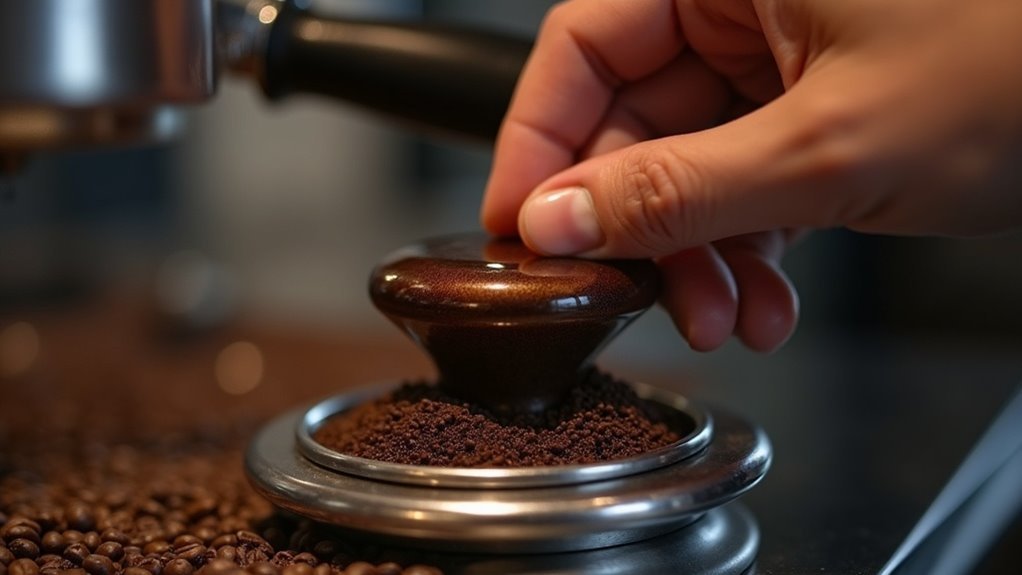
Tamping pressure refers to the force you apply when compressing coffee grounds in an espresso machine. Typically, this pressure is around 30 pounds, which helps create a uniform coffee puck that ensures optimal water flow during extraction. Using the correct tamping pressure is crucial; under-tamping can lead to sour flavors, while over-tamping may introduce bitterness. Mastering this technique significantly impacts the quality of your espresso, and there is much more to explore in perfecting your approach to achieve the best results in your coffee brewing journey.
Key Takeaways
- Tamping pressure is the force used to compact coffee grounds, usually around 30 pounds, which ensures a uniform density for optimal espresso extraction.
- Maintaining consistent tamping pressure is essential to prevent channeling, which can lead to balanced flavors and ideal water flow through the coffee bed.
- Insufficient tamping can cause sour notes in the espresso, while excessive tamping may introduce bitterness, ultimately affecting the overall flavor profile.
- Perfecting the tamping technique is vital for achieving consistent results and a well-extracted espresso shot.
- Advances in tools, such as automated tampers and pressure gauges, are improving the accuracy of tamping methods in espresso preparation.
Understanding Tamping Pressure
When you tamp coffee grounds, the pressure you apply is essential for achieving the perfect espresso extraction. Tamping pressure, typically around 30 pounds, compacts the coffee into a uniform density, ensuring ideal water flow.
This prevents channeling, where water flows unevenly, leading to inconsistent flavors. Under-tamping can create sour notes, while over-tamping may introduce bitterness. Consistent pressure is important for replicable results, as variations can greatly affect extraction quality.
While traditional techniques recommend higher pressures, modern machines allow for lighter tamping techniques (8–12 pounds), providing an alternative that can still yield good espresso without compromising safety or quality.
The Role of Tamping in Espresso Extraction
Although many factors influence espresso extraction, tamping plays a critical role in determining the quality of your brew.
The tamping pressure you apply directly impacts the flow of water through the coffee bed. By achieving consistent tamping pressure, you ensure a uniform coffee puck, minimizing the risk of uneven extraction.
Consistent tamping pressure is key to a uniform coffee puck, ensuring even water flow and optimal extraction.
Insufficient tamping force can lead to under-extraction, resulting in sour flavors, while excessive pressure may cause bitterness. Aiming for maximum density helps eliminate air pockets, promoting balanced resistance against water flow.
Ultimately, mastering tamping is essential for producing a flavorful and well-extracted espresso that elevates your coffee experience and meets your quality standards.
Ideal Tamping Pressure: Guidelines and Techniques
Achieving the ideal tamping pressure is essential for any barista aiming to perfect their espresso extraction. To create a balanced resistance, you should apply around 30 pounds of pressure, ensuring an even coffee puck.
However, some professionals prefer a softer technique, using only 8-12 pounds to maintain loose grounds and enhance water distribution. Consistency is crucial; variations in tamping pressure can lead to inconsistent extraction, negatively impacting flavor profiles.
Aim for a flat, uniformly tamped puck to prevent channeling during extraction. Additionally, the grind size plays a significant role in espresso preparation, influencing the effectiveness of your tamping technique.
Common Tamping Mistakes to Avoid
Even with a solid understanding of ideal tamping pressure, many baristas still fall into common traps that can hinder their espresso quality. Here are mistakes to watch for:
| Mistake | Consequence | Solution |
|---|---|---|
| Over-tamping | Slow extraction, bitter flavor | Apply around 30 pounds of pressure |
| Under-tamping | Fast extraction, weak flavor | Ensure consistent density in the puck |
| Uneven tamping | Uneven extraction results | Practice tamping for a level puck |
Avoiding these common tamping mistakes is crucial for achieving the perfect espresso shot every time.
The Future of Tamping Techniques in Espresso Preparation
As the coffee landscape evolves, baristas are increasingly embracing innovative tamping techniques that promise to enhance the quality and consistency of their brews.
The shift towards automation introduces calibrated tampers that guarantee consistent tamping pressure, minimizing human error. Self-leveling tampers facilitate even distribution of ground coffee, preventing over-extraction while optimizing espresso shots.
Precision baskets improve water flow, enhancing the effectiveness of tamping. Additionally, digital pressure gauges and smart tampers allow baristas to measure and adjust tamping pressure with pinpoint accuracy.