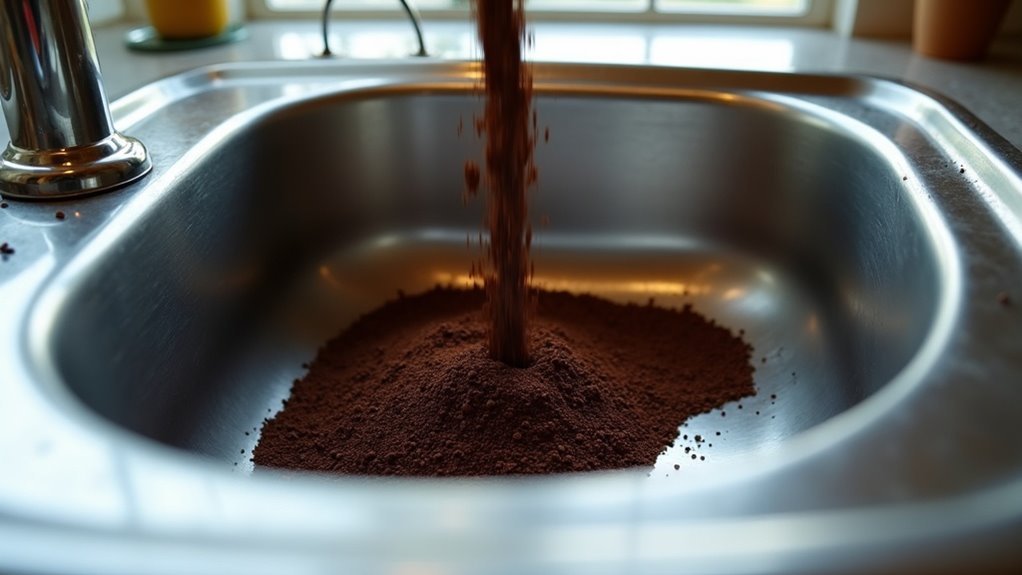
Pouring coffee grounds down the sink is a bad idea. They don’t dissolve and can create clogs that restrict water flow, damaging your plumbing system. This can lead to costly repairs. Additionally, excess coffee grounds can harm the environment by contaminating water sources and disrupting aquatic ecosystems. They can also attract pests and cause foul odors in your kitchen. Instead of pouring them down the sink, consider better disposal options for a healthier home and planet, such as composting or using them in your garden, and discover effective methods to handle coffee grounds responsibly.
Key Takeaways
- Coffee grounds can accumulate in pipes, leading to clogs and costly plumbing repairs over time.
- Improper disposal of coffee grounds can contribute to environmental contamination and disrupt local aquatic ecosystems.
- Damp coffee grounds can produce foul odors and attract pests, creating unsanitary kitchen conditions.
- Composting coffee grounds enriches soil and supports sustainable waste management practices.
- Using coffee grounds in gardening reduces landfill waste and promotes a circular economy by repurposing organic materials.
Clogs and Drain Blockages
When you pour coffee grounds down the sink, you’re not only risking your plumbing but also missing out on some creative ways to utilize those grounds. While they don’t dissolve in water and can lead to clogs and drain blockages, coffee grounds have many benefits when used properly.
Instead of sending them down the drain, consider using them as a natural exfoliant for your skin, a deodorizer for your fridge, or even as a fertilizer for your garden. Their gritty texture can encourage clinging to pipe interiors, which diminishes water flow over time, potentially leading to stubborn blockages that require costly professional plumbing help.
To maintain a healthy drainage system and make the most of your coffee experience, it’s essential to avoid regularly disposing of coffee grounds in your sink and explore these safer and more creative disposal methods instead.
Damage to Your Plumbing System
Ignoring the dangers of pouring coffee grounds down your sink can lead to serious damage to your plumbing system. The gritty texture of coffee grounds sticks to pipe interiors, gradually narrowing their diameter and restricting water flow.
Over time, these clumps accumulate, creating stubborn blockages that result in slow drains or complete stoppages. Since coffee grounds don’t dissolve in water, they pose a unique threat to your drainage system.
Repairing or replacing damaged pipes can incur costly repairs, making it essential to dispose of coffee grounds properly. To enjoy your coffee while keeping your plumbing system safe, consider composting your used coffee grounds or incorporating them into your gardening routine.
Protect your plumbing system by avoiding this common mistake and savoring your coffee responsibly.
Environmental Impact
While you might think of coffee grounds as a harmless byproduct of your morning brew, their improper disposal can have significant environmental consequences.
Dumping them in the sink not only leads to plumbing issues but also contributes to environmental contamination. Here are some key points to consider:
- Coffee grounds can disrupt aquatic ecosystems by lowering oxygen levels.
- They promote harmful algal blooms, which can threaten water quality.
- Combined sewage systems may release untreated contaminants into rivers due to excess coffee grounds.
- Cumulative disposal can severely impact freshwater organisms and biodiversity.
Properly disposing of coffee grounds is essential for maintaining a healthy environment and protecting aquatic life, ensuring that we can continue to enjoy our coffee for years to come.
Foul Odors and Pest Attraction
When you leave damp coffee grounds in the sink, you not only waste a valuable resource but also invite unpleasant odors and create a breeding ground for pests.
The combination of decaying coffee and moisture can permeate your kitchen, making it less inviting and affecting the aroma of your beloved brew.
Unpleasant Kitchen Smells
Improperly disposing of coffee grounds down the sink not only creates a damp environment but also invites a host of unpleasant kitchen smells, especially if you’re a coffee lover.
When coffee grounds accumulate in plumbing, they can lead to stagnation and foul odors that permeate your kitchen. To maintain a fresh coffee brewing space, consider the following:
- Avoid moisture build-up by not pouring coffee grounds down the sink.
- Keep plumbing clear of organic material to prevent bacteria growth, which can affect the aroma of your favorite brews.
- Regularly clean your drains to eliminate any lingering smells that might clash with the delightful scent of freshly brewed coffee.
- Opt for composting coffee grounds to safely dispose of them, enriching your garden while keeping your kitchen odor-free.
Protect your home from unpleasant odors and guarantee a welcoming atmosphere for your coffee moments.
Pest Infestation Risk
Pouring coffee grounds down the sink may seem convenient, but it can lead to unpleasant odors in your kitchen and increase the risk of pest infestations.
The moist environment created by the combination of water and organic material like coffee grounds can attract pests such as cockroaches, ants, and fruit flies. These insects thrive in decaying waste, potentially turning your beloved coffee corner into an unwelcome hotspot.
As coffee grounds decompose, they release foul odors that can permeate your home, compromising the overall air quality.
To enjoy your coffee without the worry of pests, it’s essential to avoid disposing of coffee grounds in the sink. Instead, consider using proper waste disposal methods to protect your space and keep your kitchen fresh and inviting.
Recommended Disposal Methods
When it comes to disposing of coffee grounds, you’ve got several effective options that benefit both your home and the environment.
Composting coffee grounds enriches your soil and improves moisture retention, while using them as garden fertilizer provides essential nutrients to your plants.
If composting isn’t your thing, simply throw them in the trash to avoid plumbing issues and keep your waste disposal eco-friendly.
Additionally, you can explore creative uses for coffee grounds, such as making natural scrubs or pest repellents, adding even more value to your coffee-making routine.
Composting Coffee Grounds
Composting coffee grounds not only reduces waste but also enriches your garden soil with essential nutrients.
This eco-friendly method serves as a natural fertilizer while promoting sustainable waste management.
To safely incorporate coffee grounds into your gardening routine, consider these tips:
- Add grounds in moderation to avoid caffeine buildup in the soil.
- Sprinkle directly onto the soil to enhance moisture retention for your plants.
- Use as a natural pest deterrent against certain garden insects, helping to protect your beloved coffee plants.
- Mix with other compost materials for balanced nutrient distribution, ensuring a healthy growing environment for your coffee crops.
Garden Fertilizer Use
While many coffee enthusiasts appreciate the rich flavor and aroma of their brew, it’s essential to understand how to responsibly dispose of coffee grounds.
Using coffee grounds in moderation can enrich your garden with nitrogen and vital nutrients, but be cautious of caffeine buildup that may negatively affect plants. Incorporating them into garden beds or using them as mulch can enhance soil structure, improve drainage, and retain moisture.
Composting coffee grounds not only recycles waste but also contributes a nutrient-rich element to your compost, promoting sustainable practices.
Proper Trash Disposal
To maintain a healthy plumbing system and promote sustainable waste management, it’s essential to dispose of coffee grounds properly. Tossing them down the sink can lead to plumbing issues, as they clump and cause blockages.
Instead, consider these recommended disposal methods for your coffee grounds:
- Trash: Seal coffee grounds in a bag and throw them away.
- Compost: Add them to your compost pile for nutrient-rich soil, perfect for enhancing your garden.
- Garden Mulch: Use grounds as mulch to help retain moisture and enrich your plants.
- Community Programs: Check for local initiatives that encourage composting coffee grounds, helping to promote sustainability in your area.
Individual Responsibility in Environmental Health
Recognizing your role in environmental health is essential, as even small actions can lead to significant changes in our ecosystems.
By properly disposing of coffee grounds, you actively contribute to waste collection efforts that protect aquatic life. When coffee grounds enter drains, they can introduce harmful chemicals like caffeine into waterways, disrupting oxygen levels and harming organisms. Your individual responsibility in waste disposal plays a vital part in mitigating pollution.
Composting coffee grounds not only helps maintain water system integrity but also supports sustainable practices. Additionally, repurposing coffee grounds for gardening or other uses can promote a circular economy.
Together, our collective efforts can foster healthier rivers and coastal ecosystems, ensuring a safer environment for all while enjoying your favorite coffee.