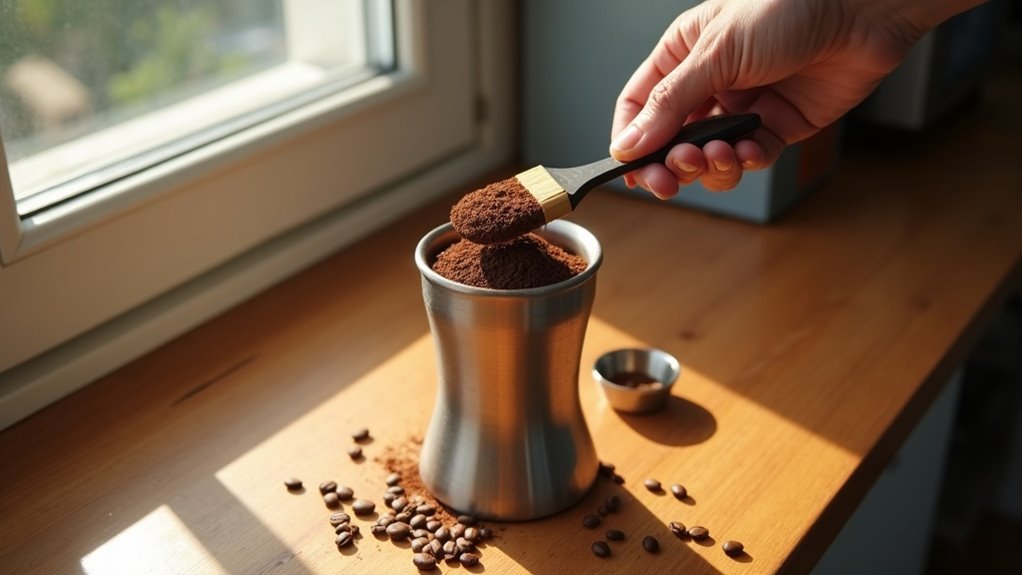
To reduce grinder retention and enhance your coffee experience, consider selecting a low-retention grinder featuring a straight-through grind path and advanced burr designs. Utilizing anti-static materials can help minimize grounds that cling inside the grinder. It’s essential to regularly purge residual coffee grounds after each use and to clean the burrs, chute, and hopper to ensure optimal efficiency. When transitioning between different beans, remember to adjust the grind settings, starting with coarser settings to effectively clear any retained grounds. By following these tips, you can significantly improve the freshness and flavor of your coffee. There’s always more to discover about coffee and the art of grinding!
Key Takeaways
- Choose low-retention grinders designed with a straight-through grind path to minimize trapped grounds and promote quick discharge of coffee.
- Regularly clean burrs, chute, and hopper to maintain grinder efficiency and reduce residual coffee grounds.
- Purge residual coffee grounds after each use to prevent stale coffee from contaminating fresh doses.
- Adjust grind settings when switching beans, using coarser settings to help clear retained coffee grounds effectively.
- Use grinders with anti-static materials to minimize static buildup and ensure smooth coffee flow without clinging coffee grounds.
Understanding Grind Retention
While you mightn’t think about it often, understanding grind retention is crucial for achieving the best possible coffee flavor.
Grind retention matters because leftover coffee grounds can lead to stale flavors in your brew. The design of your grinder, including the burr chamber and chute shape, influences how much grind retention occurs.
Grind retention affects flavor; stale grounds can compromise your brew’s quality, influenced by your grinder’s design.
When stale grounds mix with fresh coffee, they compromise the quality of your cup. To reduce retention, consider a quick purge of the grinder before brewing.
This practice ensures consistency in grind size and shot quality, allowing you to savor a delicious cup every time.
Importance of Low Grind Retention
Low grind retention is crucial for maintaining the freshness of your coffee, preventing stale grounds from contaminating your freshly ground beans.
This consistency is vital for achieving the ideal coffee-to-water ratio necessary for optimal extraction, which directly influences the flavor profile of your brew.
Freshness Preservation
To preserve the freshness of your coffee, minimizing grind retention is vital, as stale grounds can contaminate fresh doses and compromise flavor profiles.
Low grind retention is essential for single dosing, where accurate measurements impact the coffee-to-water ratio and extraction dynamics.
By regularly purging retained grounds before brewing, you ensure each cup is crafted from fresh, untainted grinds, enhancing taste and consistency.
Utilizing low-retention grinders with straight-through grind paths and advanced burr technologies helps reduce residual grounds.
Combining fresh coffee beans with low retention practices greatly elevates the flavor and aroma, resulting in a more enjoyable coffee experience.
Consistency in Brewing
Achieving consistency in brewing coffee hinges on your ability to manage grind retention effectively, since even a small amount of stale grounds can considerably alter the flavor profile of your brew.
Low grind retention ensures that coffee grounds remaining in your grinder don’t mix with fresh doses, preserving the intended taste. This is particularly crucial for single dosing, where precise measurements are essential for the perfect cup.
High retention can lead to inconsistent extraction dynamics, negatively impacting the quality of your shots. Regularly purging retained grounds before brewing is essential, as it supports the consistency of your coffee and enhances overall brew quality and enjoyment.
Enhanced Flavor Profile
While many factors influence the flavor of your coffee, low grind retention stands out as a critical element that directly impacts taste. By minimizing stale coffee grounds mixing with fresh batches, you preserve the integrity of your coffee-to-water ratio, achieving a more consistent extraction. This results in an enhanced flavor profile that coffee enthusiasts crave.
Single dosing, aided by low grind retention, allows for precise control over measurements, boosting brewing consistency. Innovative grinder designs facilitate better airflow, quickly dislodging old grounds and ensuring a cleaner taste experience.
Prioritizing low grind retention is essential for delivering vibrant, fresh coffee in every cup, allowing you to savor the rich and diverse flavors that each brew has to offer.
Mechanisms of Low-Retention Grinders
Low-retention grinders are designed with a straight-through grind path, which minimizes areas where coffee grounds can get trapped, effectively reducing retention.
By incorporating anti-static materials, these grinders limit static buildup, preventing grounds from clinging to the components of the grinder.
Furthermore, enhanced burr designs with sharper cutting edges improve grinding efficiency, ensuring that less coffee material is left behind after each use.
This results in a fresher and more flavorful cup of coffee for enthusiasts and baristas alike.
Straight-Through Grind Path
One key feature of grinders designed for minimal retention is the straight-through grind path, which allows coffee grounds to move directly from the burrs to the discharge chute.
This design considerably reduces the number of turns and bends, preventing coffee particles from getting trapped and helping to minimize grind retention.
Additionally, the straight-through mechanism promotes quicker discharge of grounds, enhancing the freshness and flavor of your brewed coffee.
Many low-retention grinders also incorporate advanced burr designs for optimal cutting efficiency, ensuring a finer, more consistent grind while further reducing retention.
This combination contributes to a superior coffee experience.
Anti-Static Materials Usage
The design of grinders with a straight-through grind path greatly enhances their efficiency, but incorporating anti-static materials takes coffee grinding performance to the next level.
These materials help reduce static electricity, ensuring smooth ground coffee flow and minimizing retention for a better brewing experience.
Consider the benefits of anti-static features in low-retention grinders specifically for coffee enthusiasts:
- Special Coatings: Applied to grinder components, these coatings reduce static charge during grinding, leading to a more effortless coffee preparation.
- Static-Minimizing Plastics: These innovative materials prevent coffee grounds from clinging to parts, ensuring that every bit of your precious coffee is utilized.
- Consistent Grind Size: By reducing static, you achieve a uniform grind, preventing stale grounds from mixing with fresh, which is crucial for brewing the perfect cup of coffee.
Enhanced Burr Design
Enhanced burr designs are essential for achieving the best coffee grinding efficiency. In low-retention grinders, sharper cutting edges and tighter tolerances minimize coffee retention after use, ensuring that every grind is fresh.
Many modern grinders feature a straight-through grind path, which reduces the risk of grounds getting trapped and ensures a smooth flow of coffee. Improved burr geometry, such as refined conical or flat burrs, guarantees a uniform particle size while lowering the amount of retained grounds.
Additionally, easily removable components make thorough cleaning quick and easy, preventing residual coffee from affecting the flavor of your fresh brews. Incorporating anti-static materials further helps reduce retention by minimizing static buildup that causes grounds to cling.
Investing in these advanced burr designs enhances your coffee grinding experience and ensures that each cup is brewed to perfection.
Recommendations for Managing Grind Retention
To effectively manage grind retention and enhance the quality of your coffee, regular maintenance of your grinder is crucial.
Grind retention refers to the coffee grounds that linger in the grinder, which can negatively impact the flavor and freshness for home brewers.
Here are some key recommendations:
- Regular cleaning: Routinely clean the burrs, chute, and hopper to eliminate accumulated coffee grounds.
- Purge after use: Brush out any residual grounds and grind a small amount of coffee to dislodge stale particles.
- Adjust grind settings: Before trying out new beans, switch to a coarser setting to clear out retained grounds, especially when using single dose techniques.
Innovations in Grinder Design
As advancements in grinder design continue to emerge, many coffee enthusiasts are discovering solutions that significantly reduce grind retention. Innovations such as straight-through grind paths and improved burr designs—both flat and conical—minimize retention and facilitate efficient coffee exit. Additionally, the use of anti-static materials helps reduce cling, ensuring that coffee grounds don’t linger in the grinder. Many modern grinders now support single dosing and feature easily removable parts for hassle-free cleaning. Here’s a summary of key innovations:
| Feature | Benefit | Grinder Type |
|---|---|---|
| Straight-through path | Efficient ground exit | Minimal retention |
| Anti-static materials | Reduces static cling | Flat & conical burrs |
| Enhanced burr designs | Sharper edges, tighter tolerances | All grinder types |
Grinder Comparisons: Finding the Right Fit
With innovative grinder designs minimizing retention, coffee enthusiasts now face the challenge of selecting the right grinder for their specific brewing needs.
Here’s a breakdown to assist you in choosing the right one:
- Baratza Sette 270: Priced under $700, this grinder boasts less than 1 gram of grind retention, making it perfect for those who prefer single dosing.
- Eureka Atom 65: Available in the $700 – $1100 range, this grinder retains about 2 grams of coffee, making it ideal for users who like to keep a full hopper.
- Eureka KRE: A commercial-grade option featuring 12 grams of retention, showcasing the trade-off between grind speed and retention rates.
Understanding these retention rates and designs will help ensure safer, more effective brewing tailored to your unique coffee style.