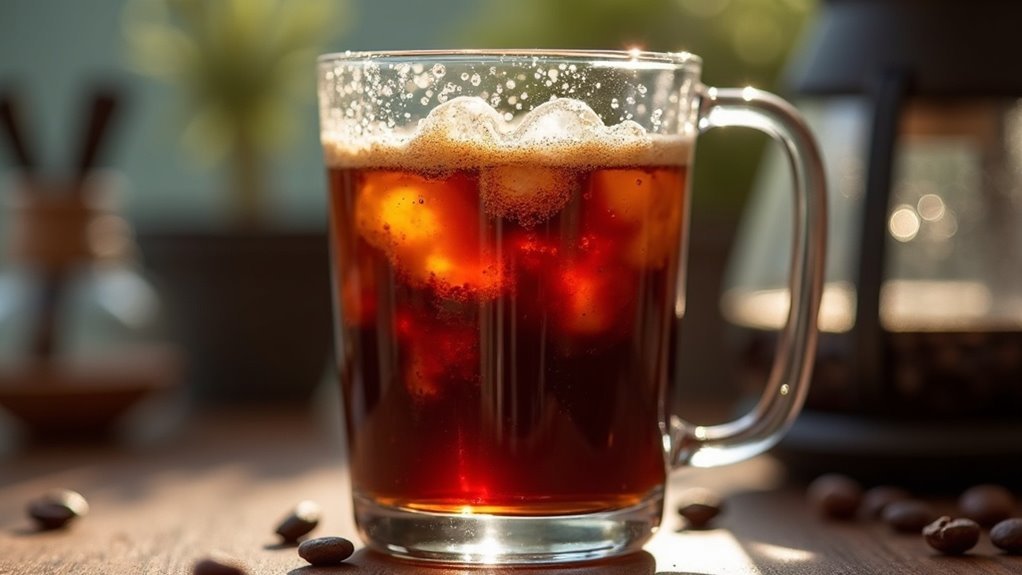
Cold brew coffee typically contains around 200 mg of caffeine in a 16-ounce serving, making it a strong choice for a caffeine boost. Some brands, like Dunkin’, can elevate that to 260 mg. Factors such as the coffee-to-water ratio, steeping time, and grind size can all influence the final caffeine concentration. Using stronger ratios and longer steeping times usually yields higher caffeine content. Explore various brewing techniques and learn how to customize your cold brew to meet your specific caffeine needs.
Key Takeaways
- A standard 16-ounce serving of cold brew coffee typically contains around 200 mg of caffeine.
- Some brands, like Dunkin’, can contain up to 260 mg of caffeine per 16-ounce serving.
- Cold brew generally has higher caffeine content compared to iced coffee, which averages about 165 mg per serving.
- Caffeine levels in cold brew can vary based on coffee-to-water ratios, steeping time, and grind size.
- Extended steeping times (12 to 24 hours) enhance caffeine extraction in cold brew coffee.
Understanding Cold Brew Coffee
Understanding cold brew coffee begins with its unique preparation method, which sets it apart from traditional brewing techniques. You steep coarsely ground coffee beans in cold or room temperature water for 12 to 24 hours, allowing for a smoother, less acidic beverage.
The water ratio markedly influences the extraction process, typically ranging from 1:4 to 1:8. This extended steeping time enhances caffeine extraction, resulting in a drink with a higher caffeine content compared to other brewing methods.
By adjusting factors like grind size and steeping duration, you can control the concentration of caffeine, tailoring your cold brew experience to your preference.
Enjoy exploring the diverse world of coffee with cold brew as a delicious option!
Caffeine Content in Cold Brew
While many coffee enthusiasts enjoy cold brew for its smooth flavor, the caffeine content is often a key factor in its appeal. A standard 16-ounce serving of cold brew coffee typically contains around 200 mg of caffeine, with some brands like Dunkin’ reaching 260 mg.
Compared to iced coffee, which averages about 165 mg, cold brew generally offers a higher caffeine concentration. Variables such as brewing methods, coffee-to-water ratios, and steeping times can considerably affect caffeine levels.
Additionally, using Robusta beans instead of Arabica can enhance caffeine extraction due to the former’s nearly double caffeine content.
Factors Affecting Caffeine Levels
The caffeine levels in cold brew coffee aren’t just a matter of preference; they hinge on several key factors.
The coffee-to-water ratio greatly affects caffeine content, with stronger ratios of 1:4 to 1:8 yielding better caffeine extraction. Longer steeping times, typically between 12 to 24 hours, enhance caffeine diffusion, increasing concentration.
Grind size also matters, as finer grinds provide a larger surface area for extraction, leading to higher caffeine levels. Additionally, Robusta beans contain nearly twice the caffeine of Arabica beans.
Finally, while hot water extracts caffeine more efficiently, cold brew compensates with its extended steeping times to optimize caffeine extraction.
Comparing Cold Brew to Other Coffee Types
How does cold brew stack up against other popular coffee types regarding caffeine content?
Cold brew coffee typically contains around 200 mg of caffeine per 16 ounces, which is higher than iced coffee‘s 165 mg. A 16-ounce Starbucks cold brew offers about 205 mg, while Dunkin’ Donuts cold brew packs 260 mg.
Compared to hot coffee, which ranges from 210 to 360 mg based on brewing method, cold brew may have slightly lower caffeine levels. Its higher caffeine concentration often surpasses espresso‘s 150 mg per 1.5-ounce shot.
This variance is influenced by factors such as the coffee-to-water ratio, steeping time, and grind size, making cold brew an interesting choice for those looking for a caffeine boost.
Brewing Techniques and Their Impact on Caffeine
When you brew cold brew coffee, the coffee-to-water ratio greatly influences the caffeine content; a stronger ratio can yield higher caffeine levels.
Additionally, the steeping time plays an essential role, as extending it beyond 12 hours enhances caffeine extraction.
Finally, the grind size impacts how much caffeine you extract, with coarser grinds often delivering better results than finer ones.
Coffee-to-Water Ratio
Adjusting the coffee-to-water ratio in cold brew greatly influences caffeine extraction and the overall strength of your beverage.
A common ratio ranges from 1:4 to 1:8, with a stronger 1:4 ratio yielding higher caffeine concentrations. This stronger ratio allows more coffee grounds to interact with water during the brewing process, increasing caffeine extraction.
For example, a 1:4 ratio can produce a concentrate with considerably more caffeine than a diluted 1:8 version. Customizing this ratio directly impacts the final caffeine content, ensuring you can enjoy a cold brew tailored to your preferences while effectively managing your caffeine intake.
Steeping Time Duration
While steeping time might seem like a minor detail in the cold brew coffee process, it plays an essential role in determining the caffeine content of your final beverage.
Cold brew typically requires 12 to 24 hours, with longer steeping times enhancing caffeine extraction. Ideal extraction occurs within the first few hours, stabilizing after about 400 minutes.
Grind Size Impact
The grind size of your coffee beans directly influences caffeine extraction during the cold brew process, making it a critical factor in achieving your desired caffeine content.
Coarse grinds typically yield about 20% more caffeine extraction compared to medium grinds, especially with the recommended steeping time of 12 to 24 hours.
While finer grinds can increase caffeine levels and create a stronger concentrate, they require careful monitoring to avoid over-extraction, which can lead to bitterness.
For ideal extraction and balanced caffeine concentration, it’s essential to choose the right grind size based on your brewing preferences and desired caffeine impact.
Managing Your Caffeine Intake
Managing your caffeine intake requires an understanding of how cold brew coffee can fit into your daily limits. Adults should aim for a maximum of 400 mg of caffeine, allowing for 16 to 24 ounces of cold brew, which contains about 200 to 300 mg per 16 ounces.
Adjusting serving sizes is essential for controlling caffeine consumption. You can also dilute cold brew with water or milk to reduce its concentration.
When using cold brew concentrates, start small, as they can contain 100 to 200 mg per 8 to 12 ounces. Pay attention to coffee-to-water ratios and steeping times for tailored caffeine strength, ensuring your coffee experience remains enjoyable while managing your caffeine levels.
Popular Cold Brew Recipes
Cold brew coffee offers a versatile canvas for creating a range of delicious recipes that cater to different tastes and preferences. You can customize your cold brew by adjusting the coffee-to-water ratio for a stronger or milder cup, and by adding flavored syrups or spices like cinnamon. Nitro cold brew, infused with nitrogen, provides a creamy texture and may enhance caffeine content. Below is a table of popular cold brew recipes for your consideration:
| Recipe Type | Caffeine Content | Flavor Profile |
|---|---|---|
| Classic Cold Brew | 200-300 mg | Smooth, less acidic |
| Nitro Cold Brew | Higher | Creamy, rich |
| Iced Cold Brew | Higher | Invigorating, versatile |
| Flavored Cold Brew | Variable | Customizable sweetness |
Explore these recipes to find your perfect cold brew coffee experience!