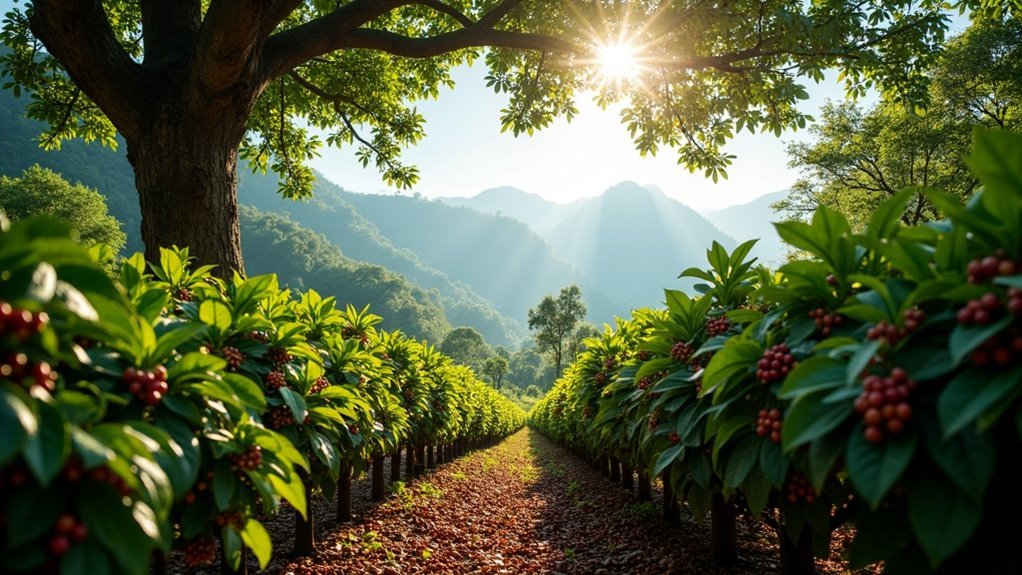
Choosing shade-grown coffee not only enhances your coffee experience but also supports sustainability in the coffee industry. This cultivation method promotes biodiversity, improves soil health, and protects crucial wildlife habitats, particularly for migratory birds. The slower growth process beneath tree cover results in more complex flavors and a smoother taste profile in your cup. Additionally, shade-grown coffee offers economic advantages for farmers by lowering input costs and allowing for crop diversification. By choosing shade-grown coffee, you actively contribute to vital conservation efforts and the overall health of our planet. Discover more about its benefits and the positive impact it has on the environment.
Key Takeaways
- Shade-grown coffee enhances biodiversity, providing a natural habitat for various wildlife species and promoting ecological balance within coffee-growing regions.
- This cultivation method improves soil health and minimizes erosion, ensuring fertility while relying on fewer agrochemicals.
- Additionally, shade-grown coffee supports carbon sequestration, capturing approximately 99 tons of carbon per hectare, which helps mitigate climate change.
- Coffee produced under shade often boasts complex flavor profiles, resulting in a smoother taste with lower acidity levels, enhancing your coffee experience.
- By choosing shade-grown coffee, you directly support sustainable farming practices and contribute to habitat preservation, benefiting both farmers and the environment.
What Is Shade-Grown Coffee?
Shade-grown coffee is a unique cultivation method that flourishes under a canopy of taller trees, fostering a rich ecosystem that enhances both biodiversity and coffee quality.
This sustainable approach to coffee farming provides a natural habitat for wildlife, especially migratory birds, contributing positively to the environment.
Different types of shade-grown coffee, including Rustic and Traditional Polyculture, ensure a variety of growing conditions.
To achieve certification, farmers must adhere to stringent standards that promote sustainable practices.
Additionally, the presence of shade trees allows coffee beans to ripen at a slower pace, resulting in high-quality coffee with more intricate flavors.
The Environmental Impact of Shade-grown Coffee
While traditional coffee farming often leads to environmental degradation, opting for shade-grown coffee offers a compelling alternative that promotes ecological health.
By choosing shade-grown coffee, you support:
- Biodiversity: These farms exhibit 30% higher bird abundance, fostering healthier ecosystems.
- Soil Erosion: Shade-grown systems minimize soil loss, maintaining fertility effectively compared to sun-grown methods.
- Water Cycling: The canopy enhances rainfall interception, supporting local water supplies.
Moreover, shade-grown coffee contributes to carbon sequestration, capturing an impressive 99 tons of carbon per hectare, which aids climate stability.
Shade-grown coffee captures an impressive 99 tons of carbon per hectare, significantly contributing to climate stability.
This holistic approach nurtures ecological balance while ensuring safety for our planet’s future.
Enjoying shade-grown coffee not only satisfies your caffeine cravings but also supports sustainable practices that benefit the environment.
Biodiversity and Bird Conservation
When you choose shade-grown coffee, you’re indulging in a satisfying beverage while actively supporting vital bird conservation efforts. Shade-grown farms create critical habitats for various bird species, thereby enhancing biodiversity. For example, in Chiapas, Mexico, you can find 180 bird species, which is comparable to that of natural forests. Bird Friendly farms in the Andes have an astonishing 14 times the density of migratory birds when compared to primary forests. The table below highlights the ecological advantages of shade-grown coffee:
| Feature | Shade-Grown Coffee | Sun-Grown Coffee |
|---|---|---|
| Bird Abundance | 30% greater | Baseline |
| Species Diversity | 15% greater | Baseline |
| Critical Habitat | Yes | Limited |
Soil Health and Conservation Benefits
When you choose shade-grown coffee, you’re not just savoring a delicious cup; you’re also promoting soil health.
These farms effectively prevent soil erosion and enhance soil fertility, providing a sustainable alternative to sun coffee systems.
By fostering carbon sequestration and maintaining moisture, shade coffee practices contribute to a healthier ecosystem and a more resilient agricultural landscape.
Enjoy your coffee knowing that it supports both flavor and the environment.
Soil Erosion Prevention
Shade-grown coffee systems play a vital role in soil erosion prevention, as the tree cover they provide stabilizes slopes and enhances soil structure. By integrating shade trees into coffee farms, you can significantly reduce soil loss compared to sun coffee systems.
Here are some key benefits:
- Lower soil erosion rates that are comparable to natural forests
- Improved water retention through tree root systems, which helps protect local water supplies
- Healthier soil structure that fosters a diverse ecosystem and reduces the need for agrochemicals
Opting for shade-grown coffee not only supports sustainable farming practices but also protects the environment, ensuring the safety and integrity of our valuable soil resources.
Enhanced Soil Fertility
The integration of shade trees in coffee farming not only mitigates soil erosion but also considerably enhances soil fertility, leading to a more sustainable coffee production system.
Shade-grown coffee systems thrive with native trees that enrich the soil, boosting nutrient availability for coffee plants. These agroforestry systems exhibit 18% higher carbon content and 19% greater cation exchange capacity compared to unshaded counterparts, promoting healthier soil structure crucial for coffee growth.
The tree cover stabilizes slopes in high-rainfall areas, effectively reducing erosion and minimizing the reliance on agrochemicals.
By fostering rich biodiversity, shade-grown coffee supports natural pest control and complex food webs, contributing to overall soil health and ecological balance.
Choose shade-grown coffee for a safer, more sustainable farming practice that benefits both the environment and your cup of coffee.
Carbon Sequestration Benefits
While many coffee farming practices contribute to environmental degradation, shade-grown coffee systems stand out for their remarkable ability to sequester carbon and enhance soil health.
These systems not only absorb significant amounts of carbon but also foster healthier soils through:
- Reduced soil erosion, comparable to natural forests
- Increased biodiversity, improving nutrient cycling for coffee plants
- Enhanced cation exchange capacity, facilitating better nutrient uptake for optimal coffee growth
Economic Advantages for Farmers
Cultivating coffee under a canopy of trees offers farmers significant economic advantages that can enhance their livelihoods. Shade-grown coffee often commands higher market prices, helping offset lower yields.
By diversifying revenue streams with fruits, firewood, and medicinal plants, farmers can create additional income sources. Economic models suggest converting 36-66% of your coffee acreage to shade-grown systems optimizes returns while promoting sustainable farming practices.
This approach also leads to reduced input costs for fertilizers and pesticides, making coffee operations more viable. Additionally, shade-grown practices provide secure land tenure, ensuring stability and protection against deforestation, ultimately benefiting the economic future of coffee farmers.
Flavor Profiles of Shade-grown Coffee
When you choose shade-grown coffee, you’re opting for a cup that boasts a complex flavor profile, thanks to the slower maturation process that enhances natural sugars.
The cooler, shaded environments not only contribute to a smoother taste but also lower acidity, making each sip more enjoyable.
This unique cultivation method ultimately leads to a richer and more satisfying coffee experience, perfect for coffee enthusiasts seeking depth in their brew.
Complex Flavor Development
As shade-grown coffee matures more slowly than its sun-grown counterparts, it offers a remarkable development of complex flavors and natural sugars that elevate its overall taste profile.
This slower ripening process, combined with a nutrient-rich environment, enhances the quality of the coffee beans. Key factors include:
- A diverse ecosystem that supports various flowering plants, boosting pollination and contributing to flavor complexity.
- Lower acidity levels, which help minimize stomach discomfort while preserving robust flavors.
- Cooler temperatures at higher altitudes, leading to a smoother and more refined taste experience.
Opting for shade-grown coffee not only delights your palate with its rich flavor profile but also supports sustainable farming practices that are beneficial for our planet.
Smooth Taste Experience
The smooth taste experience of shade-grown coffee is a direct result of its unique growing conditions. Maturing slowly under the canopy, these coffee beans develop complex flavors and natural sugars, contributing to a rich, smooth taste.
The lower caffeine content and acidity levels make shade-grown varieties ideal for those sensitive to harsh flavors. Cooler temperatures at higher altitudes enhance flavor profiles, while nutrients from surrounding plants enrich the soil, resulting in superior bean quality.
This slower ripening process guarantees peak flavor development, offering you a coffee experience that’s not only delicious but also gentle on your palate. Enjoy the harmonious balance of flavor and smoothness that shade-grown coffee brings to your cup.
Certification and Consumer Choices
Choosing shade-grown coffee not only enhances your morning ritual but also supports critical conservation efforts. By selecting coffee with the Bird Friendly certification, you ensure that your purchase promotes biodiversity and protects essential habitats.
Here’s why it matters:
- Habitat Quality: Certified farms maintain high standards, fostering ecological stability.
- Deforestation Prevention: These farms are less likely to face deforestation, ensuring long-term sustainability.
- Consumer Awareness: Your choice helps fund migratory bird conservation and supports local farmers practicing environmentally responsible methods.
In a market where organic, shade-grown coffee represents only 1%, your informed choices can drive demand for sustainable coffee options.
Supporting Sustainable Practices
When you choose shade-grown coffee, you’re not just enjoying a richer flavor; you’re also championing sustainable agricultural practices that positively impact both the environment and local communities. This choice fosters biodiversity, creating habitats for various species, including birds that naturally control pests. Shade-grown farms are highly effective at carbon sequestration, often surpassing traditional unshaded systems. By buying certified coffee, you’re supporting coffee farmers directly and contributing to the preservation of vital habitats.
| Benefits | Shade-Grown Coffee | Traditional Coffee |
|---|---|---|
| Biodiversity | High | Low |
| Carbon Sequestration | 99 tons/hectare | Minimal |
| Habitat Preservation | Strong | Weak |
| Soil Conservation | Excellent | Poor |
| Support for Farmers | Direct | Indirect |