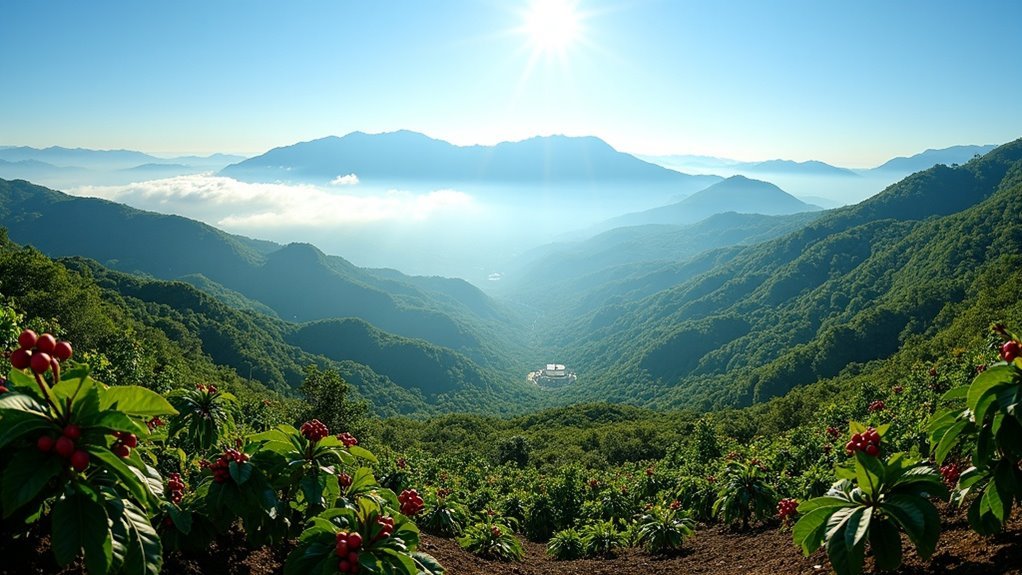
Brazilian coffee primarily grows in key states like Minas Gerais, São Paulo, Espírito Santo, and Bahia. Minas Gerais alone produces nearly 50% of the nation’s coffee, known for its high-quality Arabica beans. São Paulo features the Port of Santos, a vital export hub for coffee. Espírito Santo specializes in fruity Robusta coffee, while Bahia’s mechanized farms ensure consistent harvesting. Each region imparts unique flavors and characteristics, making Brazilian coffee diverse and rich in variety. Explore more about these fascinating coffee-growing dynamics and their impacts on the coffee we enjoy today.
Key Takeaways
- Brazilian coffee primarily thrives in key states like Minas Gerais, São Paulo, Espírito Santo, and Bahia, each contributing unique flavors and characteristics to the coffee landscape.
- Minas Gerais is particularly notable, producing nearly 50% of Brazil’s coffee and gaining a reputation for its high-quality Arabica beans.
- São Paulo plays a crucial role in coffee exports, with the Port of Santos serving as Brazil’s main hub for coffee shipping.
- Espírito Santo is known for its production of Robusta coffee, characterized by fruity notes and high acidity, often grown on family-owned farms.
- Bahia is home to mechanized coffee farms that ensure consistent cherry ripening, enhancing Brazil’s diverse range of coffee offerings.
Key Coffee-Producing States in Brazil
When it comes to coffee production, Brazil stands as a powerhouse, and its key coffee-producing states play an integral role in this dominance.
Minas Gerais is a frontrunner, accounting for nearly 50% of the country’s coffee output, with regions like Cerrado do Minas celebrated for their high-quality beans.
Minas Gerais leads Brazil’s coffee production, contributing nearly half of the nation’s output with its renowned high-quality beans.
São Paulo, with its historical significance, is home to the Port of Santos, Brazil’s primary coffee-exporting hub, while the Alta Mogiana region is renowned for its exceptional coffee varieties.
Espírito Santo specializes in Robusta coffee, where family-owned farms thrive in the region’s ideal humidity.
Each coffee-growing state contributes uniquely to the specialty coffee market, ensuring that Brazilian coffees continue to excel in both quality and flavor.
The Influence of Climate on Coffee Growth
When you explore the influence of climate on coffee growth in Brazil, you’ll discover that temperature and humidity are essential for the development of coffee beans.
The altitude of coffee-growing regions significantly impacts the flavor profiles and acidity of the coffee, while seasonal rainfall patterns ensure that the beans ripen uniformly.
Understanding these climatic elements can deepen your appreciation for the unique characteristics of Brazilian coffee.
Temperature and Humidity Effects
Although tropical climates are often associated with lush landscapes, the specific temperature and humidity levels in Brazil’s coffee-growing regions play an integral role in shaping the quality of the beans you enjoy. In the Southeastern region, particularly Minas Gerais, ideal temperatures between 20°C and 25°C (68°F to 77°F) coupled with humidity levels of 60% to 80% promote even ripening of coffee cherries, enhancing their flavor profile. Seasonal fluctuations, especially the dry season from May to September, are vital for harvesting. Here’s a quick overview of these factors:
| Factor | Description |
|---|---|
| Temperature | 20°C to 25°C (68°F to 77°F) |
| Humidity | 60% to 80% |
| Altitude | Sea level to 1,300 meters |
| Dry Season | May to September |
These environmental conditions are crucial in producing the high-quality coffee that enthusiasts appreciate.
Altitude and Coffee Quality
How does altitude shape the quality of Brazilian coffee?
In Brazil, coffee thrives at altitudes between 900 and 1,100 meters, particularly in Minas Gerais’ regions like Cerrado do Minas and Sul de Minas.
Higher altitudes provide cooler temperatures that slow the maturation of coffee cherries, enhancing the complexity of Arabica beans.
As a result, you can expect flavor profiles featuring bright acidity, floral notes, and improved sweetness.
The unique climate conditions, including microclimates created by altitude, further influence these rich flavors.
Ultimately, altitude plays a crucial role in determining the exceptional quality that Brazilian coffee is celebrated for.
Seasonal Rainfall Patterns
Seasonal rainfall patterns are vital in shaping the growth and quality of coffee in Brazil. With annual precipitation levels between 1,000 and 2,500 millimeters, these patterns significantly influence the ideal conditions for coffee plant development.
In Minas Gerais, Brazil’s largest coffee-producing state, there’s a notable dry season from May to September that coincides with the harvest period, allowing for optimal cherry ripening. Conversely, consistent rainfall from October to April during the wet season supports crucial flowering and fruiting stages of the coffee plants.
This balanced rainfall is essential for enhancing coffee quality, contributing to flavor profiles characterized by desirable acidity and sweetness. Brazil’s unique climate plays a pivotal role in its status as a leading coffee producer, making seasonal rainfall patterns critical to the country’s coffee industry.
Major Coffee Regions and Their Characteristics
When exploring the rich tapestry of Brazilian coffee production, you’ll discover that the country’s 14 major coffee regions each boast distinct characteristics that contribute to the diversity of flavors and profiles found in your cup.
Minas Gerais, the largest producer, contributes about 50% of Brazil’s coffee output. The Cerrado de Minas region holds the prestigious Designation of Origin, known for its high-quality beans that elevate the coffee experience.
In Espírito Santo, Robusta coffee thrives on family-owned farms, delivering high-acidity coffees with delightful fruity notes.
Bahia stands out with its mechanized coffee farms, ensuring consistent cherry ripening and high productivity, showcasing Brazil’s unwavering commitment to quality in coffee cultivation.
Coffee Varieties Grown in Brazil
Brazil’s diverse coffee regions not only shape the landscape of its production but also influence the variety of coffee grown across the country.
Largely, you’ll find Arabica coffee, making up about 70% of Brazil’s total output, with Robusta comprising the rest. Varieties like Catuaí, Bourbon, and Mundo Novo thrive in regions such as Minas Gerais, offering low acidity and delightful sweetness.
Brazilian coffee is renowned for its nutty and chocolaty flavor profiles, making it a staple in blends and specialty markets. As demand for high-quality specialty coffee rises, unique flavors from Minas Gerais and Bahia are gaining recognition, further enhancing Brazil’s reputation as a key player in the global coffee industry.
The Role of Technology in Coffee Production
As the global coffee market evolves, technology has become indispensable for enhancing production efficiency and quality in Brazil’s coffee industry.
In various Brazilian coffee regions, farmers are embracing mechanization and precision agriculture techniques, utilizing satellite monitoring and soil sensors to optimize irrigation and fertilization. This approach not only improves yield but also promotes sustainable practices, ensuring that high-quality coffee remains at the forefront of production.
Farmers in Brazil are leveraging advanced technology to enhance coffee yield and sustainability through precision agriculture and mechanization.
Advanced processing equipment, including automated sorting and grading, guarantees consistent quality and lowers labor costs, making premium coffee more accessible to consumers.
Furthermore, investments in research and development focus on breeding disease-resistant coffee varieties, enhancing resilience against climate change, and securing the future of coffee production in Brazil, ensuring that coffee lovers around the world can continue to enjoy their favorite beverage for years to come.
Future Trends in Brazilian Coffee Cultivation
While the coffee industry faces numerous challenges, exciting trends in Brazilian coffee cultivation promise a more sustainable and resilient future.
You’ll see more farms adopting organic and Fair Trade certifications to meet the growing demand for ethically sourced coffee. Precision agriculture is enhancing productivity and coffee quality, while climate-resilient varieties are being developed to address the impacts of climate change.
Emerging coffee-producing areas like Bahia are integrating advanced techniques, complementing traditional regions that preserve unique flavors. Continuous investment in research and development will improve soil health and optimize water usage, ensuring Brazilian coffee maintains its competitive edge in the global market.
The future looks bright for coffee lovers everywhere, as Brazil continues to innovate and elevate its coffee offerings.