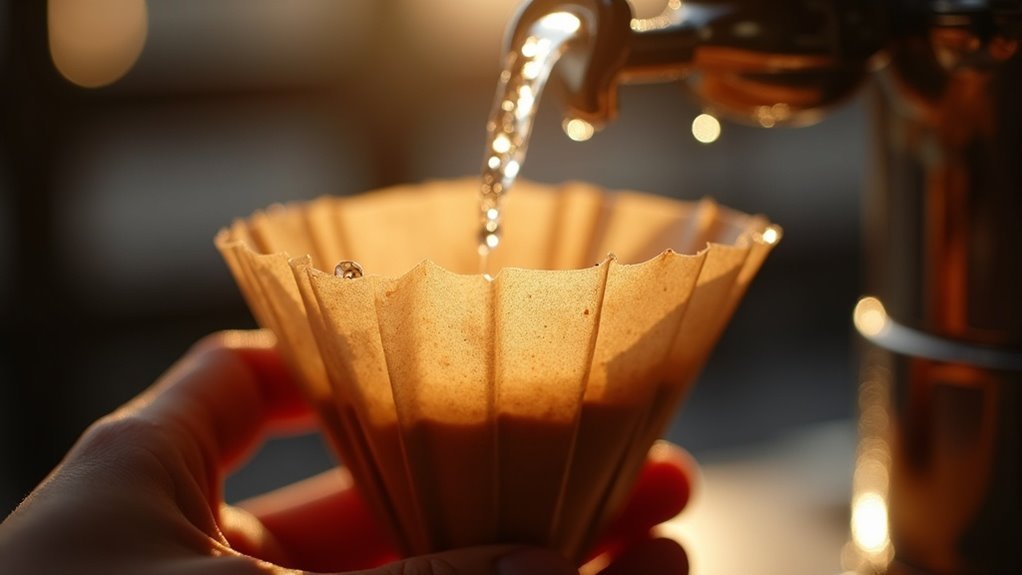
Rinsing paper filters is essential for coffee enthusiasts looking to eliminate unwanted papery tastes and improve brewing temperatures. This simple step removes dust and impurities, leading to a cleaner flavor profile in your coffee. While the taste difference might not be drastic, rinsing can enhance extraction consistency, ensuring a more balanced brew. However, many high-quality filters perform well even without rinsing. If you’re curious about the nuances of rinsing and its impact on your coffee, you’ll find there’s much more to explore in your brewing journey.
Key Takeaways
- Rinsing removes any papery taste and loose particulates, enhancing the overall flavor profile of your coffee.
- It preheats the filter and brewing vessel, contributing to an optimal extraction temperature for the best brew.
- Rinsing helps minimize dust and impurities found in lower-quality filters, ensuring a cleaner cup of coffee.
- High-quality filters often do not require rinsing, as they typically do not impart off-flavors to your brew.
- While rinsing can improve heat retention, preheating the dripper is also an effective alternative for maintaining temperature during the brewing process.
The Importance of Rinsing Coffee Filters
When you brew coffee, the quality of your ingredients and equipment plays an essential role in the final flavor, which is why rinsing paper filters shouldn’t be overlooked.
Rinsing helps eliminate any papery taste and loose particulates that can negatively impact your coffee’s taste. A quick rinse with hot water not only preheats the filter but also reduces impurities and dust particles that could otherwise spoil your brew.
This step is particularly important for lower-quality filters, which may harbor more unwanted flavors.
How to Properly Rinse Your Filters
To properly rinse your coffee filters, start by placing the filter in your brewer and pouring hot water evenly over both sides. This guarantees complete coverage and prevents dry patches.
A quick rinse is generally sufficient, but soaking the filter briefly may help remove unwanted flavors and impurities that can affect your coffee’s taste. Use warm water, as it dissolves soluble impurities, but avoid boiling water to protect the filter’s integrity.
After rinsing, discard the water to eliminate any residual papery taste that can interfere with your brew. For best results, check the specific instructions for your filter type, as some may have unique rinsing requirements that enhance your coffee experience.
Benefits of Rinsing for Flavor Enhancement
Rinsing your paper filters removes any papery taste that could dull the coffee’s flavor, ensuring a cleaner cup.
This simple step also enhances extraction efficiency, allowing more coffee solubles to be drawn out during brewing.
As a result, you achieve improved brewing consistency, leading to a more satisfying coffee experience.
Removes Papery Taste
Eliminating the papery taste from your coffee can greatly enhance its overall flavor profile, and rinsing paper filters plays an essential role in this process.
When you rinse the filter with hot water, you effectively remove any residual chemicals and loose particulates that could compromise your brew. This simple step helps to guarantee a cleaner cup by eliminating off-flavors that might detract from the coffee’s inherent qualities.
Additionally, preheating your brewing vessel with hot water maintains the ideal temperature during extraction, further enhancing the flavor of your coffee.
For the best results, especially with unbleached filters, make rinsing a standard part of your coffee preparation routine. Enjoy a richer, more flavorful cup!
Enhances Extraction Efficiency
While many might overlook the importance of rinsing paper filters in coffee brewing, doing so greatly enhances extraction efficiency.
A rinsed filter promotes a cleaner flavor profile by:
- Removing dust and impurities that could introduce unwanted tastes in your coffee.
- Preheating the brewing vessel, ensuring the water reaches the ideal temperature for optimal extraction.
- Improving capillary action for more efficient water flow through the coffee grounds.
- Clearing pores to enhance flow rates, leading to even and balanced extraction of flavors from the coffee beans.
Improves Brewing Consistency
Rinsing paper filters before brewing is a simple yet effective technique to improve brewing consistency and enhance the flavor profile of your coffee. By rinsing the filters, you effectively remove residual dust and off-flavors that can lead to a papery taste, resulting in a cleaner and more refined cup.
This process also pre-warms the filter and the brewing vessel, helping to maintain the ideal temperature during extraction.
Furthermore, rinsed filters improve filtration efficiency by clearing out impurities that might clog the filter pores, allowing for better flow and even extraction of coffee solubles.
Implementing this practice can contribute to a balanced flavor profile, minimizing unwanted tastes and ensuring that your coffee brews evenly every time.
Rinsing vs. Not Rinsing: What the Tests Show
To understand the implications of rinsing paper filters in coffee brewing, it’s essential to look at taste tests comparing rinsed and unrinsed filters.
Here are some key findings from the tests:
- No notable flavor differences were observed between rinsed and unrinsed filters.
- Rinsing may preheat your brewing vessel but has minimal impact on the overall taste of the coffee.
- Brew time and pouring technique significantly influence flavor more than the rinsing process does.
- For bleached filters like Chemex and Kalita, skipping the rinsing step prioritizes convenience without compromising coffee quality.
Ultimately, you can brew confidently without rinsing bleached paper filters, ensuring a great cup of coffee every time.
The Environmental Impact of Rinsing Filters
When you rinse paper coffee filters, you’re consuming filtered water—a precious resource that’s increasingly limited in many areas.
Additionally, the energy needed to heat this water adds to your environmental footprint, making it essential to weigh these factors against any perceived benefits in your brewing experience.
Ultimately, you might find that the minor taste improvement in your coffee doesn’t justify the environmental costs associated with rinsing.
Water Consumption Concerns
Although rinsing paper filters may seem like a necessary step in coffee preparation, it raises significant concerns about water consumption and environmental impact.
Consider these points:
- Rinsed filters consume filtered water, a finite resource vital for our coffee brewing.
- The energy required to heat water for rinsing adds to the carbon footprint associated with coffee production.
- Studies show minimal quality difference between rinsed and unrinsed filters, meaning you can brew great coffee without the extra step.
- Experts like Peter Giuliano and James Hoffmann recommend skipping rinsing to conserve valuable resources while still enjoying a delicious cup of coffee.
Energy Usage Implications
Rinsing paper filters not only impacts the flavor of your coffee but also has important energy usage implications. Heating water to rinse these filters consumes energy, which adds to your carbon footprint.
Moreover, using filtered water—a limited resource—raises sustainability concerns. Research indicates that the improvement in coffee quality from rinsing is minimal, suggesting that the energy and water temperature used may not warrant the process.
Experts like Peter Giuliano and James Hoffmann recommend skipping the rinsing step altogether, advocating for resource conservation without sacrificing taste.
Alternatives to Rinsing: Reusable Filters
If you’re looking for a way to enhance your coffee brewing experience while minimizing waste, consider switching to reusable filters. Here are some benefits:
- Sustainability: Reusable filters significantly reduce single-use waste and can last for years with proper care, making them an eco-friendly choice for coffee lovers.
- Flavor: Metal filters allow oils and micro-grounds to pass through, resulting in a bolder and richer cup of coffee. On the other hand, cloth filters capture more grounds while allowing some oils to enhance the aromatic experience.
- Cost-effective: By eliminating the ongoing expense of disposable filters, you can save money over time, making your coffee habit more economical.
- Convenience: Reusable filters are designed for easy use and don’t require rinsing, simplifying your brewing routine and letting you focus on enjoying your coffee.
Make the switch for a better cup and a healthier planet!
Common Misconceptions About Rinsing Filters
Why do so many coffee enthusiasts cling to the belief that rinsing paper filters is essential? One major misconception is that rinsing greatly enhances coffee taste, yet experts like Peter Giuliano and James Hoffmann argue the difference is negligible.
Many think rinsing eliminates unwanted flavors, but high-quality filters rarely impart off-tastes. Additionally, excessive rinsing can weaken thin filters, risking structural failure during brewing.
Some believe rinsing aids heat retention, but preheating the dripper suffices. Finally, rinsing doesn’t guarantee hygiene, as dust can still accumulate, emphasizing the need for proper filter maintenance over reliance on rinsing for peak brewing.
Personalizing Your Brewing Process: Experiment and Discover
The debate over rinsing paper filters highlights the importance of personal preference in brewing coffee.
To personalize your coffee brewing process, consider these steps:
- Experiment with both rinsed and unrinsed filters to find your preferred taste.
- Conduct blind taste tests with friends to gather unbiased feedback.
- Choose high-quality filters, as they may minimize any papery flavor.
- Adjust your brewing technique, such as pre-heating your dripper, to ensure ideal extraction.
Document your experiments to refine your method over time.