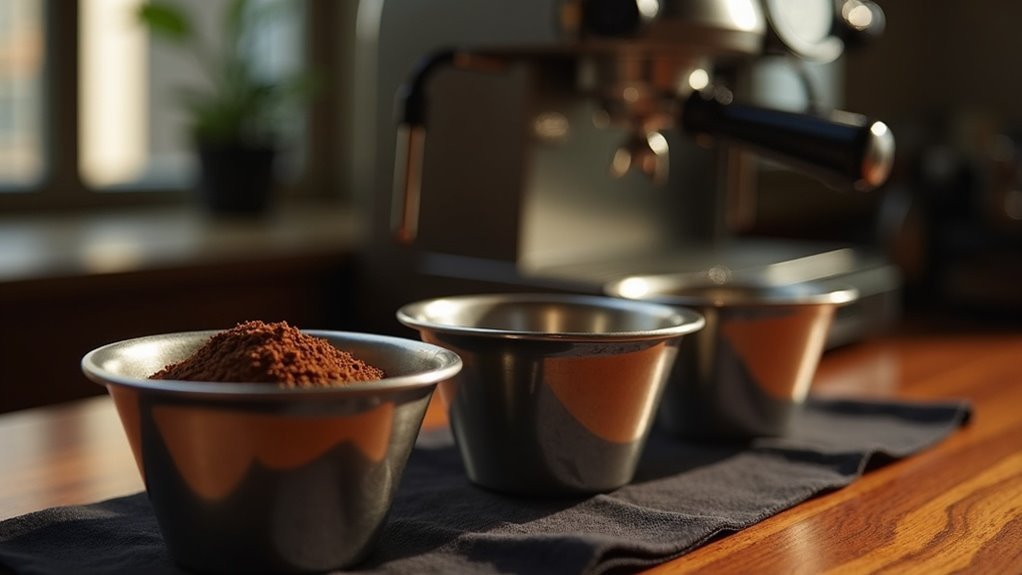
When selecting a basket size for your espresso, it’s important to note that the standard size is typically 58mm for commercial machines, while many home machines may utilize 54mm or 51mm. Opting for larger baskets can facilitate greater coffee doses and promote more uniform extraction, which enhances flavor and minimizes channeling. For optimal consistency, precision ridgeless baskets are often recommended. Always verify compatibility with your machine’s grouphead, and don’t hesitate to experiment to achieve the best results. Discover more tips on elevating your espresso experience by delving deeper into our resources.
Key Takeaways
- The standard basket size for commercial espresso machines is 58mm, while many home machines typically use 54mm or 51mm sizes.
- Larger baskets (e.g., 58mm) can produce richer coffee shots and accommodate greater coffee doses, which enhances flavor and extraction quality.
- Ridgeless baskets are favored by baristas as they promote uniform extraction and minimize channeling.
- Precision baskets, such as those from VST or IMS, are designed to optimize fluid flow, ensuring consistent extraction and improved flavor profiles.
- It’s important to ensure that the basket size is compatible with your espresso machine’s grouphead to avoid any issues with locking mechanisms and accessories.
Understanding Espresso Basket Sizes
When you delve into the world of coffee, understanding espresso basket sizes is essential, as it directly influences the extraction process and the final flavor profile.
Espresso baskets typically range from 49mm to 58mm, with 58mm being standard for commercial machines. The capacity varies, allowing for coffee doses of 7g to 20g or more.
A larger basket size creates a deeper coffee bed, reducing channeling and enhancing extraction uniformity.
When selecting a basket, consider the grouphead diameter, desired coffee dose, and extraction speed. This knowledge ensures you achieve the best coffee quality, balancing flavor and strength safely and effectively.
Standard Portafilter Sizes Explained
Understanding espresso basket sizes naturally leads to the importance of portafilter sizes, as they play a key role in brewing quality coffee. The most common size is 58mm, ideal for commercial machines, while home coffee makers often use 54mm or 51mm. Larger baskets allow for richer coffee shots but may limit advanced brewing techniques. Variations in locking mechanisms can cause compatibility issues, so choose wisely.
| Portafilter Size | Common Use | Basket Compatibility |
|---|---|---|
| 58mm | Commercial | Wide range of options |
| 54mm | Home machines | Limited accessories |
| 51mm | Entry-level | Few accessories |
The Impact of Basket Size on Extraction
Although the choice of espresso basket size may seem minor, it greatly impacts extraction quality and flavor. The basket size determines the amount of coffee grounds you use, typically ranging from 14g to 25g.
A larger basket, like a 20g model, allows for a deeper coffee bed, enhancing the extraction process by reducing channeling and promoting uniformity. Additionally, the number and size of holes influence flow rates, affecting extraction efficiency.
Adjusting your basket size can considerably alter the flavor profile of a single espresso, as it changes the relationship between dose and extraction time, ultimately impacting the quality of your shot. Understanding these nuances can elevate your coffee experience.
Precision vs. Traditional Baskets
When you compare precision coffee baskets to traditional ones, you’ll notice significant differences in extraction efficiency and flavor consistency.
Precision baskets, with their optimized hole design, promote even fluid flow, reducing channeling and enhancing extraction.
This advanced design not only improves the overall quality of your coffee but also guarantees more reliable results regardless of brewing conditions.
Extraction Efficiency Differences
While traditional espresso baskets have been the standard for years, their limitations in extraction efficiency become apparent when compared to precision baskets like VST or IMS.
Traditional baskets often restrict water flow due to poorly placed holes, limiting contact with coffee grounds and prolonging extraction time. In contrast, precision baskets feature optimized hole sizes and placements, allowing for increased flow rates and uniform extraction.
For example, the WAFO Spirit boasts 3000 holes, considerably enhancing brewing efficiency. By investing in precision baskets, you can achieve more consistent and flavorful espresso, ensuring a better overall coffee experience.
Consistency in Flavor
As you delve into the intricacies of espresso extraction, the difference in flavor consistency between precision and traditional baskets becomes clear.
Precision baskets, such as those from VST and IMS, ensure consistent extraction by optimizing water flow through a greater number of uniformly sized holes. This design accommodates finer coffee grounds, promoting a balanced flavor profile in your perfect espresso.
On the other hand, traditional baskets may hinder water flow, resulting in uneven extraction and fluctuating flavors.
Investing in precision baskets can significantly enhance your brewing efficiency and provide that sought-after consistency, transforming each espresso shot into a delightful experience.
Design and Build Quality
The design and build quality of espresso baskets are vital for optimizing extraction efficiency and enhancing the overall flavor of your brew.
Here’s how precision baskets stack up against traditional baskets:
- Hole Consistency: Precision baskets exhibit minimal variability in hole size, ensuring even extraction throughout the coffee puck.
- Fluid Dynamics: An improved hole configuration facilitates superior fluid flow, leading to ideal extraction and enhanced espresso quality.
- Quality Control: Companies such as VST and IMS uphold stringent quality standards, resulting in consistent performance that outshines mass-produced traditional baskets.
Investing in precision baskets can significantly elevate your espresso experience, making them a must-have for any coffee enthusiast or barista.
Ridged vs. Ridgeless Baskets: Which to Choose?
How do you choose between ridged and ridgeless baskets for your espresso setup?
Ridged baskets feature grooves that secure them in the portafilter but can lead to uneven extraction due to altered fluid flow.
In contrast, ridgeless baskets have smooth walls, promoting a more uniform extraction and reducing channeling issues, which many baristas appreciate for enhancing shot quality.
While ridgeless baskets may require stronger springs to stay in place, they facilitate cleaner puck knock-out, minimizing mess during preparation.
Ultimately, if you prioritize consistent extraction and ease of use in your coffee-making process, opting for ridgeless baskets is likely your best choice.
Exploring Turbo Shots With Larger Baskets
When you explore turbo shots with larger baskets, you can significantly enhance the extraction efficiency by using coarser grinds and higher doses of coffee.
This setup not only minimizes the risk of channeling but also results in a fuller, filter coffee-like body in your espresso.
Benefits of Turbo Shots
While many baristas may prefer traditional espresso techniques, experimenting with turbo shots using larger baskets can significantly elevate your coffee brewing experience.
Here are three key advantages:
- Enhanced Flavor Profile: Utilizing larger portafilters allows for higher coffee doses, resulting in deeper extraction and more complex flavors.
- Consistent Brew Quality: The increased depth of the coffee bed helps to minimize channeling, ensuring a balanced and uniform extraction for every cup.
- Faster Service: Turbo shots can be brewed in just 20-25 seconds, delivering a robust body similar to filter coffee while ensuring quick service for customers.
Coarser Grind Advantages
Experimenting with larger baskets for turbo shots opens up exciting possibilities, especially when it comes to grind size. By opting for a coarser grind, you enhance the flavor profile and body of your coffee.
Larger basket sizes accommodate higher doses, allowing for a deeper coffee bed that minimizes channeling and promotes even extraction. With extraction times of 20-25 seconds, this method creates a filter coffee-like body, appealing to those craving unique coffee experiences.
Ultimately, using larger baskets encourages baristas to explore diverse flavor preferences while ensuring a safe and enjoyable brewing process. Embrace these advantages for your next cup!
Optimizing Extraction Efficiency
To optimize extraction efficiency in espresso brewing, utilizing larger baskets for turbo shots significantly enhances the overall process. Here’s how:
- Deeper Coffee Bed: Larger basket sizes promote a deeper bed of coffee grounds, reducing channeling and ensuring a more balanced espresso shot.
- Up-Dosing Capability: You can increase the coffee dose without altering your workflow, enriching the flavor profile and intensity.
- Filtered Texture: The combination of a coarser grind and larger baskets results in a filter coffee-like body, offering a unique and delightful espresso experience.
Tips for Selecting the Right Basket Size for Your Espresso
When selecting the right basket size for your espresso, it’s essential to start by identifying your espresso machine‘s grouphead size. Most home machines typically utilize a 58mm basket, while more compact models may require a 53mm size.
Next, take into account your coffee dose; doses ranging from 18 to 20 grams will significantly impact your basket size for optimal extraction. Experimenting with smaller baskets can lead to quicker extractions, while larger baskets are better suited for slower brewing methods.
If you’re using bottomless portafilters, ensure that your chosen basket size is compatible. For improved extraction uniformity and quality, consider precision baskets such as VST or IMS.