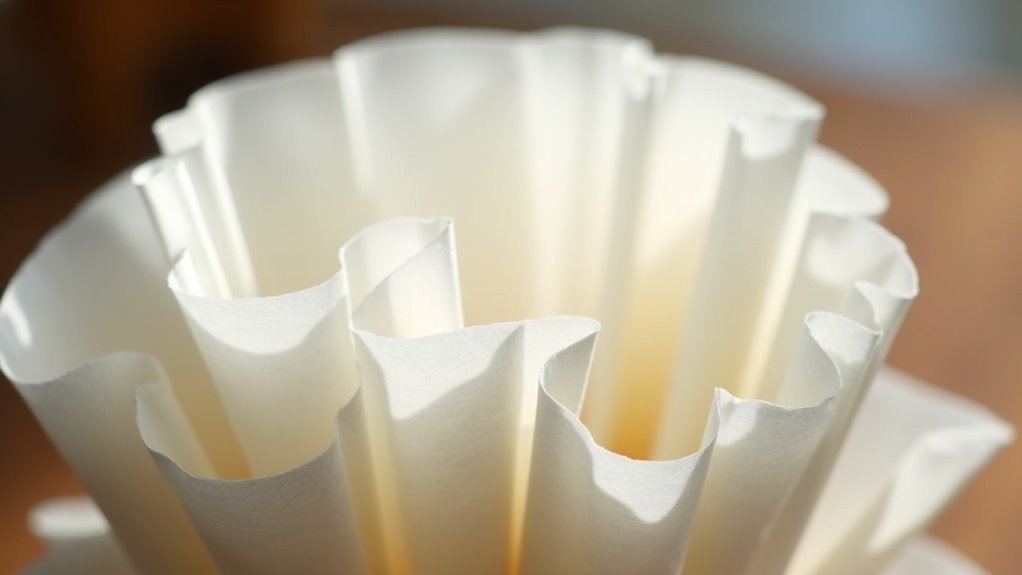
Yes, paper coffee filters can be either bleached or unbleached. Bleached filters undergo a treatment process with chemicals such as chlorine or oxygen to achieve a bright white appearance. While both types are safe for brewing coffee, many coffee enthusiasts prefer bleached filters for their cleaner taste and reduced papery flavor. On the other hand, unbleached filters can contribute a richer depth to the coffee’s flavor profile. Additionally, choosing between bleached and unbleached filters involves considering factors like environmental impact and sustainability. Delving deeper into the characteristics of each type will reveal more insights into their respective benefits for coffee lovers.
Key Takeaways
- Paper coffee filters can be bleached using chemicals, typically chlorine or oxygen, to achieve a bright white appearance.
- Bleached filters are perceived as cleaner and may require less rinsing compared to unbleached filters.
- Both bleached and unbleached filters are safe for consumption and do not leach harmful substances.
- Unbleached filters are often favored by eco-conscious coffee enthusiasts due to their minimal processing and compostability.
- The choice between bleached and unbleached filters depends on individual preferences for taste, aesthetics, and environmental impact in the coffee brewing process.
Understanding Bleached Coffee Filters
When you consider the options for coffee filters, understanding bleached coffee filters is essential to making an informed choice.
Bleached filters are treated with chemicals, often using chlorine or oxygen, to achieve their bright white color. While chlorine bleaching can produce harmful byproducts, oxygen bleaching is a more environmentally friendly option.
Despite the chemical treatment, bleached filters are safe and don’t greatly alter the taste of your coffee. They also require less rinsing than unbleached filters, minimizing any paper taste during brewing.
The Process of Bleaching Filters
When you explore the bleaching process for coffee filters, it’s vital to recognize the methods used.
Most filters undergo treatment with either chlorine or oxygen, each presenting unique environmental implications and effects on filter quality.
Bleaching Methods Explained
While many coffee enthusiasts may not think about the production process of their filters, it’s important to understand the bleaching methods involved.
Bleached coffee filters typically undergo either chlorine bleaching or oxygen bleaching. Chlorine bleaching is effective in whitening but raises concerns due to harmful dioxins and its impact on the environment.
On the other hand, oxygen bleaching is a safer, eco-friendly alternative that utilizes fewer chemicals, thereby minimizing harmful byproducts.
Regardless of the bleaching process, both bleached and unbleached filters don’t leach harmful substances, preserving the coffee’s flavor without introducing any paper taste.
When selecting filters for your brewing needs, keep these methods in mind for a more informed choice.
Environmental Impact Overview
The environmental impact of bleaching processes for paper coffee filters is an essential consideration for consumers who care about sustainability.
Coffee lovers should know that filters are made using either chlorine or oxygen bleaching methods. Chlorine bleached filters can release toxic chemicals, posing risks to both workers and the environment.
In contrast, oxygen bleached filters are a safer, more eco-friendly option, resulting in fewer harmful byproducts. Unbleached filters, with their natural brown color, require minimal processing and are generally viewed as the most sustainable choice.
Understanding these factors can help you make informed decisions about your coffee brewing supplies, ensuring that your coffee ritual aligns with your values of environmental stewardship.
Comparing Bleached and Unbleached Filters
Choosing between bleached and unbleached coffee filters involves considering both taste and environmental impact for your perfect cup of coffee. Bleached filters, treated with chemicals for whiteness, are often perceived as cleaner, while unbleached filters retain their natural brown color without such processing. Here’s a quick comparison to help you make an informed choice:
| Type | Taste Implication | Environmental Impact |
|---|---|---|
| Bleached | Cleaner, less rinsing | More chemicals used |
| Unbleached | Slight papery taste | Minimal processing |
| Both | Trap oils and sediments | Varies based on type |
| Cost | Generally pricier | Typically cheaper |
| Preference | Personal choice | Environmental awareness |
Ultimately, your choice should align with your coffee taste preferences and environmental values, ensuring you enjoy every sip while being mindful of your impact.
Environmental Impacts of Different Filters
When considering the environmental impacts of different coffee filters, it’s important to understand the differences between bleached and unbleached options.
Bleached paper filters, especially those treated with chlorine, raise concerns due to harmful dioxins produced during their manufacturing process.
On the other hand, unbleached coffee filters are more eco-friendly, as they require less processing and are compostable.
Oxygen-bleached filters provide a sustainable, chemical-reduced alternative while still offering a white option.
Your choice of coffee filters significantly affects your environmental footprint, with unbleached and oxygen-bleached filters aligning better with sustainability values.
Flavor Differences: Bleached vs. Unbleached
While many coffee drinkers focus on the brew itself, the choice between bleached and unbleached filters can subtly influence the flavor profile of your coffee.
Bleached coffee filters are often preferred for their cleaner taste, minimizing any paper flavor due to the reduction of lignin. In contrast, unbleached filters might impart a slight woody or papery taste if not pre-wet.
Rinsing both types before brewing is advisable to eliminate potential off-tastes. Though some enthusiasts favor the neutrality of bleached filters, studies indicate that the impact on final flavor is minimal, with brewing technique being a more significant factor.
Choosing the Right Coffee Filter for You
When you’re selecting a coffee filter, it’s essential to weigh the material, taste, and environmental impact.
Bleached filters might offer a cleaner flavor, while unbleached options can be more eco-friendly but may require rinsing to minimize any papery taste.
Understanding these factors will help you choose a coffee filter that aligns with your brewing preferences and values.
Filter Material Comparison
Choosing the right coffee filter is essential for achieving the perfect brew. Understanding the differences between bleached and unbleached options can significantly influence both the brewing process and the flavor of your coffee. Here’s a quick comparison to guide you:
- Bleached Filters (White): These filters yield a clean cup with minimal papery taste, as they require less rinsing before use.
- Unbleached Filters (Brown): While these are more eco-friendly, they may impart a slight paper taste if not rinsed thoroughly. However, they allow more coffee oils to pass through, enhancing the flavor profile.
- Quality Matters: Regardless of the type you choose, opt for thick filters to ensure optimal brewing and flavor extraction.
Make your coffee experience even better by selecting the right filter that suits your taste!
Environmental Impact Awareness
As you explore your coffee filter options, it’s essential to consider the environmental impact along with your taste preferences.
Choosing unbleached brown filters is generally more eco-friendly, as they undergo less processing and are free from harmful chemical treatments. If you lean towards bleached filters, opt for oxygen-bleached varieties, which utilize fewer chemicals and are still compostable.
Steer clear of chlorine-bleached filters, as their production releases harmful dioxins that can significantly harm the environment.
While both brown and oxygen-bleached filters can produce a clean cup of coffee, brown filters might impart a slight paper taste if not rinsed adequately, showcasing the balance between sustainability and flavor in your coffee experience.
Taste Preference Considerations
How do your taste preferences influence your choice of coffee filters? Selecting between bleached and unbleached filters can greatly impact your coffee’s flavor profile. Consider these factors:
- Taste Clarity: Bleached filters provide a cleaner taste, minimizing any paper flavor during brewing, which can be important for those who prefer a lighter, more delicate cup of coffee.
- Flavor Depth: Unbleached filters retain more oils, offering a fuller-bodied flavor, especially if rinsed beforehand. This option is ideal for those who enjoy a bolder, richer coffee experience.
- Personal Priorities: Weigh your preference for hygiene and aesthetics versus sustainability and depth of flavor. Bleached filters may appeal to those prioritizing cleanliness, while unbleached filters cater to environmentally conscious coffee lovers.
Ultimately, your choice should align with your taste preferences and brewing method, ensuring a satisfying coffee experience tailored just for you.